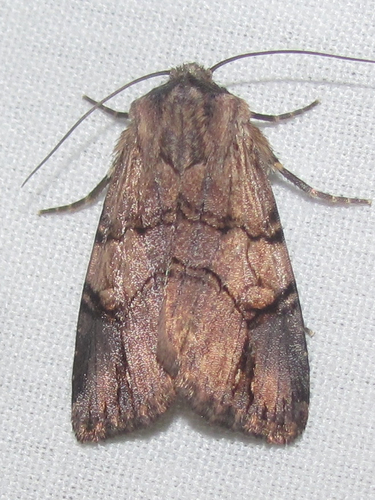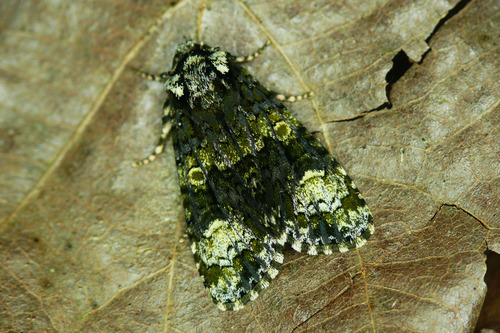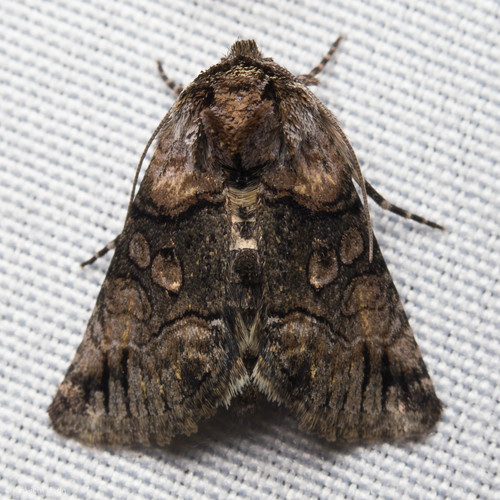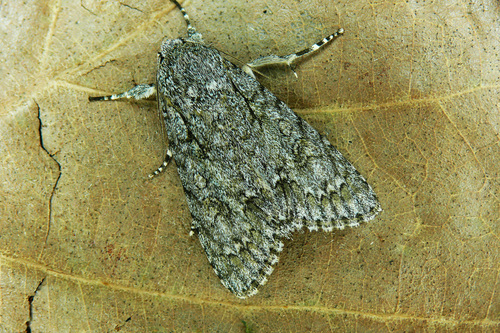
About Hoplodrina blanda (Denis & Schiffermüller), 1775
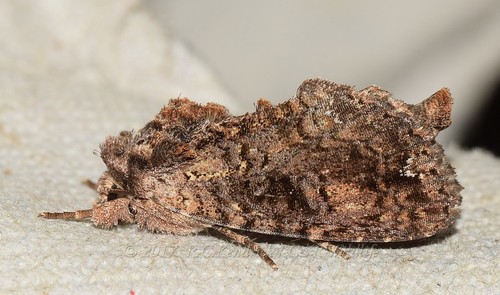
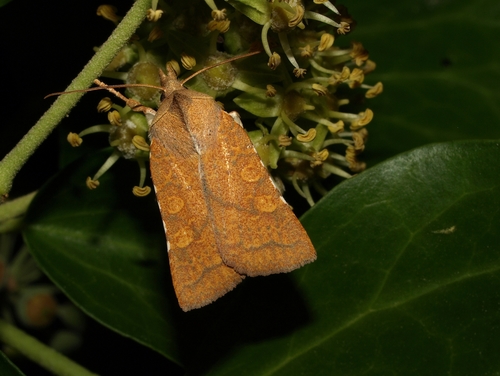
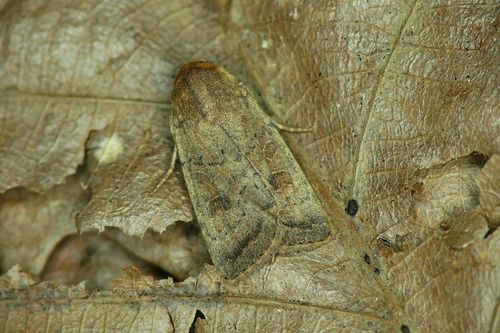
Hoplodrina blanda (Denis & Schiffermüller), 1775 has a wingspan of 31–35 mm, and forewings that measure 13–16 mm in length. The forewings are fawn-tinged grey with fuscous suffusion. The base ground colour may sometimes be paler and more luteous ochreous, especially in specimens from Western Turkestan. The costal edge of the forewing is pale; the inner and outer lines are obscurely marked, while the median and praesubmarginal shades are distinct. The stigmata are fuscous grey with pale annuli. The hindwings are whitish, with a grey tinge toward the termen; veins and the cell mark are darker. Female individuals are entirely darker grey overall. This species occurs throughout Northern and Central Europe and Central Asia. Asiatic specimens collected from Issyk-Kul, the defile of Little Kisil-su in Tianshan, Kappak in the Alexander Mountains, and Ketmen-tjube in the Sussamyr Mountains have been formally separated as the aberration centralasiae ab. nov. [Warren], though it is noted that this may actually be a distinct species. For this aberration, the ground colour of the forewing is paler, with pinkish brown tinging along the two folds, and dark markings stand out more conspicuously. The costal edge is pale, and the hindwing is whiter even in females, showing a distinct cell spot. The aberration was described from a series of more than a dozen males and only one female collected from these localities; the type male is from Kappak, and the type female is from Ketmen-tjube. Hoplodrina blanda is similar to and often confused with Hoplodrina octogenaria and Hoplodrina ambigua. Certain identification of this species requires dissection of the genitalia. See Townsend et al.