About Hoplobatrachus tigerinus (Daudin, 1802)
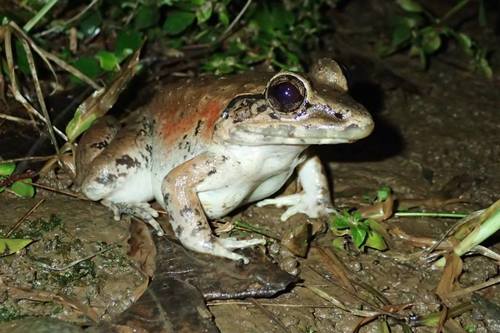
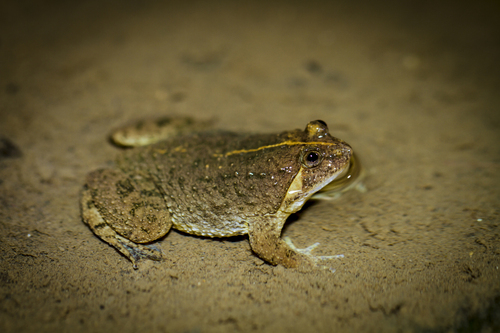
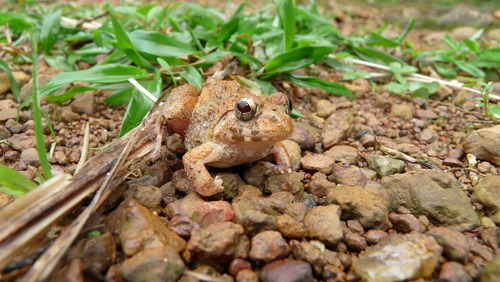
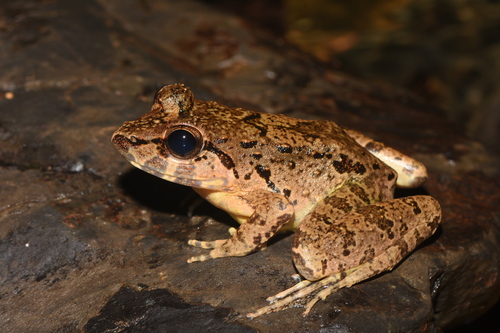
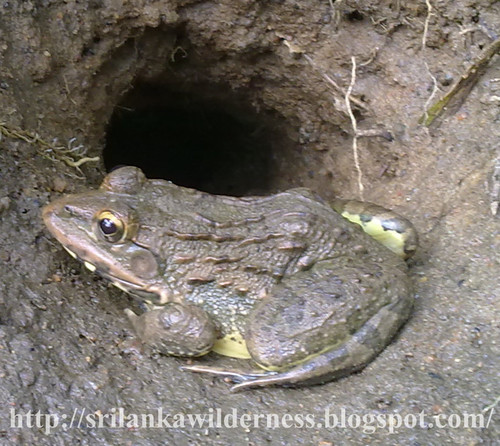
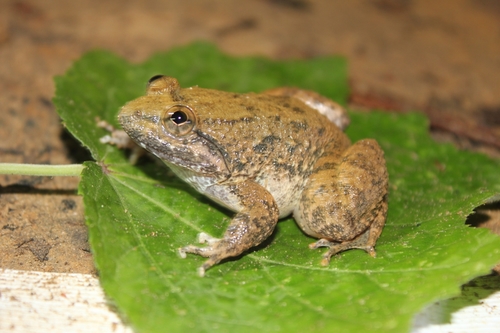
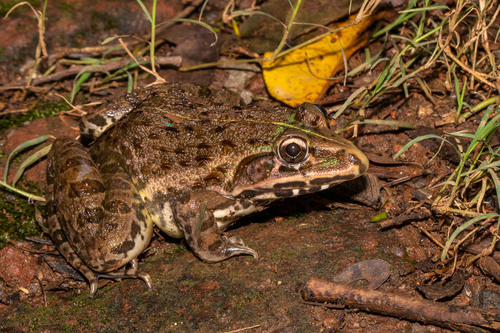
The Indian bullfrog, scientifically named Hoplobatrachus tigerinus (Daudin, 1802), is a large frog species. Adults can reach up to 170 millimetres (6.7 in) in length. Their heads are generally longer than they are wide, though older individuals tend to develop wider heads. Their base coloration is normally green or brown with dark spots, and males turn yellow during the breeding season. Most individuals have a yellow streak running along the spinal region of the back. Substantial variation in both color and size occurs between different populations, even populations that are geographically close. A 2012 study found that frogs from different villages in Jamshoro District, Sindh, Pakistan were consistently different in size and coloration from other nearby populations; the study suggested these differences were caused by variation in food availability, water quality, and age distributions. This species has unwebbed front hands, while its hind feet are almost fully webbed. Males have nuptial pads (swellings on the forearms of some male amphibians that help grasp females during mating) on the first finger, and two blue-colored vocal sacs, one on each side of the throat. Tadpoles have black speckles across their tails and fins, with dark-colored tail tips. In males, the tympanum (eardrum) is wider than the eye, while in females the eye is wider than the tympanum. Females are also heavier and longer than males. The Indian bullfrog is native to mainland Afghanistan, Bangladesh, India, Myanmar, Nepal, and Pakistan. Its presence in Bhutan and China is possible but has not been confirmed. It has been introduced to the Maldives, Madagascar, and India's Andaman Islands, where it is now a widespread invasive species. Areas that are considered likely to be invaded by this species in the future include the Mascarene Islands, Malaysia, Indonesia, and East Africa. Hoplobatrachus tigerinus typically inhabits freshwater environments, especially wetlands like paddy fields. It is not generally found in other types of ecosystems, such as forests or coastal areas. Indian bullfrogs reproduce during the monsoon season, in pools of rainwater. They lay many eggs in a single reproductive event, though most tadpoles die before reaching adulthood. Individuals can live for more than seven years in the wild.