About Hoplobatrachus crassus (Jerdon, 1853)
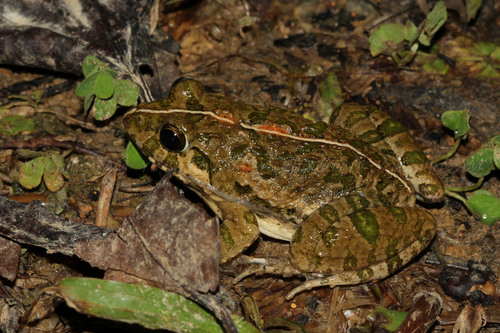
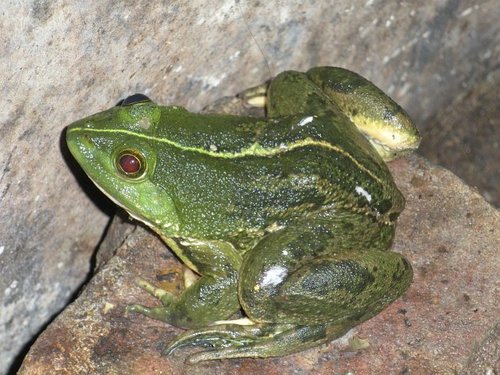
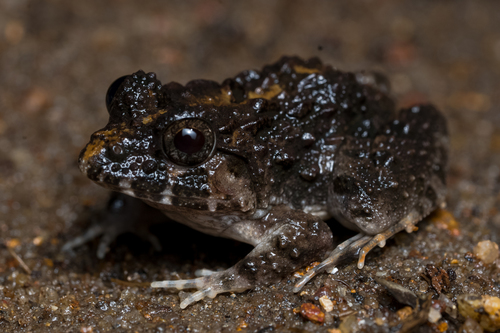
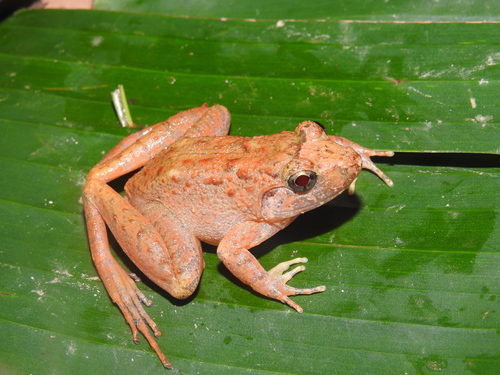
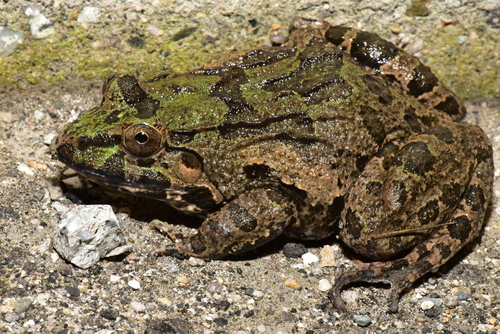
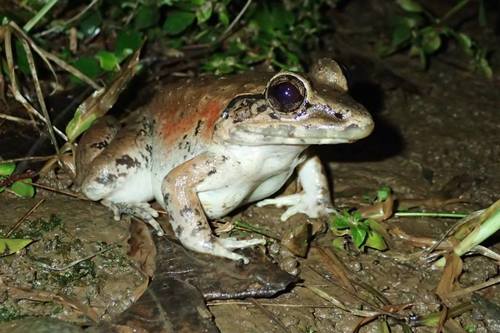
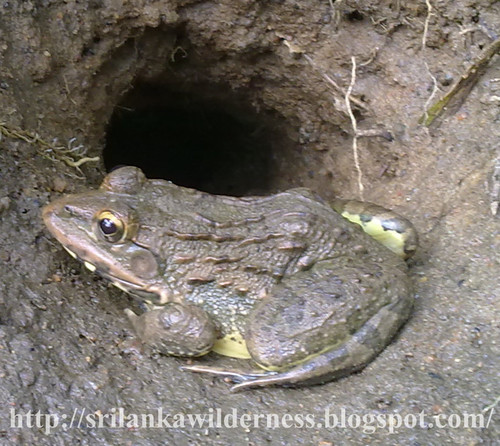
This species has a shovel-shaped metatarsal tubercle, and has longer hind legs than the somewhat similar Hoplobatrachus tigrinus, whose range partially overlaps with that of H. crassus. When the leg is stretched along the body, the tibio-tarsal (ankle) joint sits between the ear and the eye. Females are slightly larger than males: females reach about 8–10 cm or more, while males reach about 5–8 cm. The skin of the dorsum ranges from olive green to yellow in color, marked with brown or black spots. Some individuals have a yellow stripe running down the spine. Hoplobatrachus crassus is a terrestrial frog that inhabits seasonally flooded dry grasslands, open plains, and arid areas, and can also be found in cultivated areas and near human settlements. Adult frogs are often found in burrows, and may aestivate during dry periods. Breeding occurs in water. Males have two vocal sacs on their sides, and their call sounds similar to a bleating goat. The calls last for a few minutes, and consist of 2 to 4 series of 13–18 bleating pulses. Breeding occurs with the onset of rains. The species can tolerate salinity to some degree: it can tolerate 25% natural seawater (25 parts seawater diluted with 75 parts distilled water), but does not survive more than a week at salinities equal to 35% natural seawater (undiluted seawater is about 32 parts per thousand). The tadpoles of this species are thought to feed on algae. A ciliate from the genus Cepedea has been recorded living in H. crassus tadpoles.