About Homodotis falcata Butler, 1879
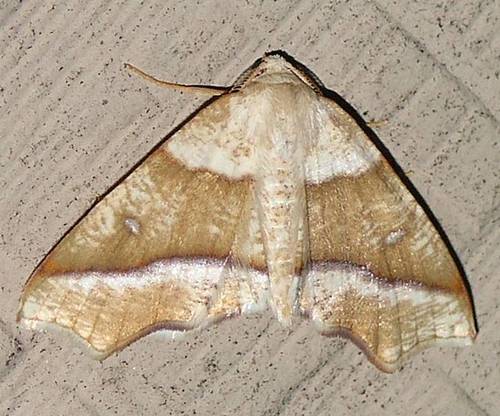
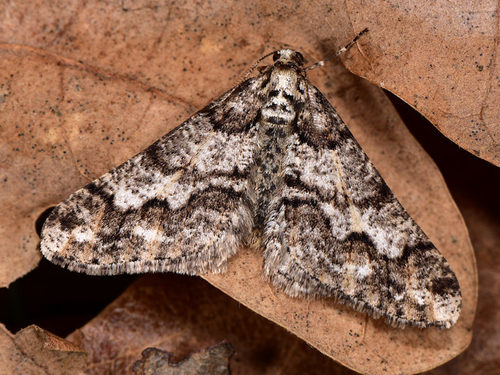
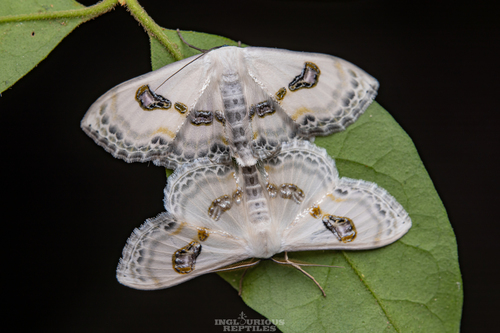
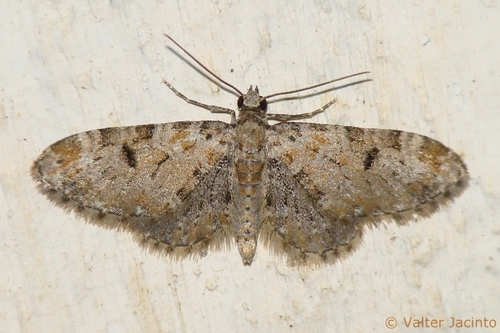
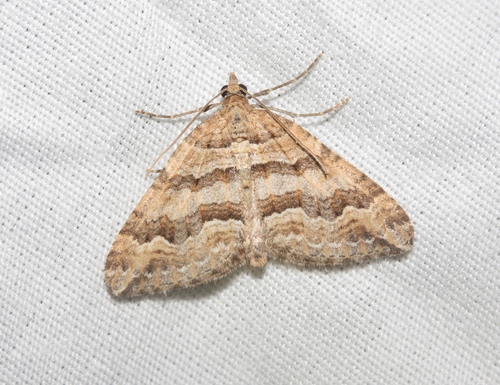
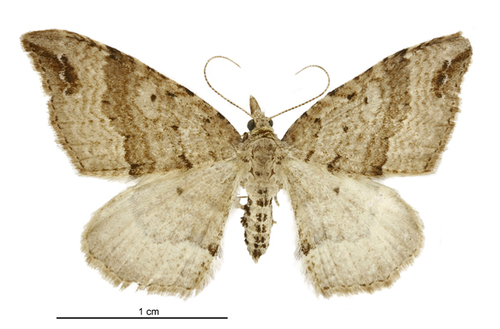
Butler described the male holotype of Homodotis falcata as follows: This species is allied to L. punctilineata, which it strongly resembles in colour and markings, but it is larger and has distinctly falcate forewings, also called primaries. The primaries are reddish-brown, with their base and a broad central band that is dark brown, crossed by blackish lines and edged with white dots; there is also a black discocellular dot. The external border is blackish and diffused, and two or three whitish subapical dots are present. The secondaries, also called hindwings, are silvery-grey, with a darker wavy central band made of parallel dark grey lines. This band is dotted with black along the abdominal margin and has a white border. There is a submarginal row of grey spots bordered with white, and a marginal row of paired blackish dots. The fringe is pale reddish-brown. Each segment of the abdomen has a pair of black dashes along its dorsal side. The underside of the primaries is grey, with a darker central band that has a white border. The costa is cream-coloured between markings, and there is a zigzag dusky subapical stria bordered with white. The underside of the secondaries is whitish, with a broad irregular central band formed by two outer blackish limiting lines and two intermediate grey lines. The outer black line is distinctly wavy, and there is a very poorly defined blackish speckled submarginal band. The underside of the body is testaceous. The wingspan of this specimen measures 1 inch 3 lines. H. falcata is similar in appearance to its sister species H. megaspilata, but it is a slightly larger moth, and its forewings have a less distinct hooked shape. The depth of forewing colour varies between individual specimens of this species. This species is endemic to New Zealand. It is found in the southern parts of the South Island, and occurs together with its similar-looking sister species H. megaspilata from Dunedin southwards.