About Homalopsis buccata (Linnaeus, 1758)
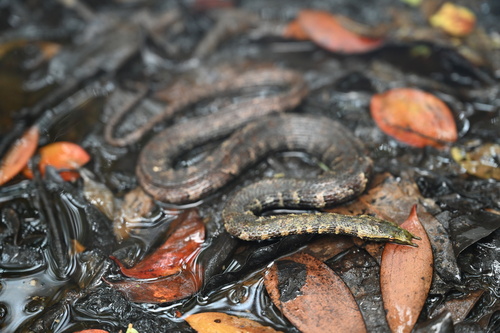
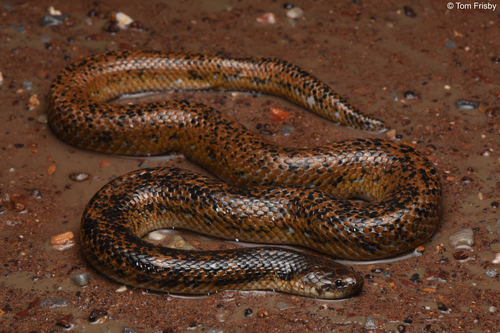
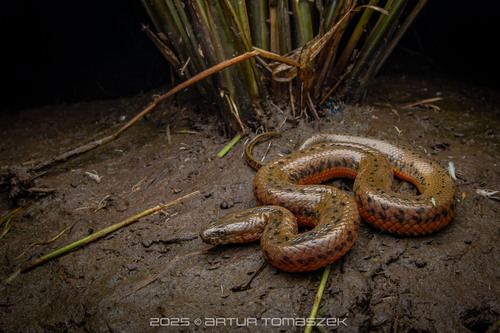
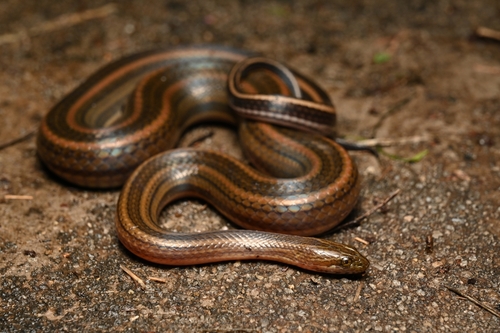
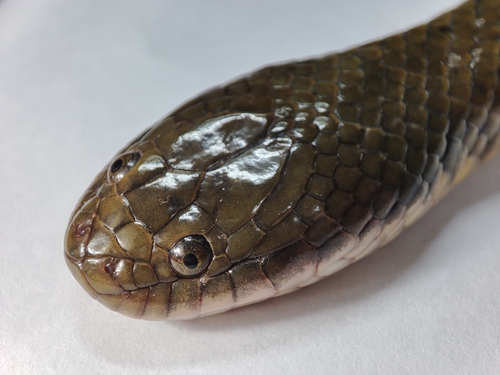
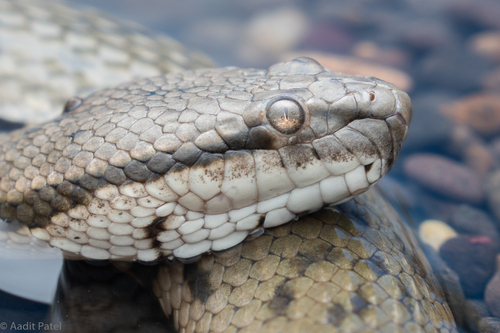
This species, Homalopsis buccata, can be identified by the following morphological characteristics: upper labials 1 through 4 contact a single loreal scale; it has two prefrontal scales; dorsal scale rows number 33–40 at mid-body, and are usually reduced to fewer than 30 on the posterior part of the body; it has one postocular scale plus a postsubocular scale; it has 12 upper labials, with a range of 11–14 across individuals; ventral scale counts are fewer than 166. Homalopsis buccata has a banded body pattern and typically grows to 1 meter (3 feet) in length. Its overall body build is somewhat similar to that of an anaconda, but unlike anacondas that constrict prey, this species uses mild venom delivered through grooved rear fangs to subdue its prey. The distribution of H. buccata extends from northern Sumatra to Salanga Island, Indonesia, and also includes Borneo; the species is found on the Malaysian peninsula and in extreme southern Thailand, in the area around Pattani. Homalopsis buccata is ovoviviparous, meaning it does not lay eggs and instead gives birth to live young. Females produce between 2 and 20 live young per breeding event, with an average of 9.26 young per breeding. Research confirms that this species breeds throughout the year, with a peak breeding activity between October and March, though no fully distinct exclusive breeding season has been identified.