About Holothuria scabra Jaeger, 1833
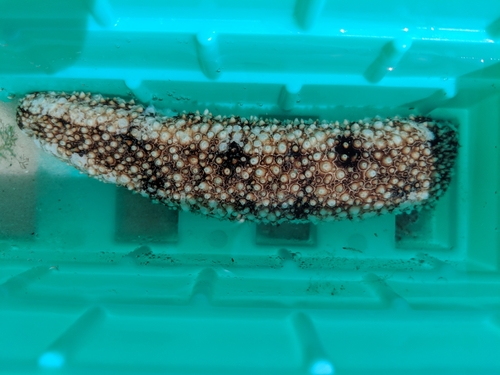
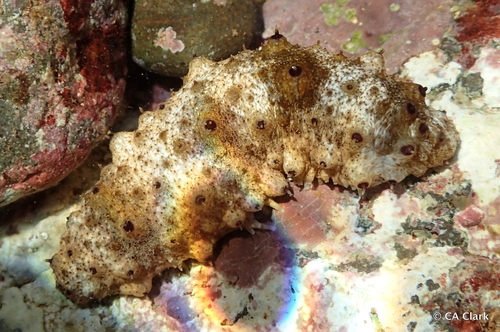
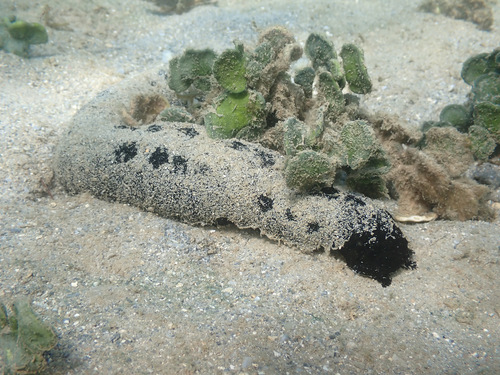
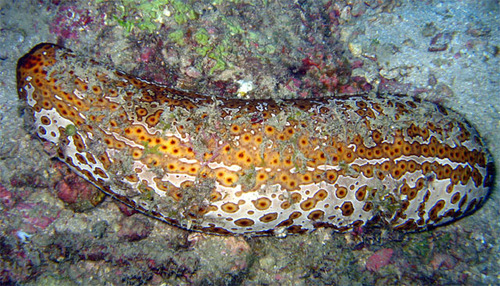
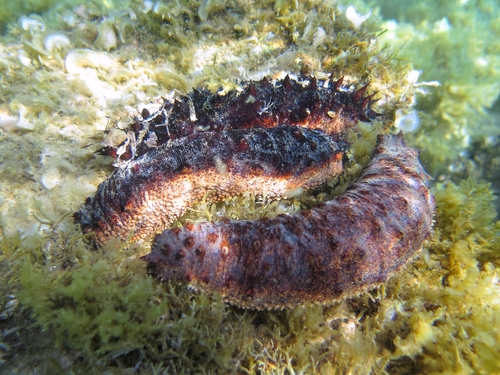
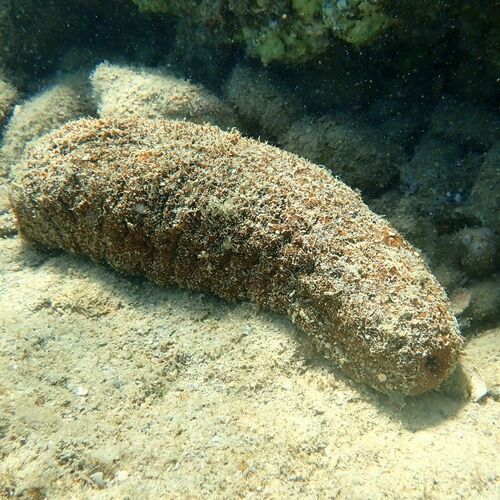
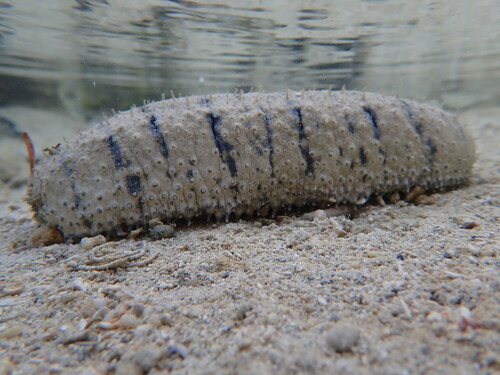
Holothuria scabra, commonly called sandfish, shares the basic body anatomy of most other sea cucumber species. Individuals have relatively stubby, elongated cylindrical bodies. The dorsal side ranges in color from grey-brown to black, marked with dark wrinkles and small black papillae that run the full length of the body. This species is countershaded, with a lighter, relatively flat ventral side. The mouth sits on the ventral surface of what is considered the body's front end; like other sea cucumbers, sandfish have feeding tentacles that protrude from the mouth, and sandfish typically have around 20 short tentacles. The anus is positioned on the dorsal side at the opposite end of the body from the mouth. On average, adult sandfish grow to 22 cm long, and the largest recorded individuals reach up to 40 cm. They reach sexual maturity at around 16 cm in length or 200 grams in weight, and some individuals can gain as much as 300 grams in a single year. The maximum lifespan of undisturbed wild sandfish is not known, but they can live for at least 10 years. Their gonads open to the outside through a single genital orifice on the dorsal anterior end of the body. The digestive system is composed of the mouth, esophagus, stomach, intestine, cloaca, and anus. Sandfish extend respiratory trees from their cloaca to breathe. They have a thick body wall that makes up 56% of their total body weight. This body wall contains small calcareous plates called spicules, which are used to identify sea cucumber species. Sandfish are distinguished by spicules shaped like tables and knobbed buttons. Like other sea cucumbers, sandfish can eviscerate (expel) their internal organs when stressed, and can fully regenerate these organs; regeneration takes approximately 2 months in this species. This species occurs in the Indo-Pacific region, ranging from east Africa to the eastern Pacific. Populations have also been recorded in the Persian Gulf, Iran. As a tropical species, it is typically restricted to latitudes between 30° N and 30° S. Sandfish live in shallow tropical waters less than 20 meters deep. They prefer seagrass meadows and muddy substrates with high nutrient levels, aligned with their dietary preferences. They can tolerate low salinity levels down to 20 parts per thousand, which allows them to live in brackish water. Like most sea cucumbers, H. scabra acts as a bioturbator and plays a key role in maintaining the health of its habitat: it reworks sediment and evenly distributes organic matter to support ecosystem function. Its diet consists of detritus and other microorganisms. Sandfish go through six distinct growth stages before reaching sexual maturity. The life cycle begins when adult individuals spawn. One day after fertilization, eggs develop into the first planktonic stage: the gastrula. After two days, they develop into auricularia, the feeding planktonic stage. Over the next 14 days, sandfish larvae progress through the non-feeding doliolaria stage and the final planktonic pentactula stage, before developing into juveniles that settle into seagrass meadows to mature. Humans have eaten sandfish for over 1000 years. While around 20 other sea cucumber species are also consumed, sandfish is the most commonly used species for this purpose. In the 1990s, dried sandfish sold as beche-de-mer for up to US$100 per kilogram. In Indonesia, harvesting wild sandfish is called trepanging. Overfishing has caused sandfish fisheries to decline in many regions, so ranching, aquaculture, and hatchery rearing are currently being attempted to support populations and harvest.