About Holothuria poli Delle Chiaje, 1824
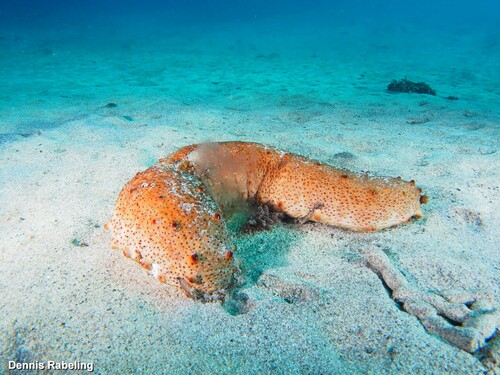
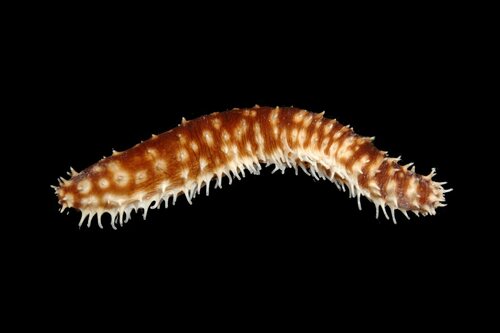
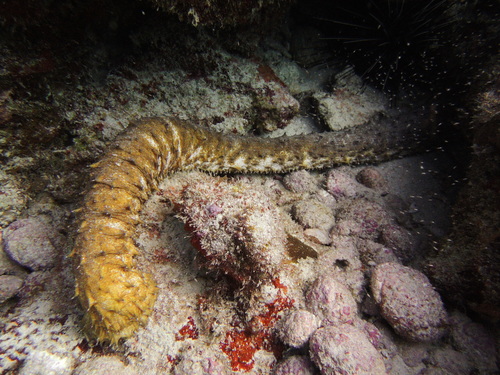
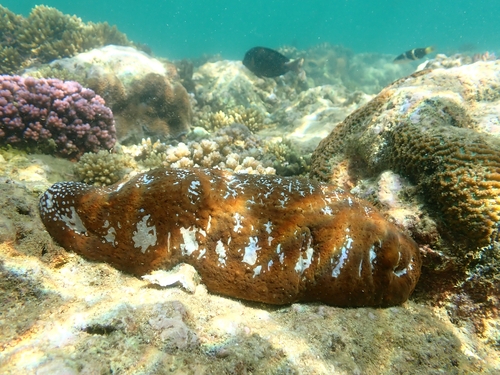
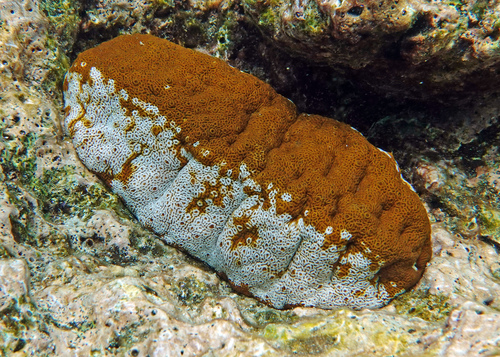
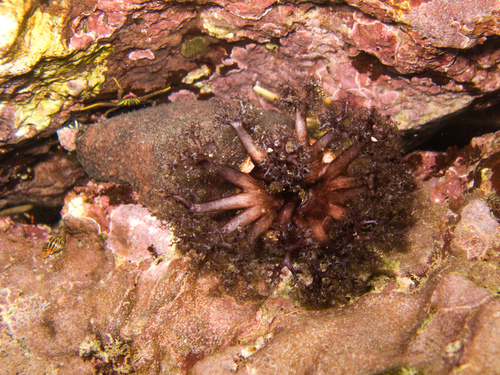
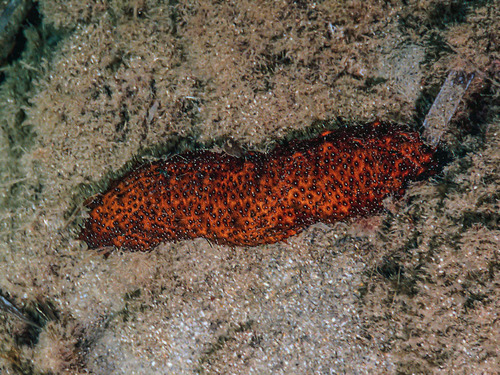
Holothuria poli Delle Chiaje, 1824 has a cylindrical body shape, reaching an approximate length of 25 cm (10 in) and width of 5 cm (2 in). A crown of retractable tentacles surrounds the mouth at its anterior end, and a cloacal opening is located at its posterior end. Its thick, leathery skin holds embedded calcareous sclerites, and is patterned with blackish spots on a mottled brown and grey background. The ventral surface is slightly paler than the dorsal surface, which bears numerous low tubercles with white tips. Longitudinal rows of tube feet secrete mucus that sand and detritus stick to, often hiding the animal’s actual appearance. This species is frequently mistaken for Holothuria tubulosa, which shares a similar distribution range. Holothuria poli occurs in the East Atlantic Ocean, ranging from the Canary Islands to the Bay of Biscay, as well as in the Mediterranean Sea and the Red Sea. Its presence in the Red Sea is thought to stem from its larvae traveling through the Suez Canal, an event called anti-Lessepsian migration. This sea cucumber lives on the seabed, most commonly at depths up to around 20 m (70 ft), but it has been recorded at much greater depths between 80 m and 250 m (260 to 820 ft) on muddy substrate off the coast of Tunisia. It can be found on sand or rock, and prefers seagrass meadows and areas with green seaweed of the genus Caulerpa. As a limnivore, Holothuria poli uses the tentacles around its mouth to collect sediment and move this detritus into its mouth. The material is sorted inside the gut: organic particles are digested, while sand and other indigestible material are mixed with mucus, formed into balls, and expelled in a connected string through the anus. Based on calculations, sea cucumbers of this species can process nearly 20 kg (44 lb) of sediment per square metre of seabed sand each year. This sea cucumber is sometimes parasitized by the worm-like sea snail Entoconcha mirabilis. It has few natural predators, due to its thick leathery skin and the bony sclerites embedded in its integument. The species has separate sexes, and spawning occurs between November and January. Individuals rear their bodies into an L-shaped posture to release gamete clouds into the water column, and there appears to be a synchronization mechanism that coordinates this gamete release. The larvae are planktonic, passing through multiple developmental stages before settling on the seabed and undergoing metamorphosis into juvenile sea cucumbers.