About Holothuria pervicax Selenka, 1867
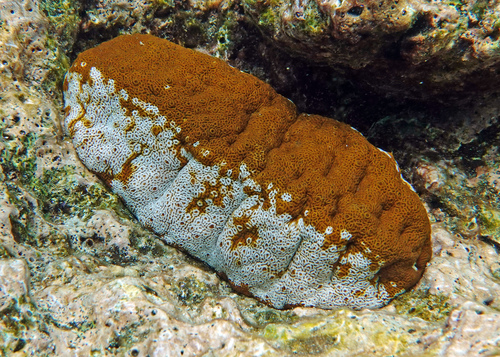
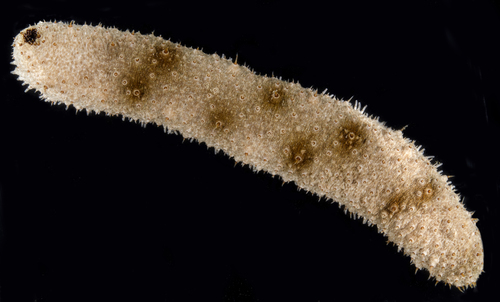
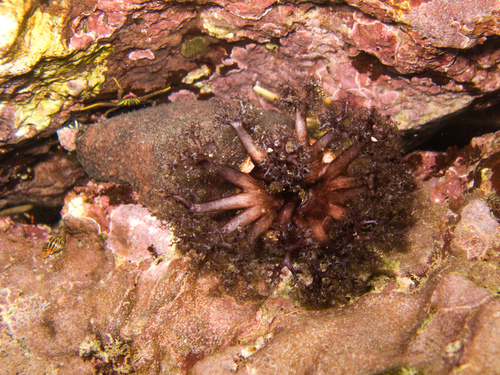
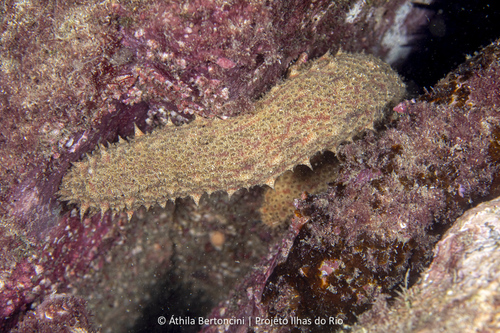
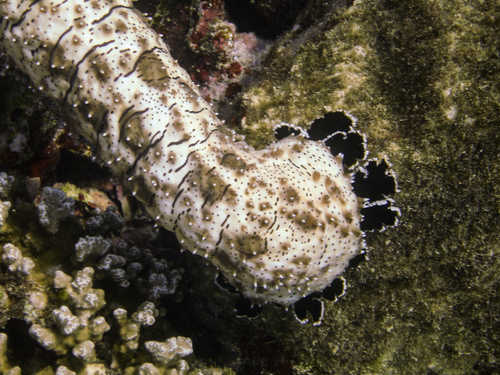
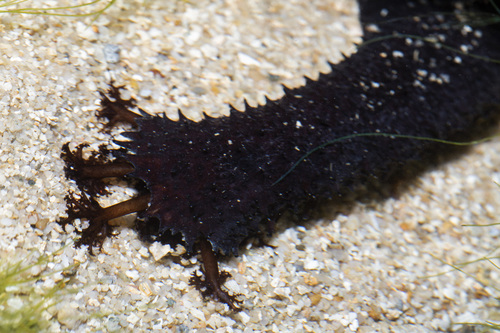
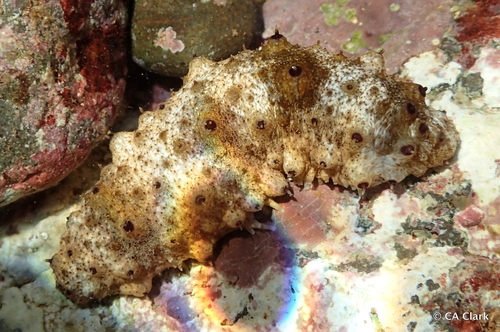
Holothuria pervicax (Selenka, 1867), commonly called the stubborn sea cucumber, is a species of sea cucumber. This species has a gray or brown body with red-brown papillae and white tube feet that it uses for locomotion. It has an elongated body with oral-aboral orientation, and can reach a maximum length of 30 centimeters. Its body is somewhat bumpy, covered by a soft epidermis. Its mouth is surrounded by thin branched tentacles, and poorly formed spicules are distributed across the body. It is difficult to distinguish Holothuria pervicax from its sister species Holothuria fusconierea; the main differences between the two are spicule size and slight variations in coloration. This species has very high care requirements and needs a specific lifestyle to survive. Aquarists have consistently struggled to maintain this species in captivity, and have not yet kept an individual alive long-term, which is how it earned the common name "stubborn sea cucumber". Holothuria pervicax is commonly found across the Indo-Pacific region, including the Maldives, Australia, Cebu (Philippines), Cook Islands, Comoros, French Polynesia, Guam, Hawaii, Indonesia, Johnston Atoll, Kenya, Marshall Islands, New Caledonia, Papua New Guinea, Reunion, Somalia, Sulu Sea, Tanzania, Cocos (Keeling) Islands, Seychelles, the Western Indian Ocean, and the Western Pacific Ocean. It prefers to live under rocks in reefs in warm water with temperatures between 24°C and 28.7°C. This species has separate sexes, with each individual carrying a single gonad. Spawning and fertilization both occur externally. Its planktonic auricularia larvae change form as they mature, developing into barrel-shaped larvae before finally becoming juvenile sea cucumbers. Holothuria pervicax has multiple defense mechanisms to avoid predation. When disturbed, it can expel its digestive tract as well as large quantities of Cuvierian tubules. This species produces a toxin called holothurin, which can kill fish, small worms, and mollusks. Toxin release can occur through the anus or the front of the body, which causes rupture of the tentacles, pharynx, and part of the intestine; these damaged tissues can be regenerated over time. Expulsion of Cuvierian tubules through the anus is used to entangle predators, but the tubule is destroyed during the process and takes weeks to regenerate. Toxin release can occur after the sea cucumber dies, if it becomes damaged, if an animal attacks it, or if there are changes in water temperature or salinity. The toxin can kill a fish in approximately 5 minutes, which explains why this species is so difficult to keep in captivity. Research has found that this sea cucumber secretes a biologically active glycosphingolipid called HPG-7, which is a major component of cell membranes. Glycosphingolipids function as antigens, mediators of cell adhesion, and assist in signal transduction. Sea cucumbers as a group have high commercial value because they produce nutrients including vitamins A, B1, B2, and B3, and minerals including calcium, magnesium, iron and zinc. Many of these nutrients are used in pharmaceutical products with properties such as anti-angiogenic, anticancer, anticoagulant, anti-hypertension, anti-inflammatory, antimicrobial, antioxidant, antithrombotic, and antitumor effects, as well as wound healing support.