About Holothuria mexicana Ludwig, 1875
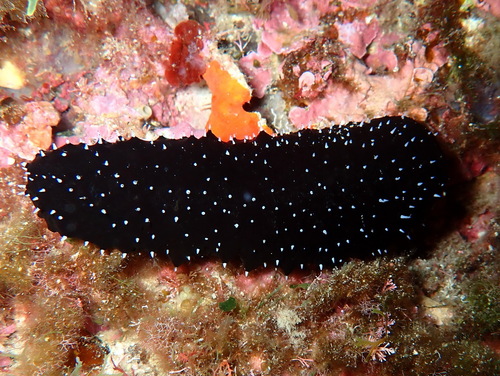
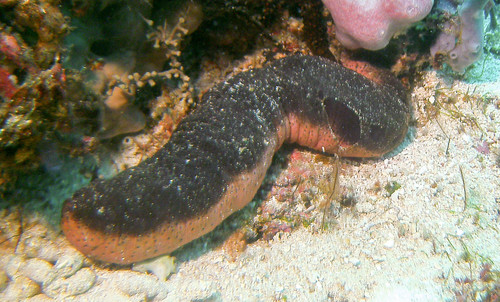
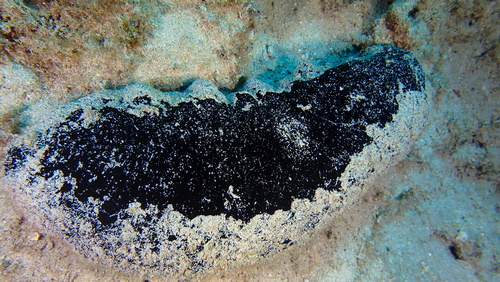
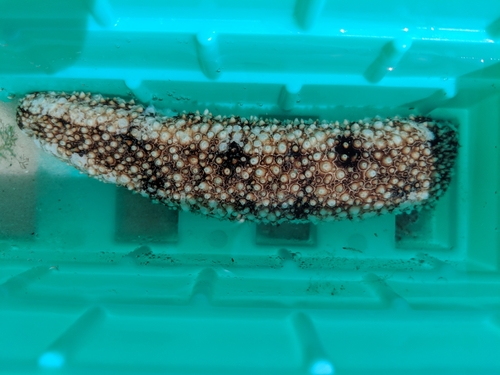
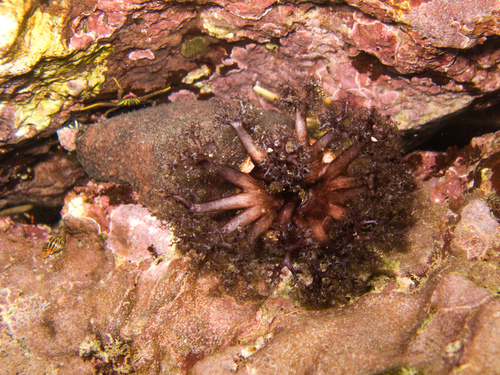
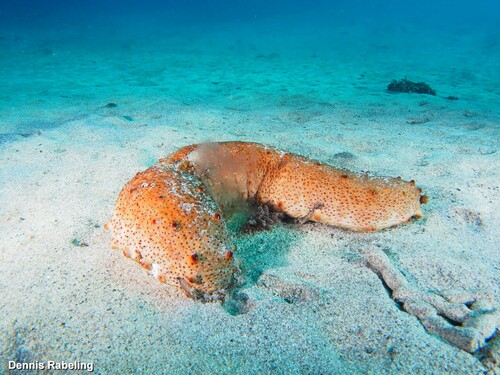
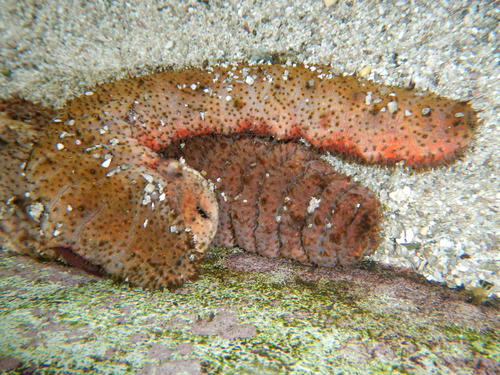
This species of sea cucumber, scientifically named Holothuria mexicana Ludwig, 1875, has transverse wrinkles across its body and can reach a total length of 50 cm (20 in). Its upper surface is dull brown or grey, with occasional warts. Its lower surface is reddish, orange, or pale, and is uniformly covered in tube feet. Wild populations of this species are unimodal and have a 1:1 male to female sex ratio. This species occurs throughout the Caribbean region, and its range extends south to Brazil. It is a shallow, demersal water species, most commonly found at depths between 2 m (7 ft) and 10 m (33 ft), and can occur as deep as 20 m (66 ft). It lives on sandy bottoms in calm water, including in seagrass beds, offshore reefs, and mangrove habitats. The minimum total length for sexual maturity in Holothuria mexicana is between 13 cm (5 in) and 20 cm (8 in), with a gutted weight of 150 g (5 oz), though smaller sexually mature individuals have been recorded. This species spawns year-round, but peak spawning periods differ by geographic location, a difference that may be linked to water temperature. Peak spawning occurs from May to July in Panama, August to September in Florida, and September to October in Curaçao. During spawning, females forcefully expel all of their eggs into the water column in a single burst through their gonopore, the opening that releases gametes. Both males and females sometimes wave their tentacles during spawning; this movement may help mix sperm and eggs to aid fertilization. After fertilization, eggs develop into non-feeding auricular larvae in approximately 64 hours. Sea cucumbers, including this species, are harvested via snorkeling or surface-supplied diving for human consumption. While some sea cucumber catch is used for local consumption, most is exported to China, where sea cucumber is considered an important health food. The ease of catching sea cucumbers, their high commercial value, and their slow recruitment rates have caused global population declines, and have led to fisheries targeting less commercially valuable species. There are targeted fisheries for Holothuria mexicana in Panama, Nicaragua, and Venezuela. In Panama, this species has low economic value because of its tough, rigid texture, but it is still fished because populations of other more valuable commercial sea cucumber species have declined. In 1997, 25 fishers participated in a 30-day fishing period that caught over 750,000 sea cucumbers belonging to three species: Holothuria mexicana, Isostichopus badionotus, and Astichopus multifidus. Sea cucumber fishing is now banned in Panama, but illegal fishing activity has still been reported. If fishing had continued at its previous rate, the small existing populations of Holothuria mexicana in this area were at high risk of fishery collapse. In Venezuela, the commercial sea cucumber fishery began in 1991-1992, but was closed by 1995 due to inadequate fisheries regulation. Despite the closure, illegal fishing continued; in 1996, 500 kg (1,100 lb) of Holothuria mexicana worth US$150,000 was confiscated in Archipelago Los Roques National Park. In 2005, China reported that it imported 0.5 tonnes of sea cucumber from Venezuela.