About Hohenbuehelia petaloides (Bull.) Schulzer
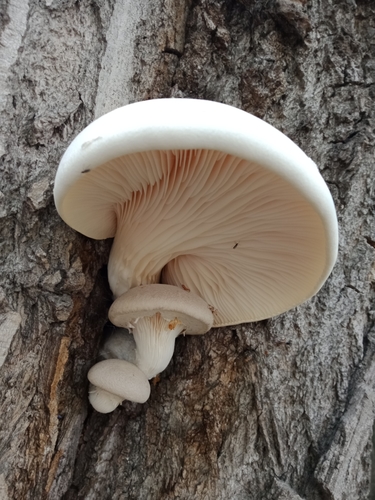
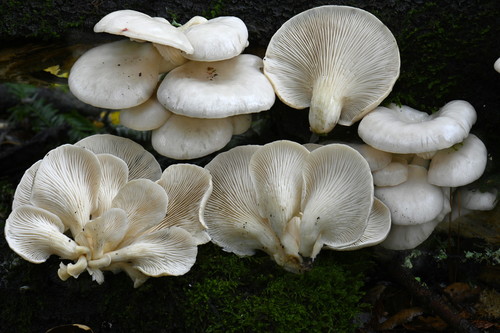
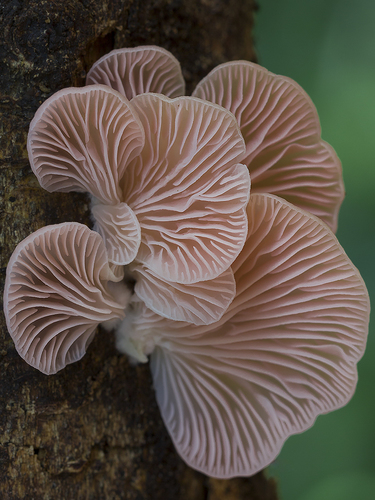
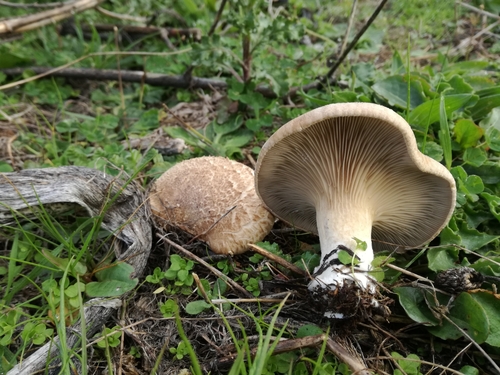
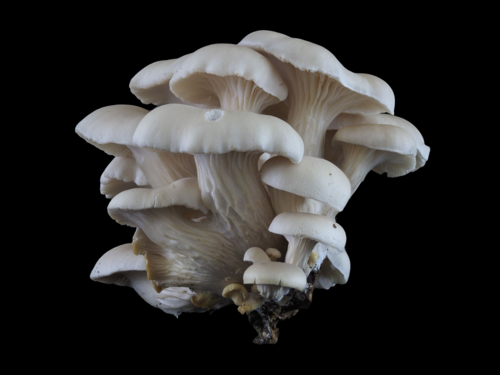
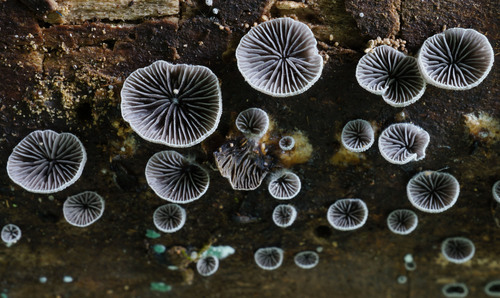
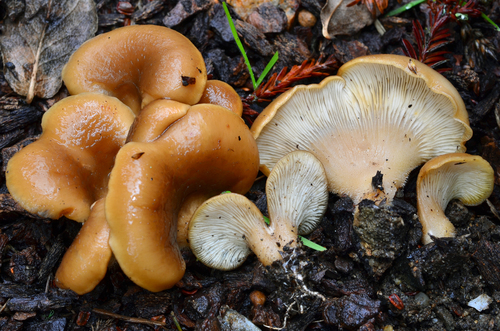
The scientific name of this mushroom species is Hohenbuehelia petaloides (Bull.) Schulzer. Its cap grows from fan-shaped to funnel-shaped, reaching up to 10 centimetres (4 inches) wide. The cap surface can be smooth or microscopically hairy, and its color ranges from pale or whitish, most often when young, to brown. The gills are decurrent, and are typically crowded and narrow. The stem is either completely absent, or short and attached laterally to the cap. The mushroom has a tough or rubbery texture, caused by a gelatinous layer located under the cuticle. It has a mild to mealy taste and odor. This species is saprobic, feeding on decaying wood. It can grow either alone or in small clustered groups around woody debris, or occasionally on stumps. It has a cosmopolitan distribution, and confirmed recorded regions include North America, Venezuela, Europe, Japan, and New Zealand. Like most species in the family Pleurotaceae, Hohenbuehelia petaloides is nematophagous. This species is classified as edible, though its tough texture is often not considered appealing.