About Hogna carolinensis (Walckenaer, 1805)
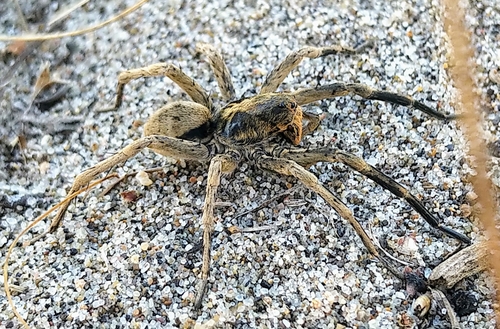
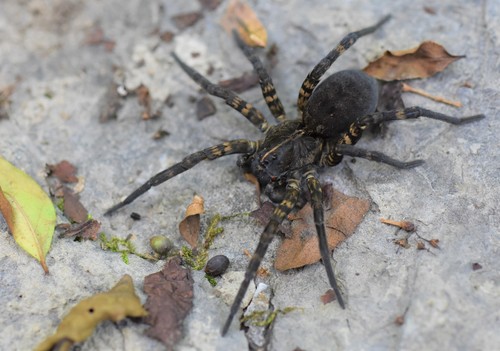
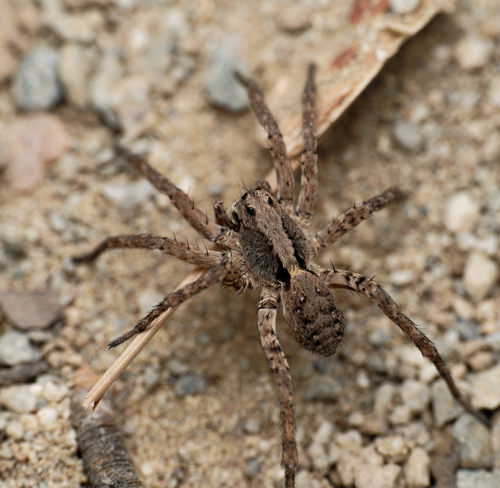
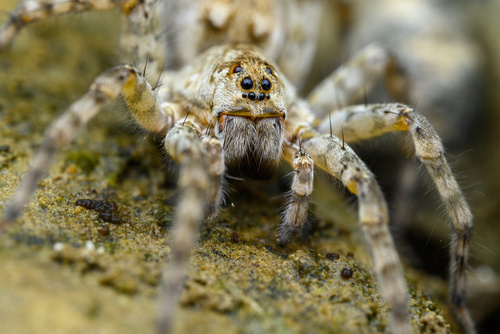
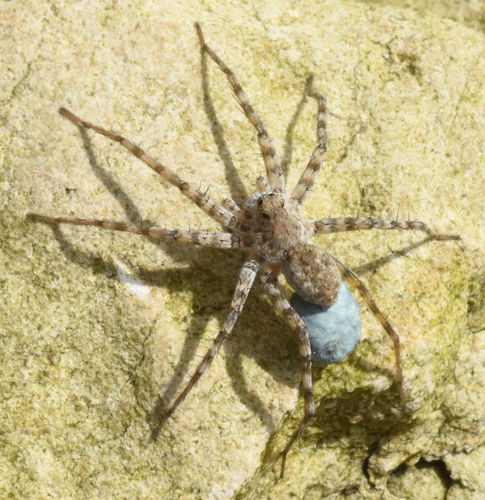
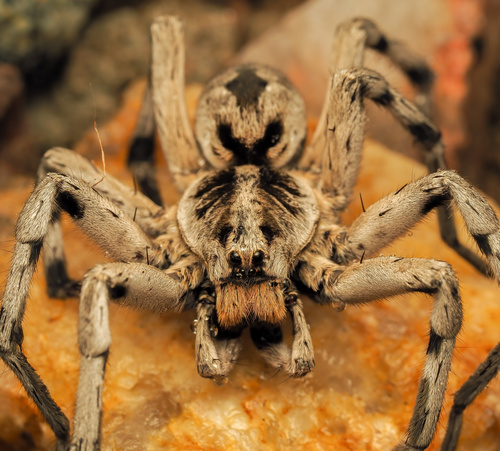
Hogna carolinensis, commonly called the Carolina wolf spider, is the largest wolf spider in North America. Adult females reach 22–35 mm (0.87–1.4 in) in body length, while adult males reach 18–20 mm (0.71–0.79 in). Their body is overall light brown, with darker brown patterns on the upper back. Their underside is dark black, and males often have orange coloration on the sides of their abdomen. Several characteristics help identify this species: male orange side-abdomen coloration is a clear marker for males. During breeding season, carrying an attached egg sac is an identifying feature for females. Additionally, their eyes reflect light, making them easy to spot and identify at night. Carolina wolf spiders are found across most of North America. Confirmed recorded locations include, but are not limited to, South Carolina, Kansas, all Great Lake States, and the American Southwest. Although this species occurs in many different ecosystems, most existing research has focused on desert-dwelling populations. Because they range widely across the North American continent, they can inhabit many different geographic and topographic types. Research indicates these spiders prefer flatter, more open areas; in desert regions, sharp topographical changes were found to cut off the spiders' home range (the area they regularly travel from their burrow). Carolina wolf spiders mate in late summer. Females carry their egg sac attached to their abdomen through an approximately two-week incubation period. There are typically two main egg-carrying seasons each year: the first in late July and the second in late August. While incubating eggs, females often engage in a behavior called "sunning" their egg sacs. This behavior involves the spider sitting near the top of its burrow with its head lowered, and its abdomen and attached egg sac pointed upward. Since Carolina wolf spiders are nocturnal, this sunning behavior is observed at night. Researchers have not confirmed the purpose of this behavior, but they hypothesize the warmth speeds egg hatching. Each egg sac produces around 200 spiderlings when eggs hatch. Spiderlings hatch near the end of summer. Except in unusual cases such as flooding, spiderlings stay with their mother for the first six days of life. During this period, they learn key cues and behaviors from their mother, and survive on leftover yolk from their eggs. After six days, the spiderlings disperse to find their own burrows and home ranges. As they mature, immature spiderlings go through multiple growing instars before reaching breeding age at around three years old. They breed for the first time during their third summer. Males die shortly after this first breeding, in the same summer, but females can survive and breed for multiple seasons. As a result, the percentage of adult males in the population peaks in June, and the percentage of adult females peaks in July. Yearly, Carolina wolf spiders are active from March to October, and hibernate from November through February.