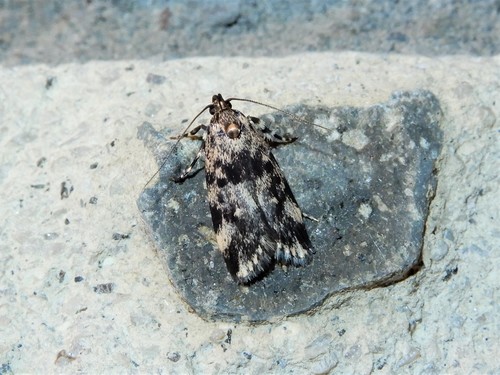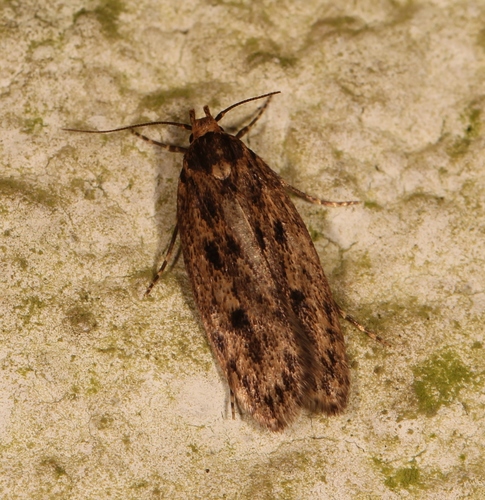
About Hofmannophila pseudospretella Stainton, 1849
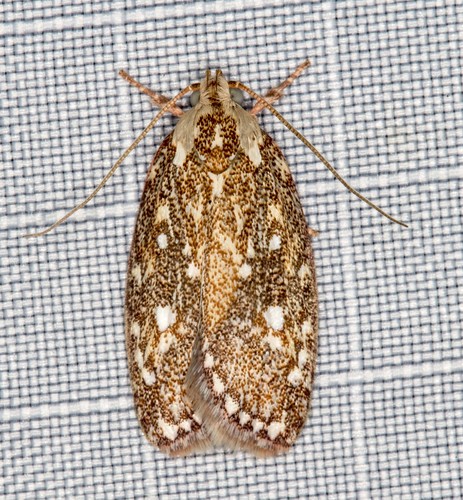
Hofmannophila is a genus of moths in the concealer moth family Oecophoridae. This genus is monotypic, meaning it contains only one species: Hofmannophila pseudospretella, commonly called the brown house moth. This species appears to be closely related to species in the genus Borkhausenia. The species was introduced from Asia to Europe and other continents in the 1840s. It is now found almost worldwide, and is especially common in Britain. It is a synanthropic species that primarily lives in private houses and commercial buildings. Smaller numbers of individuals also occur outside of human settlements; their larvae can be found in birds’ nests, where they feed on droppings and detritus. A female brown house moth usually lays up to 260 eggs over its lifetime, either singly or in batches. Large females have been recorded laying between 400 and 500 eggs. Under favorable conditions, eggs hatch 10 to 20 days after being laid. Larvae are active from June through April. During this active period, they spin silken tubes around the food they eat, leaving behind deposits of frass and silk. Larvae need relatively high humidity to successfully develop into mature moths. Higher ambient temperatures shorten the duration of their pupal stage. While larvae can enter diapause when conditions are unfavorable, they are killed by severe frost. Before pupation, larvae leave the feeding site where they hatched, and may travel for 2 to 3 days to find a suitable new location to pupate. Adult brown house moths are active from May through September, though they can be found year-round in heated buildings. They are strongly attracted to light, and are capable of flying year-round. The mite species Cheyletus eruditus is a significant predator of the brown house moth.