About Hippolais languida (Hemprich & Ehrenberg, 1833)
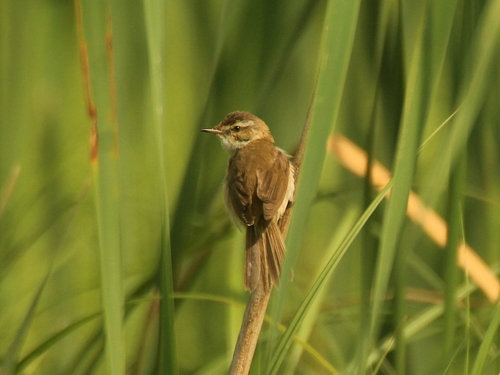
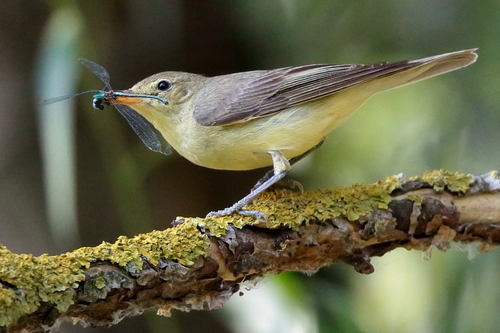
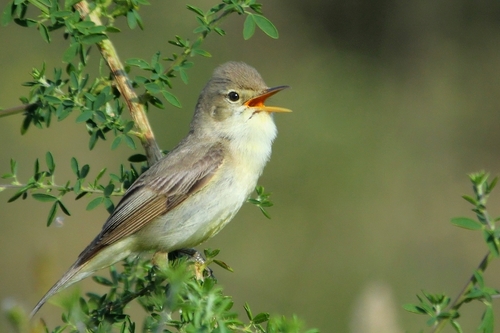
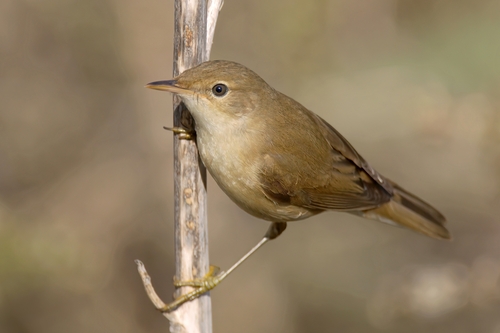
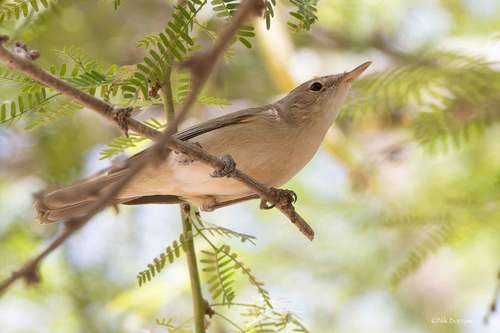
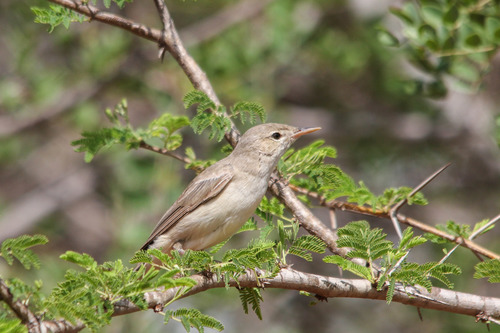
Upcher's warbler, with the scientific name Hippolais languida, is an Old World warbler that belongs to the tree warbler genus Hippolais. It breeds across a range stretching from Turkey south and east to Pakistan. This is a migratory species, and it winters in eastern Africa, from Eritrea and Somalia southward to Tanzania. This small passerine bird occurs in semi-desert habitats, and is most often found in bushy scrub and tamarisk thickets. It lays four or five eggs in a nest built in bushes and low trees. This is a medium-sized warbler, similar in size to the icterine warbler, with a slightly longer bill, shorter wings, and a longer tail. Its frequent tail movement is similar to that seen in Sylvia warblers or chats. Its rather grey plumage resembles that of the olivaceous warbler, but its distinctive tail movements separate it from that species. It feeds on invertebrates. Its song is similar to the songs of other Hippolais warblers, but is distinct, unmistakable, and entirely different from the song of the olivaceous warbler. Ehrenberg's original description of this bird was 'rather vague', and it was redescribed by Henry Baker Tristram in 1864. Tristram named it Hippolais upcheri in honor of his friend Henry Morris Upcher, which is the origin of this bird's common name.