About Hippoglossus hippoglossus (Linnaeus, 1758)
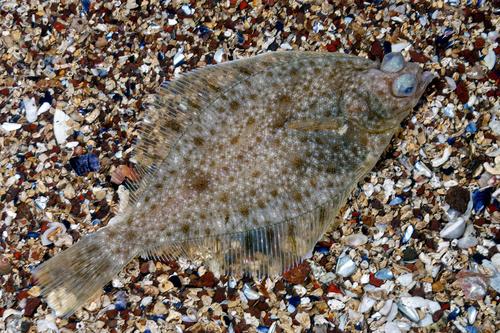
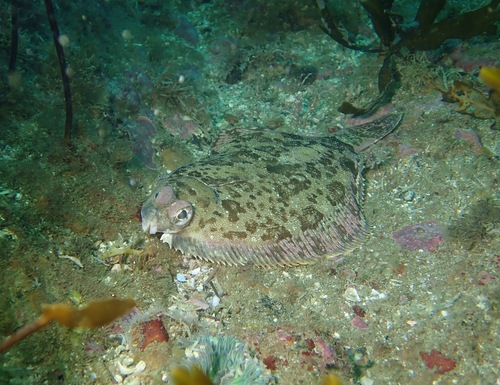
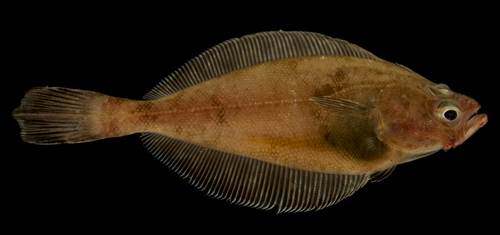
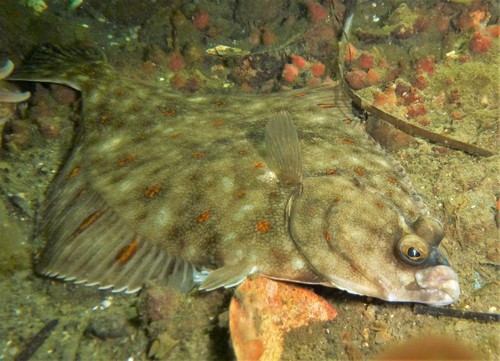
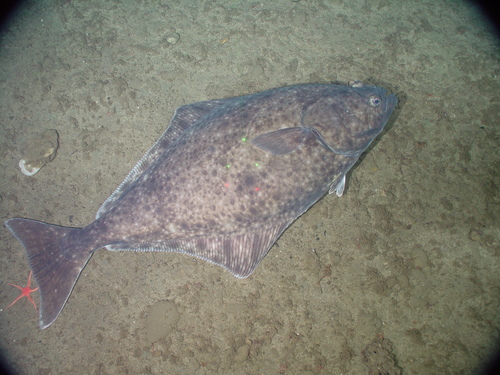
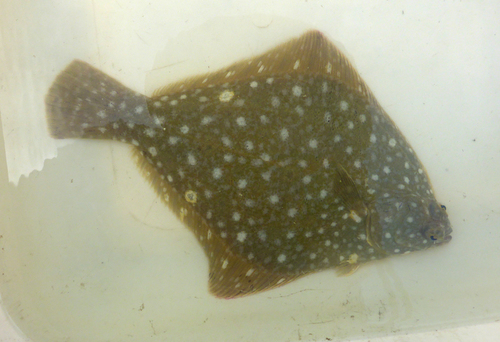
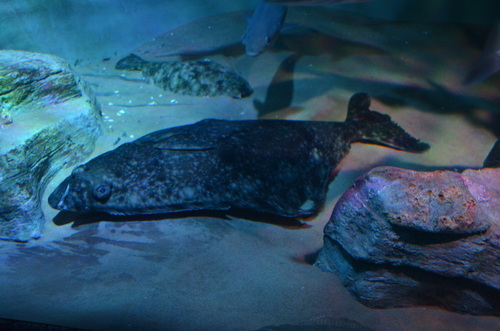
The Atlantic halibut, Hippoglossus hippoglossus, is a right-eyed flounder. Its body is flattened sideways, and it habitually rests on the left side of its body; both eyes migrate to the right side of its head during development. Newly hatched larvae swim in an upright position like most other fish, with one eye on each side of the head. Once larvae grow to one inch in length, the left eye moves over the snout to the right side of the head. At the same time, the coloring on the left side of the body fades to white, while the upper side of the fish is uniformly dark chocolate, olive, or slate, and can be almost black. The edge of the caudal fin is concave. Young Atlantic halibut are paler and have more mottled coloration. Adult males average 10 to 15 kilograms (25–30 lb), can grow up to more than 25 kg (60 lb), and rarely reach 45 kg (100 lb). Females can grow as large as 250 kg (600 lb).
This marine species typically inhabits the ocean floor at depths between 50 and 2,000 m (200 and 6,600 ft), though it occasionally moves closer to the surface. Larvae are pelagic and drift relatively helplessly, and migrate to the ocean bottom once they reach around 4 cm in length. Young fish between two and four years old live close to shore, and move into deeper water as they grow older.
Atlantic halibut are found in both the eastern and western parts of the North Atlantic. In the western North Atlantic, they occur from southwestern Greenland and Labrador, Canada to Virginia in the United States. In the eastern North Atlantic, they are found around Iceland, the United Kingdom, Ireland, and across northern Europe to Russia. A distribution map for Atlantic halibut is available on the Official Website of the Massachusetts Division of Marine Fisheries. This demersal fish occurs across latitudes from 79°N to 36°N and longitudes from 77°W to 55°E.