About Hippodamia variegata (Goeze, 1777)
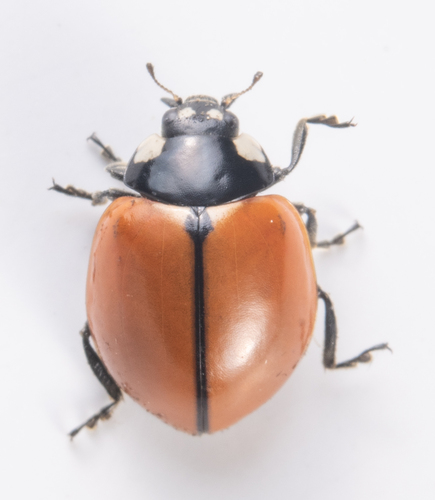
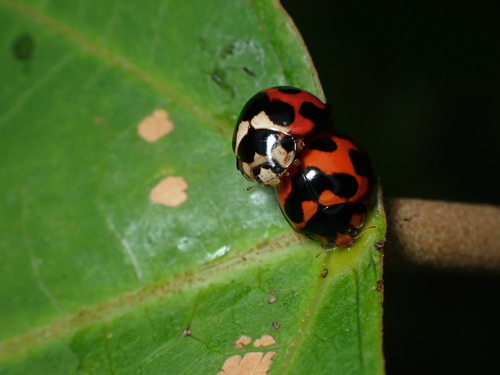
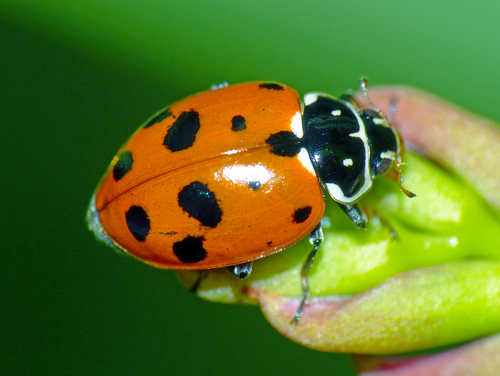
Adults of Hippodamia variegata reach a length of 3–5.5 millimetres (0.12–0.22 inches). These beetles have a slightly convex, rather elongated body shape. In males, the first segment of the anterior legs is greatly expanded. The head is black, with dark eyes and white spots. The pronotum is black, with a white-yellowish border and a central black mask-shaped marking. The elytra are red or orange, and carry a highly variable number of black spots, ranging from zero to thirteen. A single black spot surrounded by white is located on the scutellum. The legs are blackish brown, with brown ends. The underside of the body is black. This species is native to the Palearctic realm, and has since spread to the Nearctic and Oriental regions. It has been recorded outside its native range in countries including Australia, South Africa, Kenya, India, China, Canada, the United States, and Chile, often arriving through intentional introduction for crop pest control. Hippodamia variegata primarily inhabits fields, meadows, gardens, and shrubs, occurring more frequently in these habitats than in bushes and trees. It prefers dry, rough vegetation.