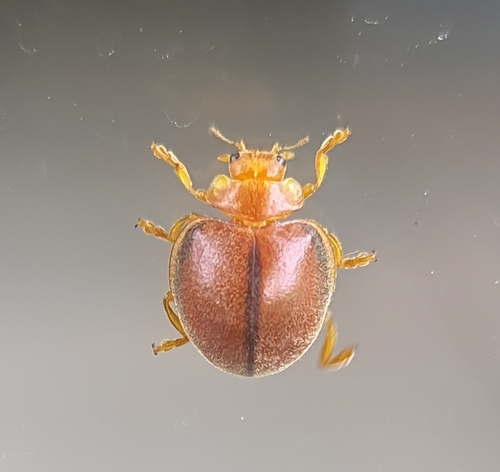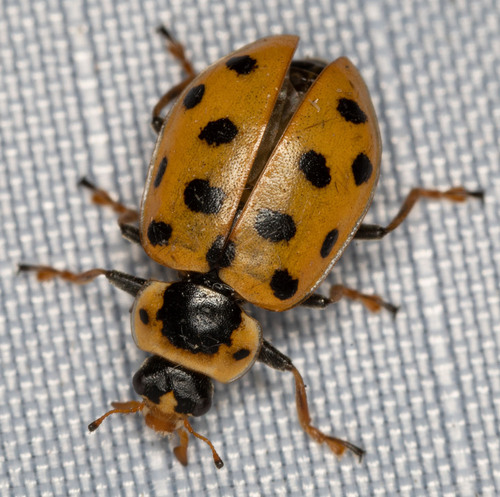
About Hippodamia tredecimpunctata (Linnaeus, 1758)
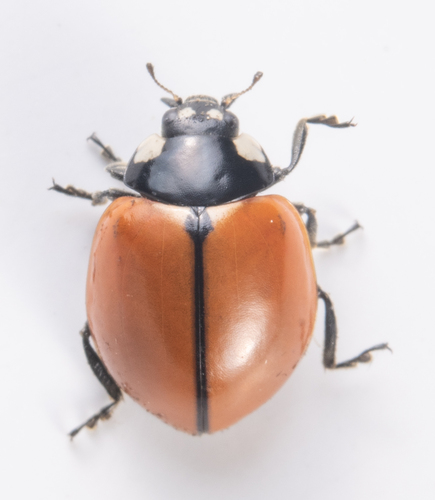
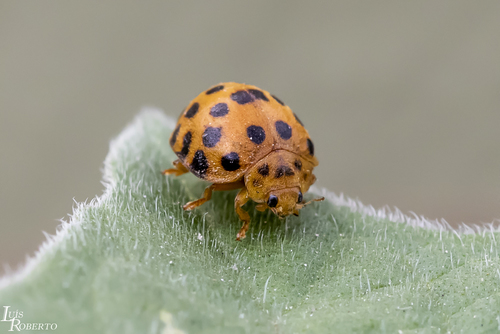
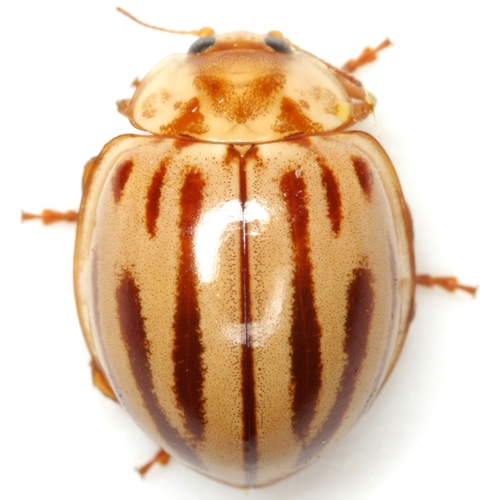
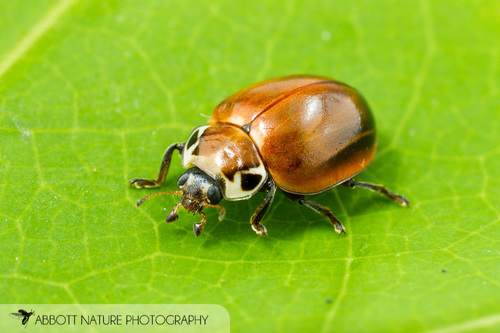
Adults of Hippodamia tredecimpunctata have domed backs, an overall mainly oval shape, are often shiny, and have short legs and antennae. Adults have two wing covers, and are typically colored red to orange, with thirteen dark or black spots across their bodies. Larvae of this species are slightly flattened and covered in small spines. Very small eggs are laid in groups of 10 to 50 on the undersides of leaves. This species is distributed across most of the northern hemisphere, including Europe, North Africa, European Russia, the Caucasus, Siberia, the Russian Far East, Belarus, Ukraine, Moldova, Transcaucasia, Kazakhstan, Middle Asia, Western Asia, Afghanistan, Mongolia, China, the Korean Peninsula, Japan, and North America. In North America, it occurs in Canada and the northern United States. After the introduction of the non-native ladybeetle Coccinella septempunctata, the relative abundance of Hippodamia tredecimpunctata has declined in many regions, including the midwestern United States, Maine, Quebec, and New Brunswick. However, the species is able to coexist with non-native ladybeetles in the Canadian regions of Manitoba and Ontario. Hippodamia tredecimpunctata is a stenotypic species with a restricted habitat range, and it is most strongly associated with wet meadows, lakesides, flood plains, river deltas, marshes, marshy alder thickets, carr, and bodden. It is found growing on plants of the genera Carex, Sparganium, Phragmites, and Salix.