About Hippocampus whitei Bleeker, 1855
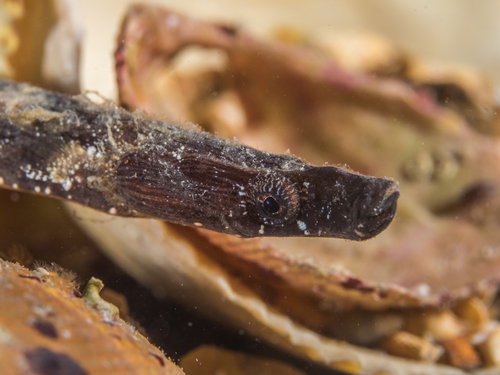
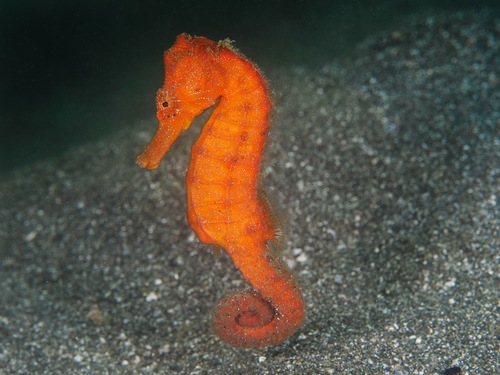
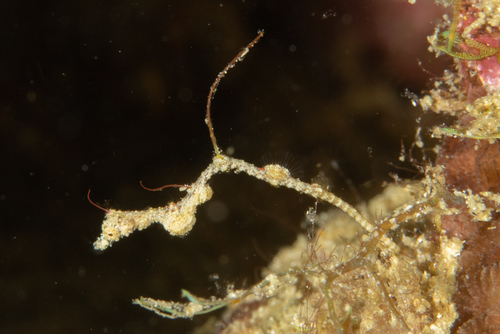
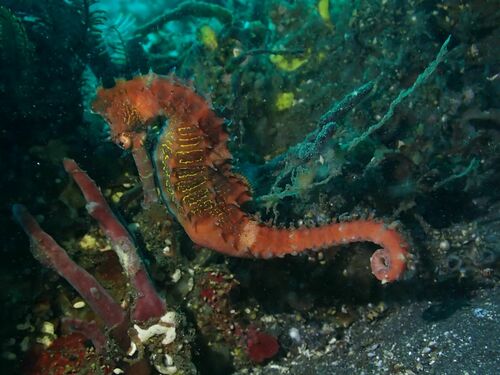
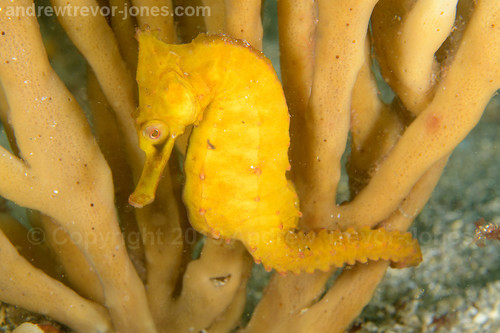
This species, Hippocampus whitei Bleeker, 1855, is a small fish that reaches a maximum total size of 13 centimetres (5.1 inches). It has several consistent distinctive characteristics: a narrow head, a moderate to high coronet, a long snout that makes up around half of the total head length, moderately sized spines positioned above the eyes, and low single or double cheek spines. Spines along the rest of the body vary widely between individuals, ranging from low and rounded to moderately developed and sharp. Most individuals are colored pale to dark brown or black, though some individuals are solid yellow all over. They often carry pale, saddle-shaped markings on the first, fourth, and eighth trunk rings, and also on tail rings that have enlarged spines. The underside of the snout usually has fine bars and dark dusky lines that grow wider closer to the eyes, while the nasal spine and the area immediately around it are pale. Hippocampus whitei lives in shallow, weedy inshore areas, most commonly at depths between 1 and 25 metres (3.3–82.0 ft). Its natural habitats include Zostera seagrass beds, sponges, kelp holdfasts, macroalgae, and corals, but it can also be found underneath jetties and on other man-made structures, such as shark nets. Observations from Port Stephens show that juveniles of this species prefer gorgonian habitats formed by Euplexaura sp., while adult individuals prefer habitats with sponges and soft corals. This species prefers more complex habitats; this preference is likely because its camouflage works better in these environments, making it easier to avoid predators. In addition, the prey that Hippocampus whitei feeds on is far more abundant in complex habitats, which increases available food supplies. The observed increase in this species' use of artificial habitats is likely a result of ongoing loss of its natural habitats. Hippocampus whitei is an ovoviviparous species. Females use an ovipositor to transfer eggs into a male's brood pouch, where the eggs are fertilized and protected until the male gives birth to live young. Males can brood between 100 and 250 embryos at one time. After a three-week gestation period, males give birth to around 150 young. Males brood multiple batches of young in a single breeding season. Newborn Hippocampus whitei are around 8.5 millimetres (0.33 in) long, and are morphologically similar to adult individuals of the species. They grow quickly and reach reproductive maturity early. This species has strong site fidelity and practices seasonal monogamous mating.