About Hippocampus camelopardalis Bianconi, 1854
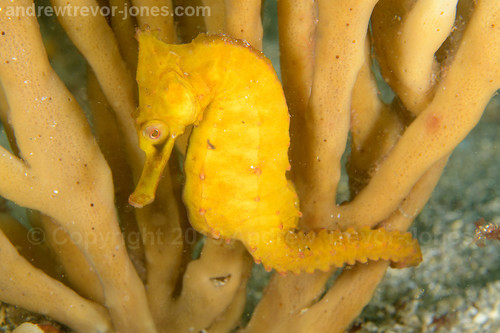
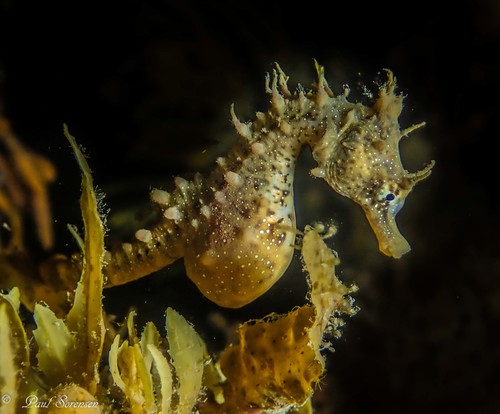
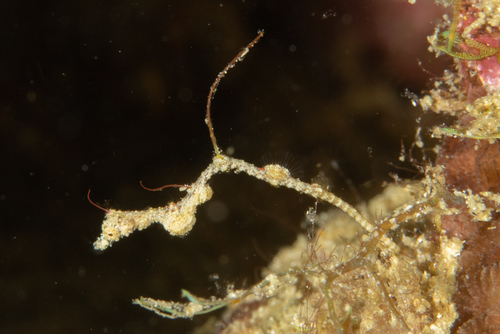
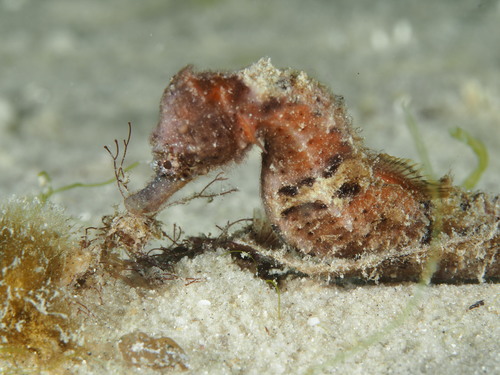
The giraffe seahorse, with the scientific name Hippocampus camelopardalis, is a species of fish in the family Syngnathidae. This seahorse lives in coastal waters along the south and east coasts of Africa, ranging from South Africa to Tanzania, and may range as far north as Kenya. It inhabits estuarine seagrass beds, algae beds, and shallow reefs up to depths of 45 metres (148 ft), and can grow to a maximum length of 10 centimetres (3.9 in). Like other seahorses, it is expected to feed on small crustaceans. This species is ovoviviparous; males carry eggs in a brood pouch before giving birth to live young. Individuals reach sexual maturity when they are around 6.5 centimetres (2.6 in) long. Major threats to the giraffe seahorse include habitat loss, coastal development, pollution, overexploitation via bycatch. Additional threats come from human harvest, where individuals are dried for use in traditional medicine or kept as curios. The giraffe seahorse has dark spots scattered across its body: one spot sits on top of the coronet, or crown, of its head, and additional spots are found on the dorso-lateral surface of its body. Both males and females have a prominent spine located above each eye.