About Hippocampus breviceps Peters, 1869
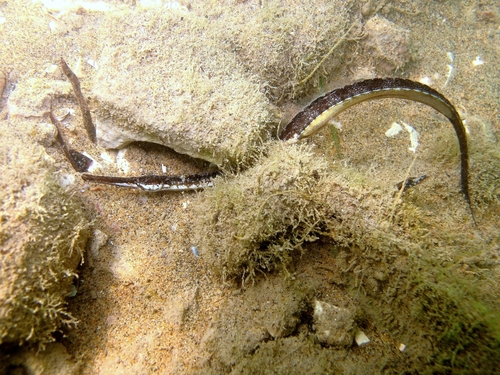
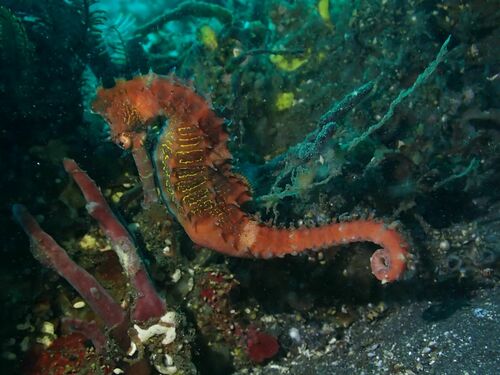
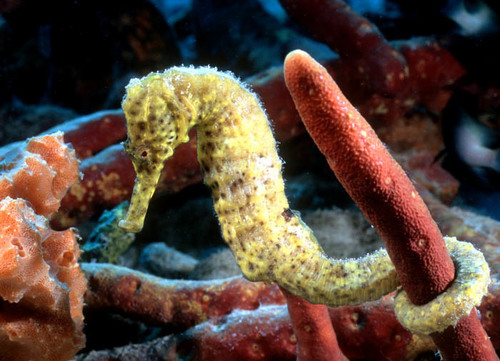
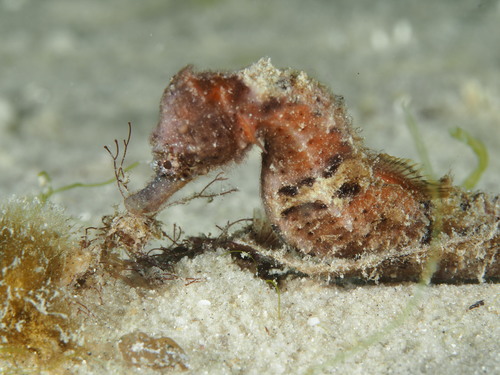
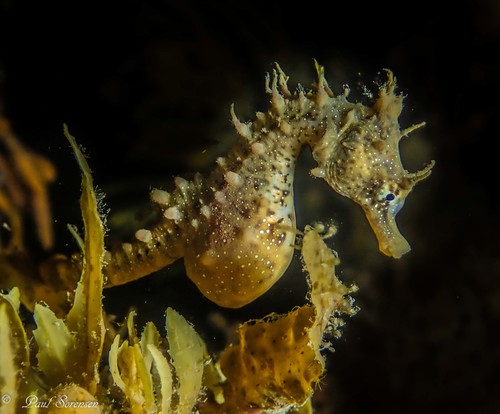
Hippocampus breviceps Peters, 1869 is typically around 10 centimetres (3.9 inches) long. It has a small, slender body, a short snout, and a raised coronet. Individuals of this species often have fleshy tendrils growing on the head and back. Its colouration usually ranges from drab grey to bright yellow-orange, with small black spots and ringed white ocelli covering the trunk and tail. The ventral side of the tail features pale bars. This seahorse species inhabits sheltered coastal reefs that are associated with macroalgal beds and seagrasses. Individuals have also been recorded on floating macroalgae, rock reefs, jetty habitats, and sponge reefs at depths below 15 metres (49 feet), though it occurs more commonly at depths around 5 metres. In summer, H. breviceps breeds on an approximately monthly cycle, producing 50 to 100 young per brood. Females of the species deposit eggs into the male's brood pouch, where the eggs are fertilized and protected until the male gives birth to live young.