About Hippobosca longipennis Fabricius, 1805
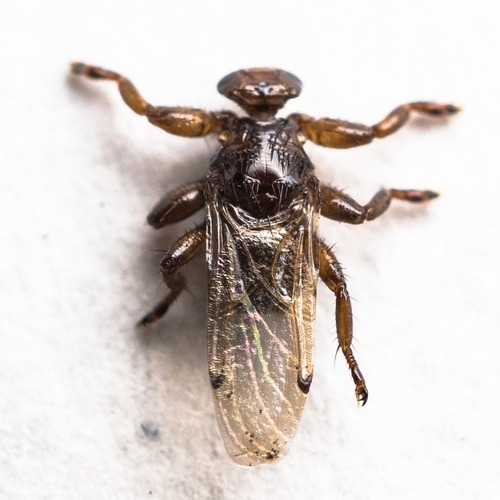
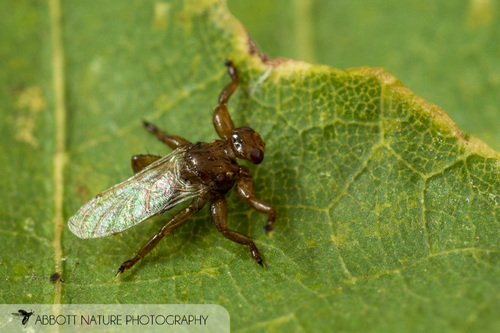
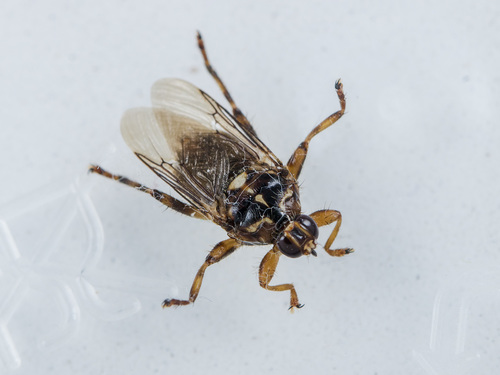
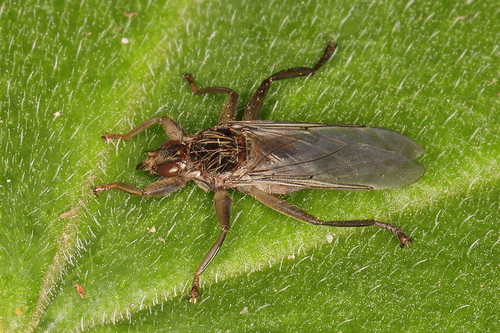
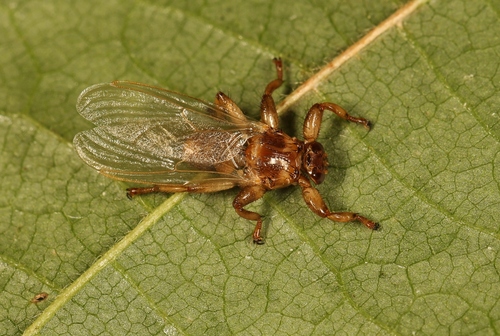
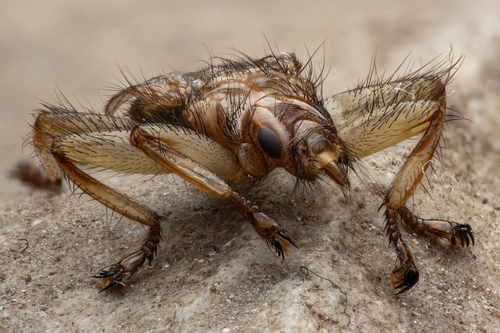
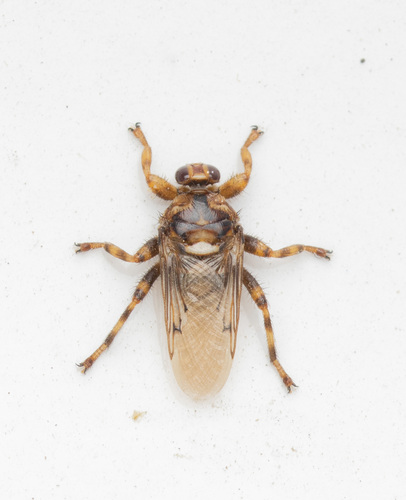
Identification: This fly has a flat head and body, piercing-sucking mouthparts, wing veins located only in the upper half of the wings, and legs with tarsal claws. It is a close relative of sheep keds. Distribution: The species is native to Africa. It occurs naturally in Africa, the Middle East, Asia, and areas of the Palearctic Region south of approximately 45° north latitude. It is occasionally reported from countries on the edges of this natural range, including Ireland, Germany, Poland, Japan, Sri Lanka, and Taiwan. It has been introduced to North America multiple times via transported zoo animals; the most significant introduction event occurred in 1970, when cheetahs were brought from East Africa to the San Diego Zoo. Additional introduction events included bat-eared foxes shipped from Africa to North Carolina, and cheetahs imported to Ireland and Japan. Specimens of the fly have been recovered from ancient Greek dog corpses, and one specimen was found on an ancient Egyptian mummified dog. Life cycle and feeding: Females of this species give birth to larvae one at a time. Larvae develop inside puparia, a structure that lets them survive dramatic environmental changes. Adult flies emerge from puparia between 19 and 142 days after larval deposition, and emerge in the morning to seek host animals to feed on. Adults feed multiple times per day, and commonly feed on domestic dogs on the neck and front armpit regions. After feeding on a host for one week, flies begin to mate while still on the host animal. Larvae develop inside the female's body for 3 to 8 days, after which the female deposits them on soil, in cracks, under plants, or on top of debris. Immediately after depositing a larva, the female returns to feeding on the host to begin developing another larva. Adult females live approximately four to five months, and produce 10 to 15 larvae over their lifetime. This species typically breeds on canines, Viverridae, hyenas, and felines. Reports of the species occurring on other animals, such as an ox in East Africa, are considered rare. It usually feeds on wild carnivores, but is sometimes found on domestic dogs. A 1977 study recorded no specimens feeding on domestic cats, but the Center for Food Security and Public Health confirms that this species does feed on domestic cats. There are rare reports of this species biting humans; recorded bites are either painless or feel similar to a bee sting. Bites can be painful for animals and cause skin irritation. Some cheetahs have been observed to make little effort to remove these flies from their bodies. A 1978 study found that an adult fly takes approximately 8 minutes to complete a blood meal, and needs to feed roughly every 6 hours. Flies experienced the highest starvation rates in moist atmospheres, and females starved less often than males. The study also observed that mating lasts only a few minutes. A 1992 study found that this species, along with Hippobosca equina, can feed on and reproduce on guinea pigs.