About Hippobosca equina Linnaeus, 1758
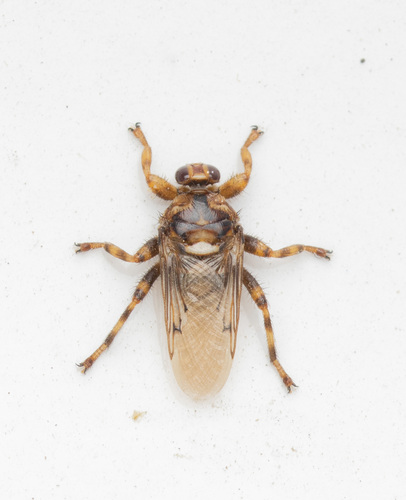
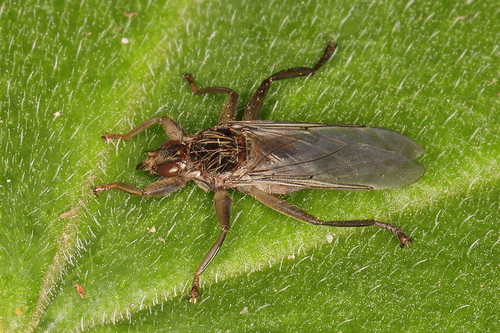
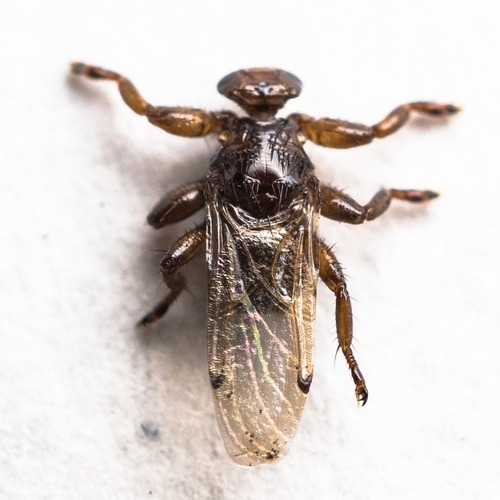
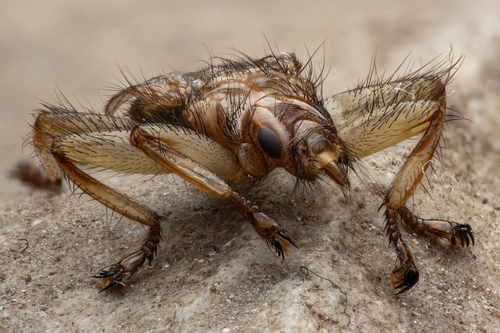
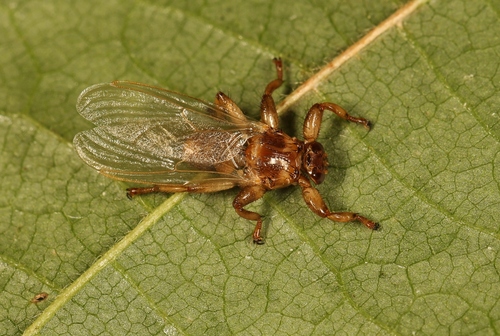
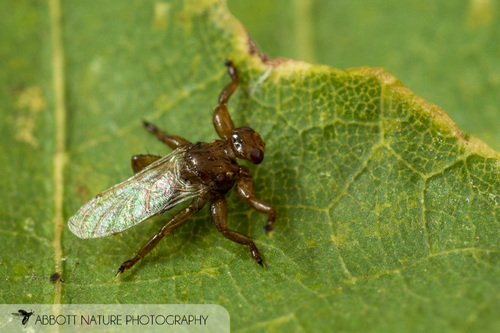
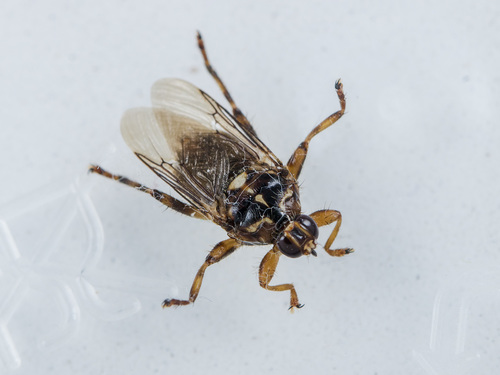
Wing length ranges from 6.0–8.5 millimetres (0.24–0.33 in). This species is generally pale reddish brown, with yellow spots on an abdomen that is indistinctly segmented. It has one pair of sub-triangular wings, and the wing veins are crowded together towards the anterior border. A characteristic trait of these flies is that they move sideways, and they prefer to feed between the hind legs and on the perineum region. The primary range of Hippobosca equina Linnaeus, 1758 covers Europe, and parts of Asia and Africa. It has been introduced to other areas, though it has since been eradicated in some of these locations by modern husbandry practices. In the United Kingdom, the species is primarily found in the New Forest, and is increasingly found in South Devon. It is occasionally recorded from other parts of the UK, but some reports from as far north as the Scottish borders are considered dubious. In the United Kingdom, the flight period runs from May to October, peaking in August and early September. In Egypt, the fly is most prevalent in Lower Egypt, and its populations appear to respond to temperature and humidity, being most common in June, July and August. In the New Forest population, adult females lay larvae singly when the larvae are already in their late third instar stage. After being laid, the larvae rapidly pupate within one hour. The duration of the pupal stage varies depending on temperature.