About Hiodon alosoides (Rafinesque, 1819)
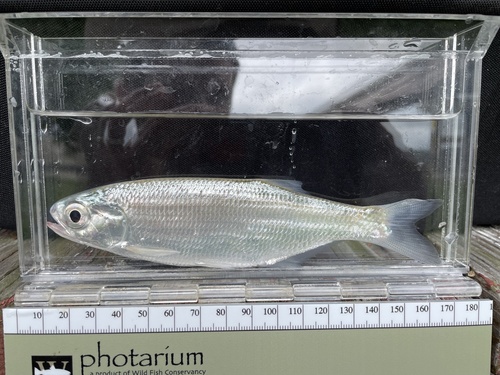
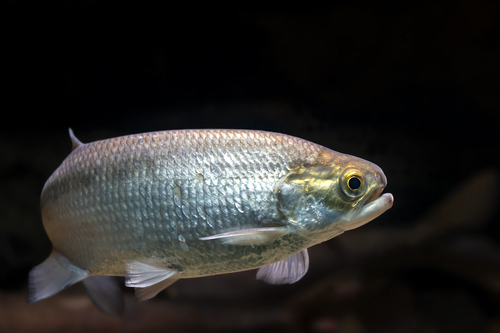
This species, commonly called goldeye, has the scientific name Hiodon alosoides (Rafinesque, 1819). In terms of morphology, goldeyes are recognizable by their compressed silver bodies and large gold-colored eyes. The upper side of their body has a blue-green silver tone, while the underside is a whiter silver. They have two abdominal fins, two pelvic fins, one dorsal fin on the back, and one anal fin on the underside. The dorsal fin is positioned opposite or behind the point where the anal fin originates. Goldeyes also have a fleshy keel that stretches from the pectoral fins to the base of the anal fin. They have a large terminal mouth with a blunt, round snout. Teeth are present on the tongue, the parasphenoid bone on the roof of the mouth, the palatopterygoid arch, and along the jaws. Goldeye fish have spineless cycloid scales, and they possess a sensory structure called the lateral line system. Adult goldeyes usually measure 15–17 inches (380–430 mm) long, and can reach up to 20 inches (510 mm). They typically weigh between 1–2 pounds (0.45–0.91 kg). In terms of range, goldeyes are found from the lower Mackenzie River near Aklavik in the north, south to Mississippi; they extend west to Alberta and east to Ohio south of the Great Lakes, with an isolated population located south of James Bay. They prefer turbid, slower-moving water in lakes and rivers. Regarding reproduction, female goldeyes reach reproductive maturity at 7–10 years old, while males reach maturity at 6–9 years old. They spawn in late May or early June. Their eggs are approximately 4 millimetres (0.16 in) in size and are semi-buoyant. Semi-buoyant eggs are a rare trait among freshwater fish, though the trait is more common in marine fish. The eggs are suspended in water and drift downstream or into quiet water areas. Most of the goldeye's annual growth occurs between June and September.