About Himantopus himantopus (Linnaeus, 1758)
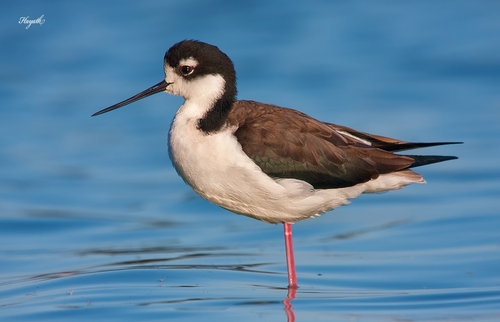
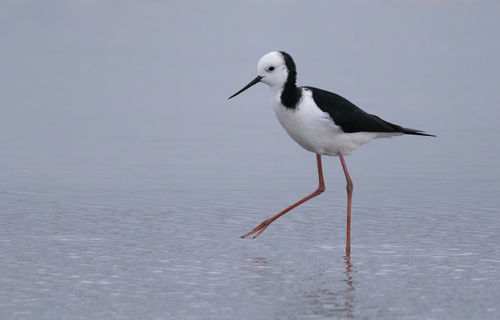
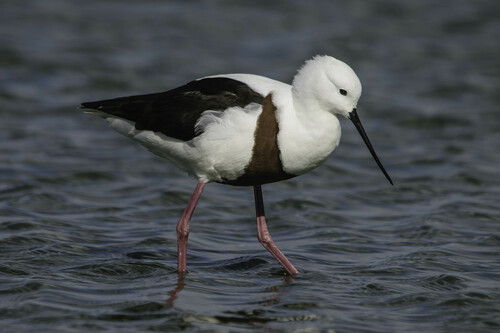
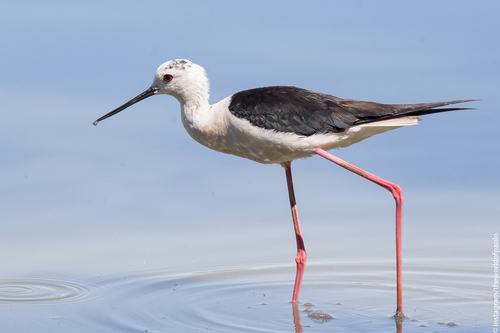
Adults of Himantopus himantopus are 33–36 cm (13–14 in) long, with long pink legs and a long, fairly thin black bill. These birds are generally black on their upper body and white on their underbody, with a white head and neck that has a variable amount of black. Males have a black back, often with a greenish gloss or sheen. Females have backs with a brownish hue that contrasts with their black remiges. In populations where the top of the head is normally white (at least during winter), females tend to have less black on the head and neck throughout the whole year, while males often have much more black, especially in summer. This difference is not distinct, however, and males typically grow all-white head feathers in winter. Immature black-winged stilts are grey, with a distinct sandy hue on their wings; light feather fringes appear as a whitish line when the birds are in flight. The breeding habitat of this species is marshes, shallow lakes and ponds. Some populations are migratory and move to ocean coasts in winter; populations in warmer regions are generally resident or only make short-range movements. In Europe, the black-winged stilt is a regular spring overshoot vagrant north of its normal range, and occasionally stays to breed in northern European countries. Pairs bred successfully in Britain in 1987, and after a 27-year break there were two successful breeding events in Southern England in 2014. Thirteen young were fledged in southern England in 2017. Four chicks were successfully fledged in northern England in 2022; this is believed to be the most northerly successful breeding recorded for the black-winged stilt.