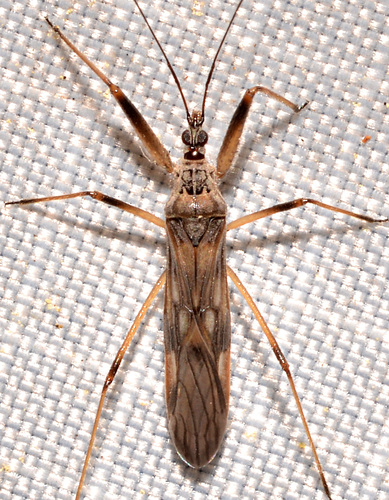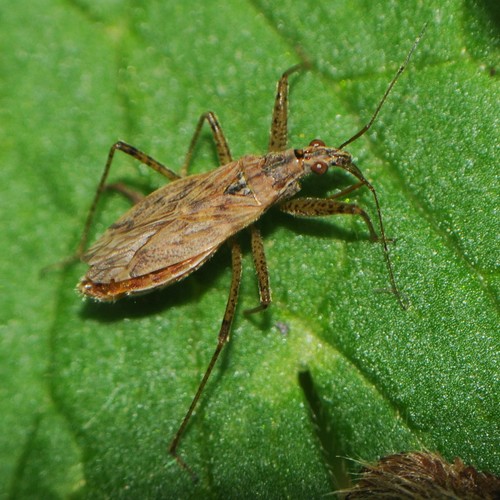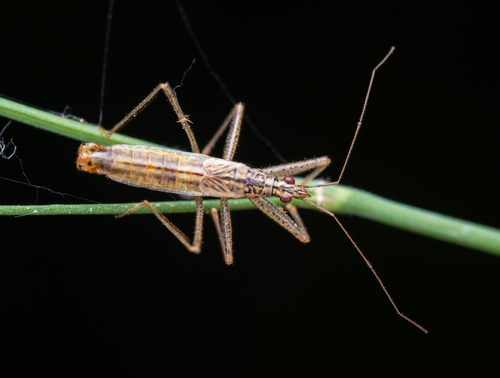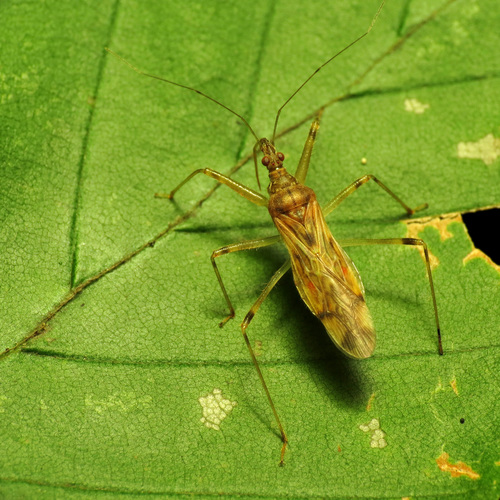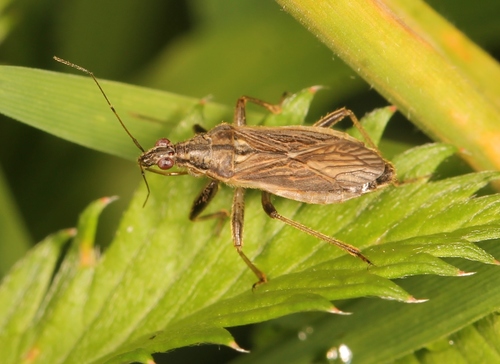
About Himacerus major (A.Costa, 1842)
Himacerus major (A.Costa, 1842) is a species of damsel bug in the family Nabidae. It is found across the Holarctic realm. Its range extends from southern Scandinavia and the south of the British Isles, through Western Europe including the Western Mediterranean, Central Europe and Eastern Europe, to the Caucasus. It is also present in North America.
Himacerus major inhabits a wide variety of grassy habitats, and its occurrence is not affected by humidity levels. The species can be found in very dry dune habitats, nutrient-poor grasslands, wet shorelines of water bodies without woody vegetation, and inland salt sites. It occurs in very large numbers near the coast of the Northern Baltic Sea, and it is absent from woodland.
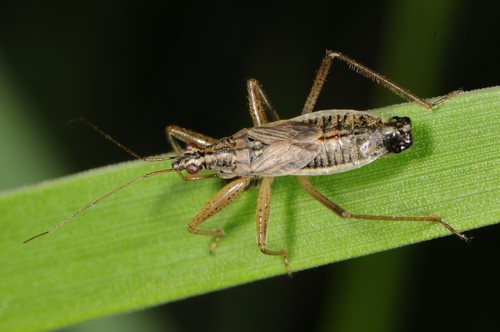
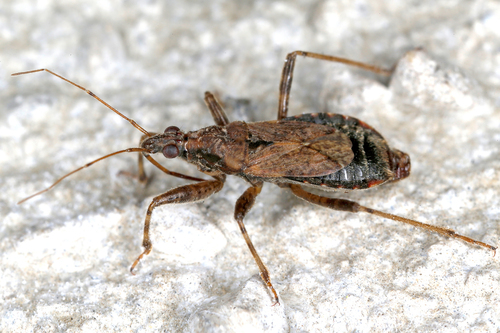
Young nymphs of Himacerus major predominantly live on the ground. Older nymphs and adults can be found in higher sections of vegetation such as shrubs during the night. During the day, they hide in ground litter, grass, or similar ground-level vegetation. It is unknown whether this species has a specific preferred prey range, but individuals have been observed sucking fluids from Auchenorrhyncha.
This species overwinters in the egg stage. Nymphs can be seen starting in May, and remain active through the autumn. Adult bugs emerge starting in July, and more rarely as early as the end of June; they are most active during August and September. Females lay their eggs by inserting them into grass.