About Hilaria belangeri (Steud.) Nash
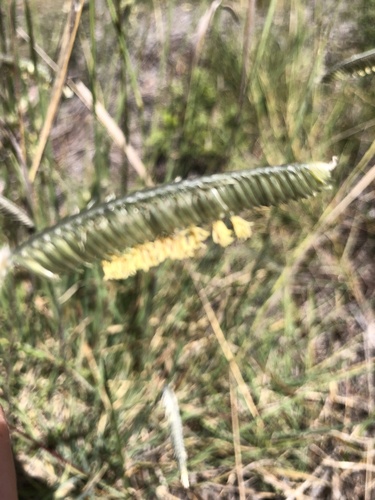
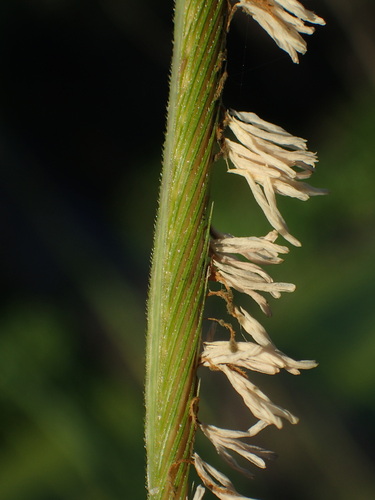
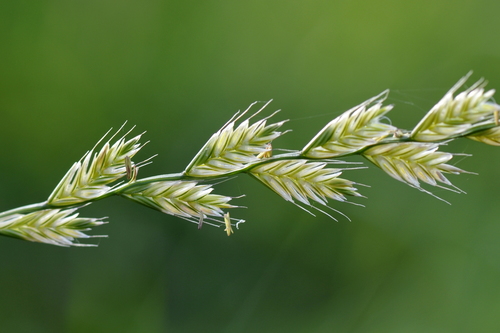
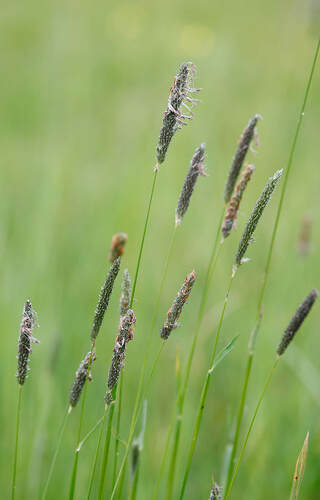
Hilaria belangeri is a grass species that goes by the common name curly mesquite, which is sometimes written as curlymesquite or curly-mesquite. This species is not related to mesquites, which are classified as legumes. The grass is native to Mexico and the southwestern United States, ranging from Arizona to Texas. This is a perennial grass that forms tufts of stems that grow up to around 30 centimeters tall, and it also forms a sod. It spreads via stolons that grow along the ground, rooting to produce new tufts. This grass has been recorded spreading 4 meters in a single growing season. Stolonic spreading is the main method of reproduction for this plant, as it is often sterile and rarely produces seeds. One of the two recognized varieties, Hilaria belangeri var. longifolia, does not form stolons, unlike the other variety. This grass grows in multiple types of southwestern habitat, including desert grasslands, woodlands, and shrubsteppe. It is a dominant species in some of these grassland habitats. It can tolerate a wide range of soil types. It can tolerate the low precipitation levels common to deserts, but does not necessarily tolerate drought conditions—it goes dormant during drought. This grass is an important forage source for animals in some local regions. In central and western Texas, it is the main forage for cattle, and cattle find it very palatable. Wild ungulates including pronghorn and deer also graze on this grass. The grass is tolerant of grazing pressure, even overgrazing. In some areas, it produces some growth early in the growing season, but most of its annual productivity comes after summer rainfall. The growth of Hilaria belangeri is inhibited by Euryops multifidus, an introduced African plant commonly called sweet resin bush.