About Hierodula membranacea Burmeister, 1838
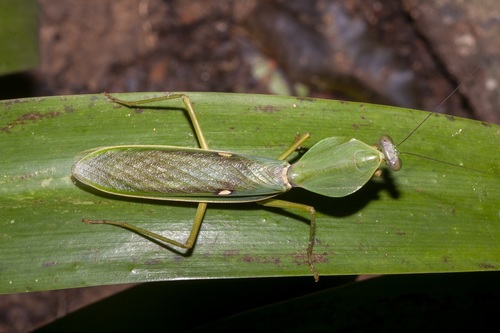
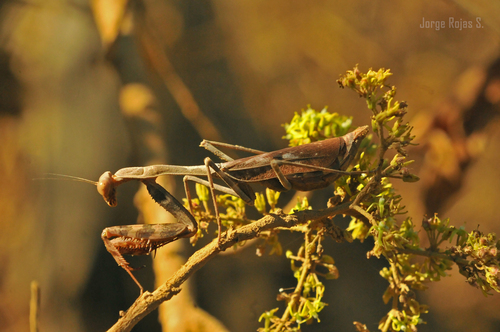
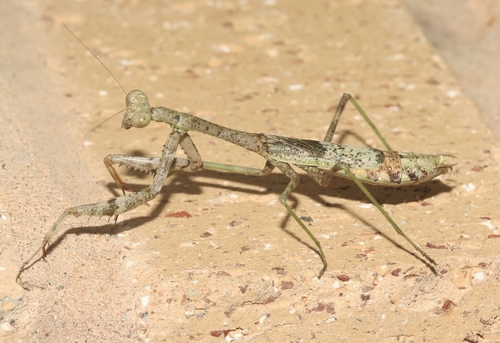
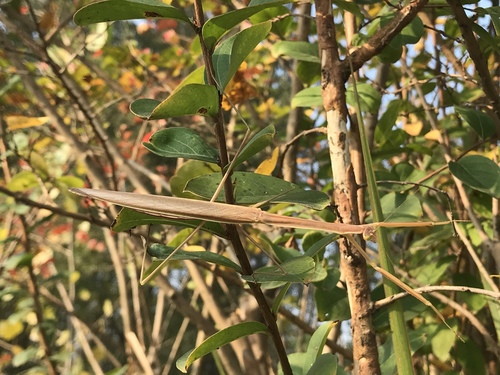
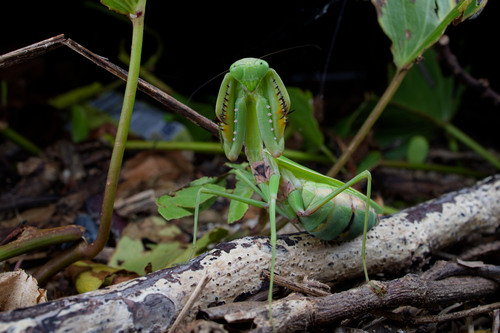
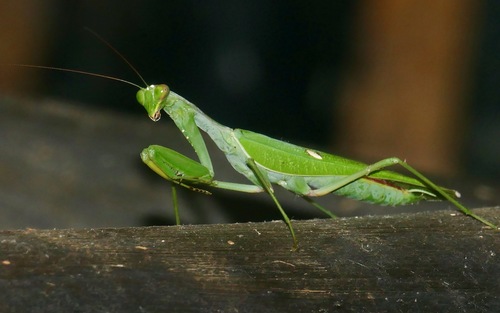
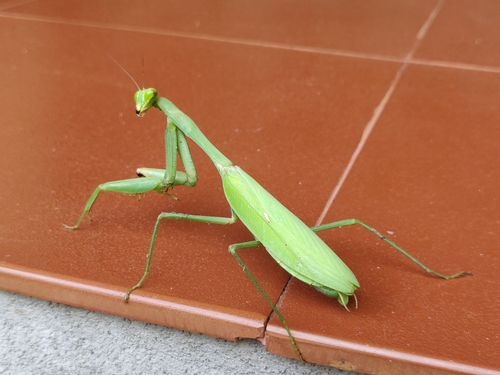
Hierodula membranacea is a large praying mantis. It shares the common name giant Asian mantis with other large species in the genus Hierodula, and it is the type species of this genus. Its body color ranges from green to yellow-green, or from brown to reddish-brown; this color range is similar to that of the giant Indian mantis and the giant Malaysian mantis. As its common name suggests, the species is native to southeastern Asia, and is among the largest mantis species. When excluding extended forelegs, adult males and females both reach a length of around 7 to 9 centimeters (2.8 to 3.5 inches). This is a cannibalistic species, and females sometimes eat males after mating. Hierodula membranacea lives in shrubs and trees in hot, humid climates, with temperatures between 22 and 30 °C (72 to 86 °F) and humidity between 60% and 70%. Hierodula membranacea reproduces sexually, and only has very limited ability to reproduce through parthenogenesis. Females can be distinguished from males by abdominal segment count: females have six abdominal segments, while males have eight. Females also have a much larger abdomen than males. After mating, the female may try to eat the male to increase fertility, and this attempt will involve a struggle. Over the course of her lifespan, an adult female lays multiple egg cases, which are called oothecae. After six to eight weeks, up to 150 nymphs hatch from each ootheca.