About Hibbertia cuneiformis (Labill.) Sm.
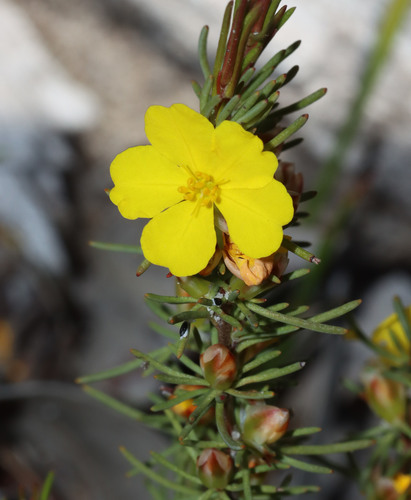
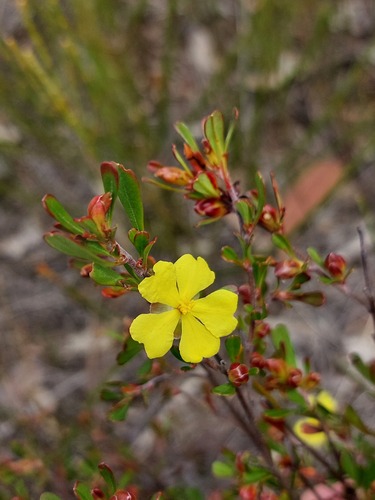
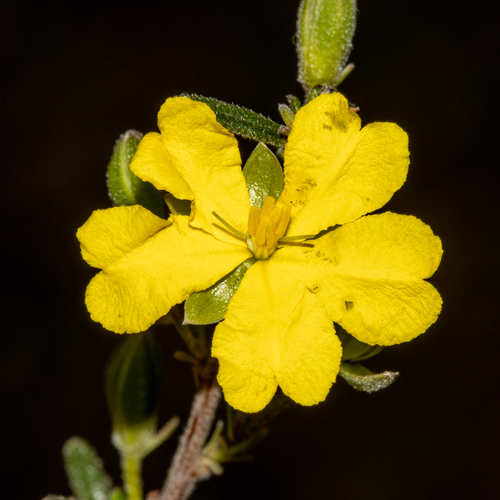
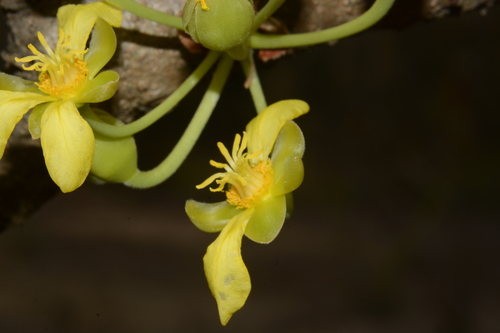
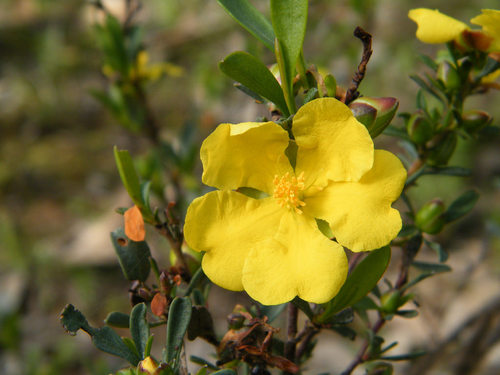
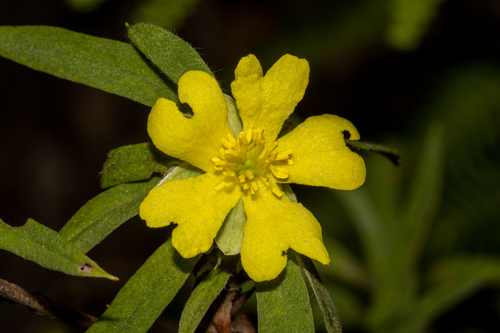
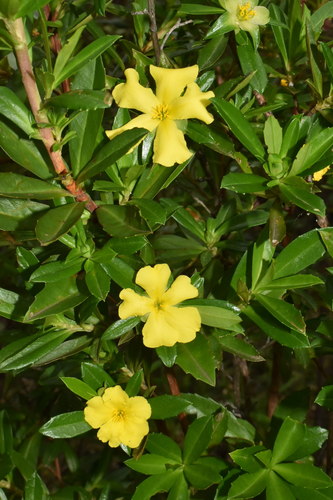
Hibbertia cuneiformis, commonly called cut-leaf hibbertia, is a species of erect or sprawling shrub endemic to the south-west of Western Australia. It grows to between 1 and 2 metres (3 feet 3 inches to 6 feet 7 inches) tall, and bears yellow flowers in its native range between January and March, or between June and November. The species was first formally described in 1806 by French naturalist Jacques Labillardière, who named it Candollea cuneiformis in his work Novae Hollandiae Plantarum Specimen. In 1811, English botanist James Edward Smith reclassified it as Hibbertia cuneiformis, publishing the new name in Abraham Rees's Cyclopædia. The specific epithet cuneiformis means "wedge-shaped". This hibbertia grows on sand dunes and in swampy areas in near-coastal regions of the Esperance Plains, Jarrah Forest, Swan Coastal Plain, and Warren biogeographic regions of south-western Western Australia. It is classified as "not threatened" by the Western Australian Government Department of Parks and Wildlife.