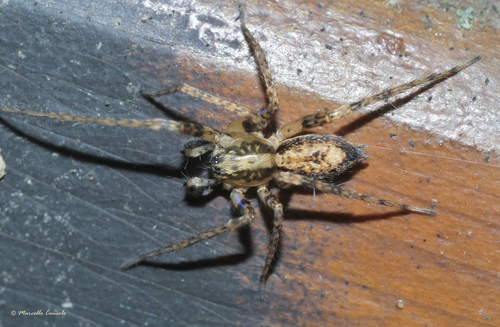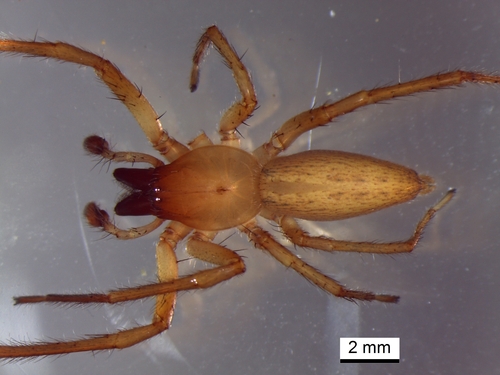
About Hibana velox (Becker, 1879)
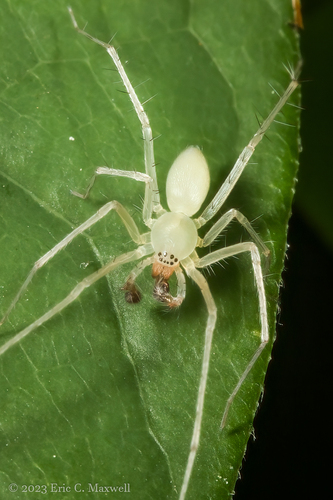
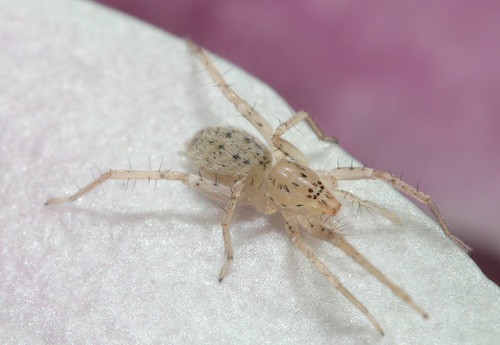
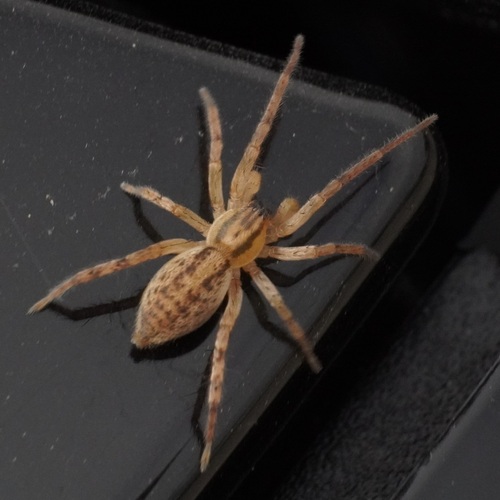
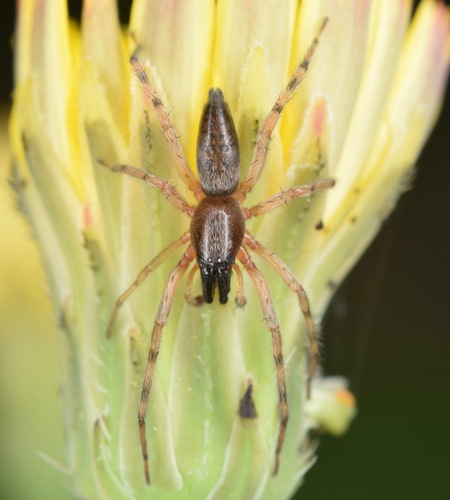
Hibana velox (first described as Aysha velox by Becker in 1879), commonly known as the yellow ghost spider, is a common spider species of North America. The genus Hibana was discovered and described by Antônio Brescovit in 1991. This species belongs to the family Anyphaenidae, commonly called sac spiders or ghost spiders, which gives the species its common name. Anyphaenidae sac spiders differ from Clubionidae sac spiders by the placement of the abdominal spiracle. The Anyphaenidae family is relatively common and found across tropical regions worldwide. In North America, Hibana velox is mainly found along the east coast and throughout the south, with a range extending from Texas to Florida, the Carolinas, and all the way into Canada; it can also be found from the United States down into South America more broadly. It is abundant year-round in Florida. Hibana velox individuals have body lengths ranging from 1/4 to 1/2 inch. Their abdomen is elongated, with pairs of spinnerets located near the epigastric furrow on the underside of the abdomen. Their color varies between brown, yellow, beige, and tan; some individuals have dark markings on the back. This species can be identified by its short retrolateral tibial apophysis and the absence of a ventral tibial apophysis. While it has a relatively small mouth, it has four promarginal teeth and eight retromarginal denticles. It has eight very small eyes arranged in two groups of four. Hibana velox prefers hot, humid, tropical habitats. In the wild, it can be found in foliage, and also enters houses. To locate this spider, look for its silken retreats under rocks, behind tree bark, and within leaf litter. It is nocturnal, and typically hides in these retreats during the day. In Florida, this species is known to colonize and take shelter on mangrove islands. As a generally terrestrial opportunistic carnivore, its diet varies by season and location. It feeds on small invertebrates, insect egg sacs, and tree crop materials that provide natural sugars and nectar as an energy source. When it engages in oophagy, it is primarily attracted to lepidopteran eggs and eggs of other spider species; as an opportunistic feeder, it may also prey on coleopteran eggs. It is effective at preying on the citrus leafminer Phyllocnistis citrella, a member of the family Gracillariidae that is a damaging pest for citrus orchard farmers. The bite of Hibana velox is venomous, and deadly to its targeted prey. Bites to humans are rarely a problem, but some bites become swollen and sore after the encounter, and untreated wounds can develop necrosis. Because of its predation on crop pests like the citrus leafminer, this spider is used as a form of biological pest control in citrus orchards.