About Hiatella arctica (Linnaeus, 1767)
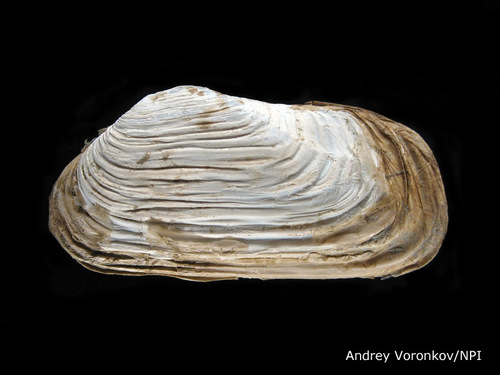
Hiatella arctica, first described by Linnaeus in 1767, is a species of saltwater clam, commonly known by common names including the wrinkled rock-borer, arctic hiatella, and arctic saxicave. It is a marine bivalve mollusk that belongs to the family Hiatellidae. This mollusc has a thick, white shell that is roughly rectangular in outline, but typically irregular in overall shape. Adults of this species reach a maximum length of 45 mm (1.8 in). Hiatella arctica has a very broad distribution; it can be found in all the world's oceans, and its range extends from the Arctic and Antarctic regions through to subtropical and tropical zones. This species can occur from the low tide mark down to depths of up to 800 m (2,600 ft). It inhabits hard substrates, and usually anchors itself to substrate using byssus threads. Common habitats for Hiatella arctica include mussel beds, the space between kelp holdfasts, rock crevices, and it can also bore into soft rock to live there.