About Hexaplex trunculus (Linnaeus, 1758)
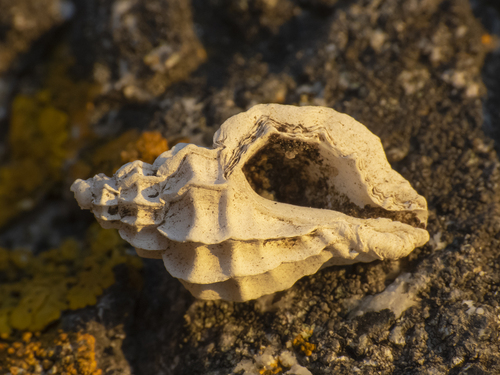
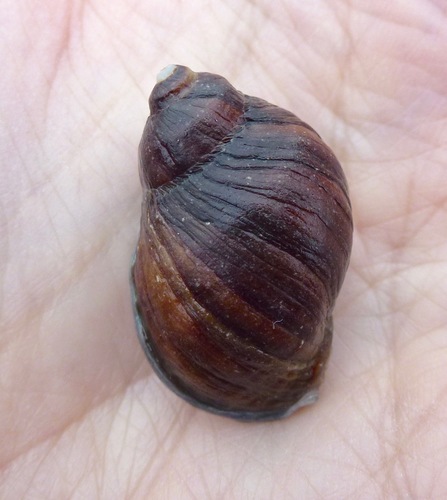
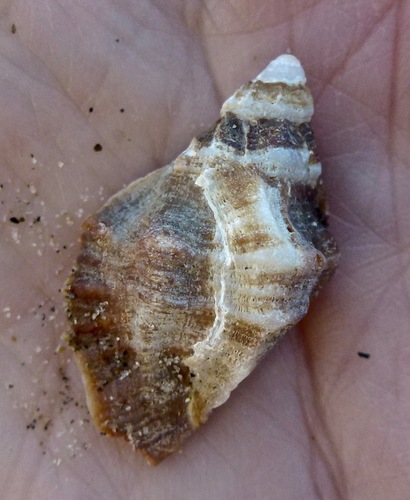
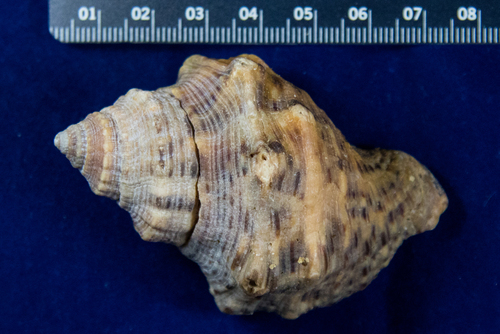
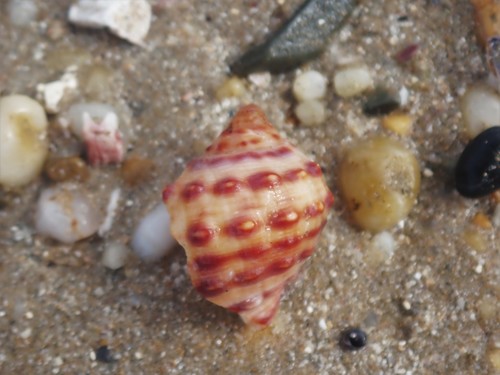
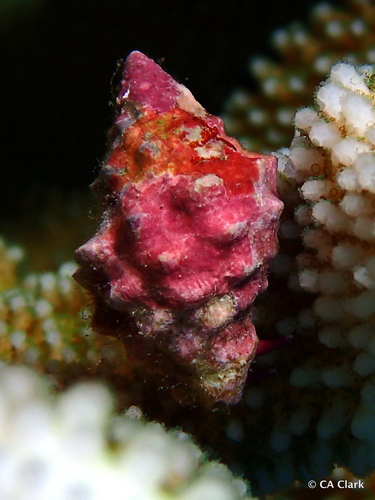
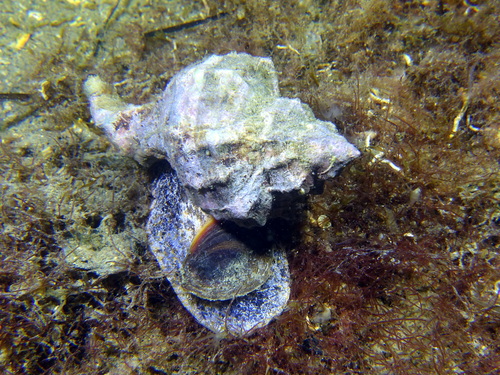
Hexaplex trunculus, first described by Linnaeus in 1758, has a broadly conical shell that reaches 4 to 10 centimeters in length. Its shell has a relatively high spire with seven angulated whorls, and the overall shape of the shell is similar to that of a fish. Shell sculpture and coloration are variable, with dark banding present across four recognized varieties. The ribs of the shell sometimes develop thickenings or spines, which give the shell a rough texture. The shell is often covered in algae, which acts as camouflage and makes it closely match the appearance of the surrounding seabed. This species is distributed across the Mediterranean Sea, and along the Atlantic coasts of Europe and Africa, including Spain, Portugal, Morocco, the Canary Islands, and the Azores. It is a murex snail that lives in shallow, sublittoral waters. In ancient times, secretions from this snail were used to produce dye. Today, people in Spain and Portugal still eat this snail.