About Heterotoma planicornis (Pallas, 1772)
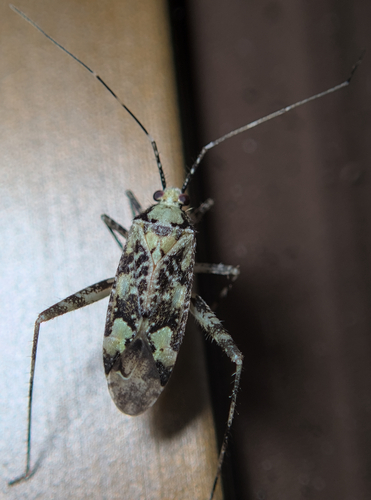
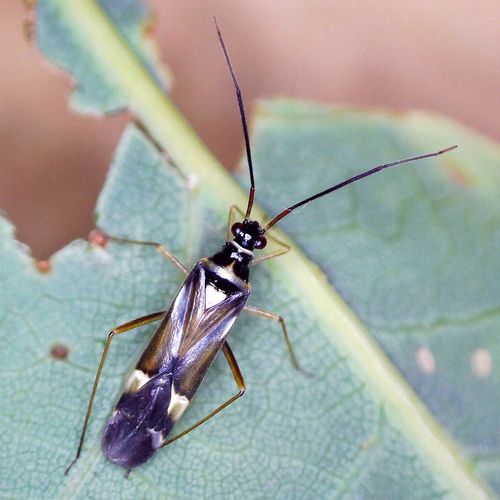
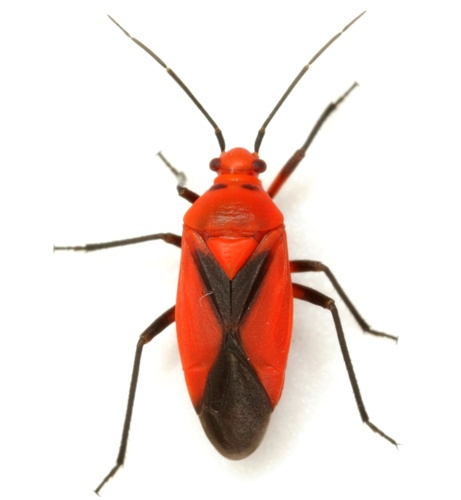
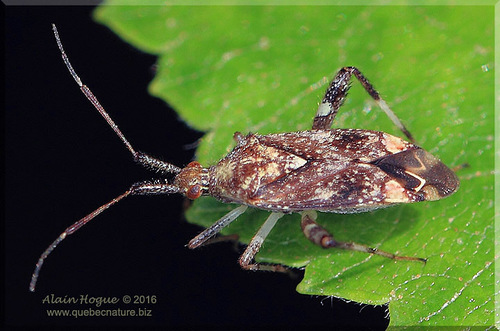
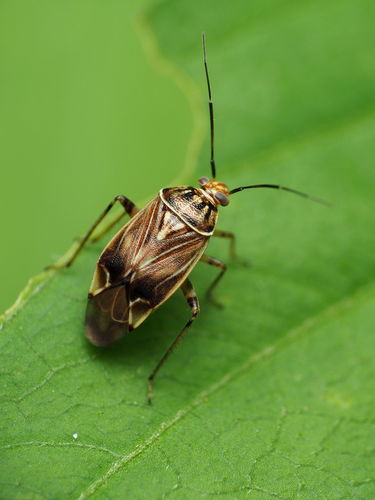
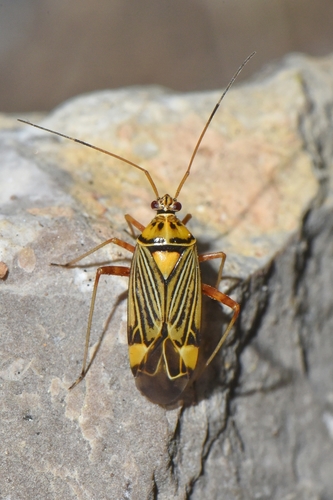
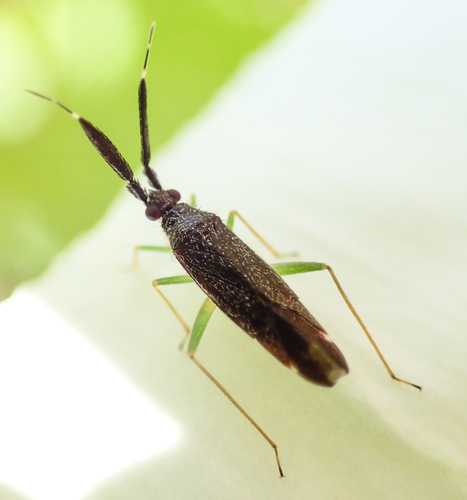
Adult males of Heterotoma planicornis reach a length of about 4.6–5.3 millimetres (0.18–0.21 in), while females are slightly longer, at 4.9–5.5 millimetres (0.19–0.22 in). The body of this species is black or dark red, with pale green legs. Adults have short hairs and distinctively shaped antennae, with a large flattened second antennal segment, which gives the species its Latin name planicornis, meaning "flat horn". Nymphs are reddish in color and share the same unusual antenna structure. This species looks very similar to the closely related Heterotoma merioptera, and can be difficult to distinguish from it. Heterotoma planicornis is found in the Nearctic realm, and across Central, Western, and Eastern Europe, extending east as far as the Caspian Sea. It is not present in the Baltic states, Faroe Islands, Finland, Malta, or former Yugoslavia. These common bugs live in neglected orchards, hedgerows, and many gardens. Females lay their eggs into young wood, and the eggs overwinter. Eggs hatch in May, nymphs develop into adults by June, and adult bugs are active from July to September. This species has one generation per year. As a plant-sucking bug, H. planicornis is also an active predator; both nymphs and adults hunt spiders, aphids, and mites. It is polyphagous, feeding on a variety of insects including Psyllidae species, aphids, other small insects, and eggs of Chrysomelidae beetles and Lepidoptera, alongside feeding on many different plants and trees. It prefers feeding on unripe fruits, buds, plant juices, and nectar, most commonly from Crataegus species, common alder (Alnus glutinosa), common hazel (Corylus avellana), pedunculate oak (Quercus robur), nettles (especially Urtica dioica), and common tansy (Tanacetum vulgare).