About Heterostichus rostratus Girard, 1854
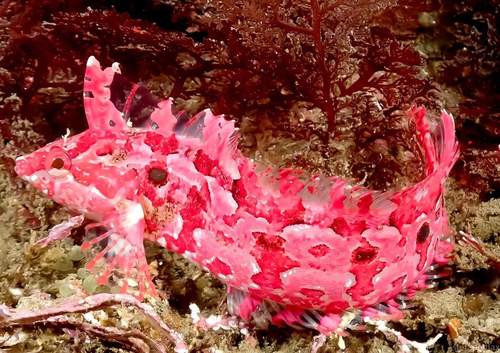
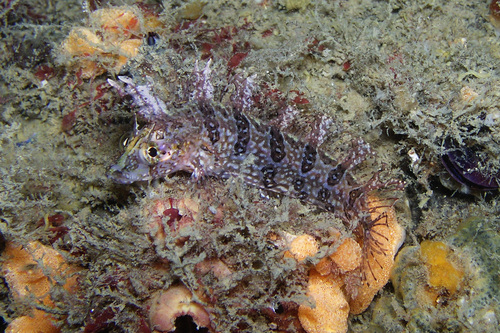
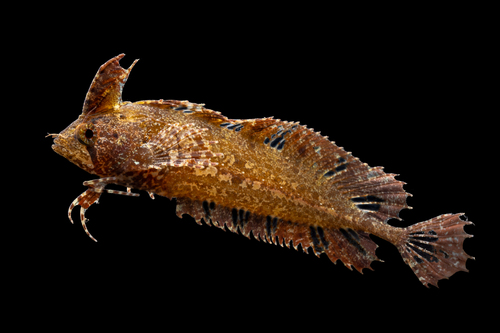
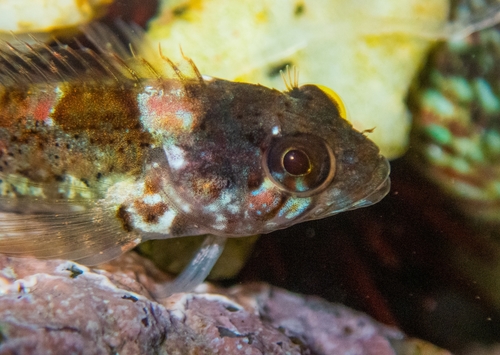
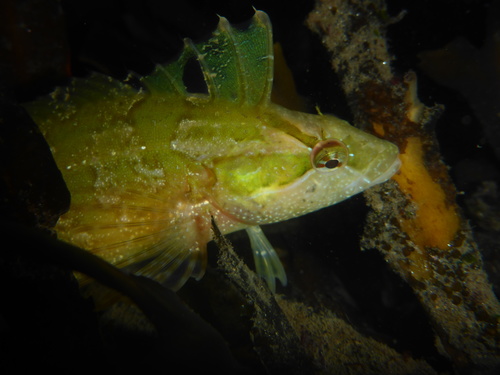
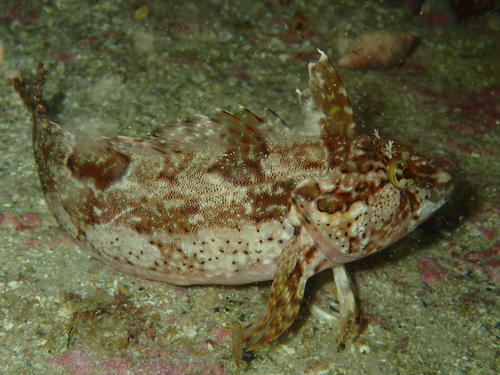
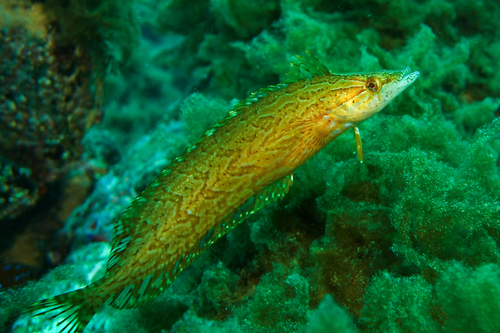
The giant kelpfish (Heterostichus rostratus Girard, 1854) has an eel-like, elongated, compressed body with a pointed head and a small terminal mouth. Its dorsal fin runs continuously along the entire top length of the body, ending at the caudal peduncle. The dorsal fin is made up of a small section of vertically longer spiny rays close to the head, connected directly to a soft ray portion. The pectoral fins are rounded and short, while the pelvic fins are small and thin. It has a very long, broad, continuous anal fin and a forked tail. Small cycloid scales cover its body, serving for protection and improving hydrodynamics. As its common name suggests, this fish closely resembles the giant kelp habitat it lives in. Giant kelpfish have three color morphs: red, brown, and green, often with melanistic barring or striping patterns that vary based on sex, developmental stage, and habitat. This cryptic coloration makes the fish hard to spot for both humans and other organisms. It can be confused with the striped kelpfish (Gibbonsia metzi), which has a similar body shape but more prominent barring, a rounded tail, and a subterminal mouth. Giant kelpfish is native to the west coast of North America. It is most commonly found in the warmer waters stretching from Point Conception, California, to southern Baja California. It inhabits rocky areas with dense canopies of giant kelp and other large seaweeds, and may also use eelgrass or surfgrass as an alternative to its preferred understory algae habitat. Juveniles are found in the upper portions of macroalgae, while older individuals gather near the base of the algae. They prefer habitats from near the surface to moderately deep waters, since these areas get abundant sunlight that supports dense vegetation they use for nesting and protection. Unlike some other members of the Clinidae family that are viviparous (bear live young), giant kelpfish are oviparous. Giant kelpfish spawn year-round, though spawning occurs most often in spring. A single spawning event takes 40–60 minutes. The female carries and deposits eggs into the nest, while the male chases away any potential intruders. The male fertilizes the eggs multiple times throughout the spawning process, and immediately returns to guarding after fertilization is complete. The male’s territory centers on the oviposition site; he defends it heavily when eggs are present, and only sparsely when no eggs are present. The male defends the territory against other giant kelpfish (conspecifics) and predators, both while the female is in the nest and after she has finished depositing eggs and left. Males can detect a conspecific up to 3 metres (9.8 ft) from their territory, and react based on the intruder’s size and species. It remains unclear which sex constructs the nest or establishes the territory, as giant kelpfish spawn year-round and maintain nests continuously. When a nest is built, it is constructed from soft red and/or brown algae, with no hard materials included, and is kept well-hidden within kelp beds. Eggs are either brown or red, matching the color of their yolk. A female lays 400–1200 eggs, spacing them out through the algae nest. Eggs develop very quickly and hatch after around 2 weeks. This species has a planktonic larval stage that lasts about 2 months. There may be a high mortality rate during this stage, when larvae grow exponentially, adapt to capturing larger prey, and meet their caloric intake needs. During this life phase, larvae are free-drifting and free-floating, living among plankton before eventually settling into kelp forests. This planktonic stage allows larvae to disperse and develop into juveniles. Giant kelpfish become sexually mature at about 2–3 years old. When a female approaches a male’s territory, the male courts her with a series of behaviors including head shakes, fin expansion, spawning quivers, and nipping at the female. Males have also been observed developing a nuptial melanistic striping pattern, altering their coloration for sexual signaling; they may appear more vibrantly green or yellow, which signals to females that they are reproductively ready, fit, and healthy. Females are not known to change their behavior during the courtship process. This species can reach a maximum total length of 61 cm (24 in), and has been recorded to live up to 4 years. Females have been observed to grow larger and live longer than males. Their elongated, flattened bodies and independently controlled pectoral fins let them make precise maneuvers through dense vegetation to evade predators and ambush prey. Their broad continuous fins are an adaptation to slow-moving environments. They are not fast, continuous swimmers, but are well suited for short burst movements.