About Heteranthera limosa (Sw.) Willd.
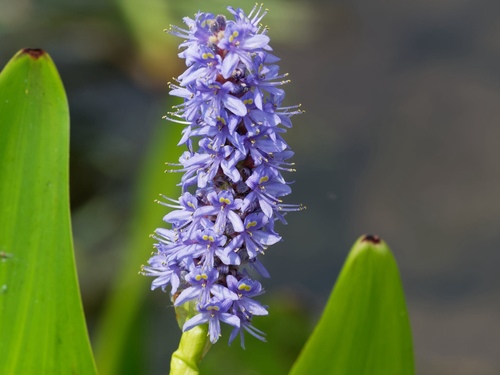
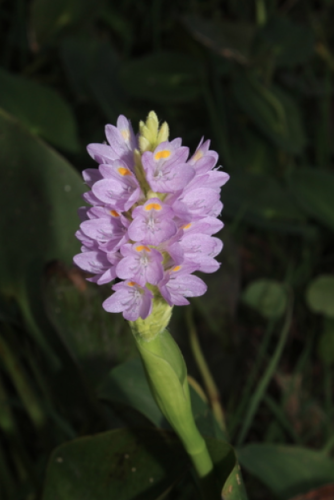
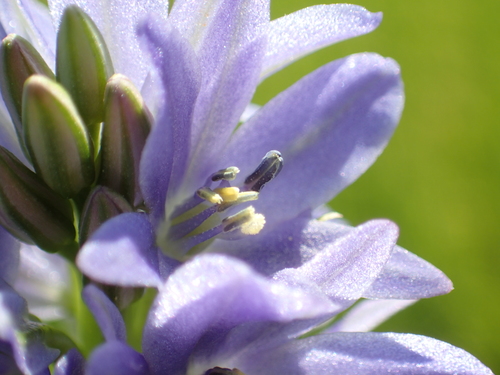
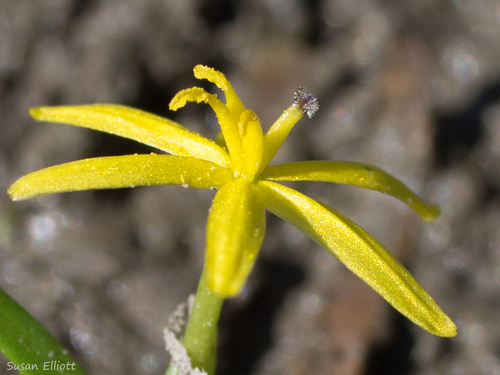
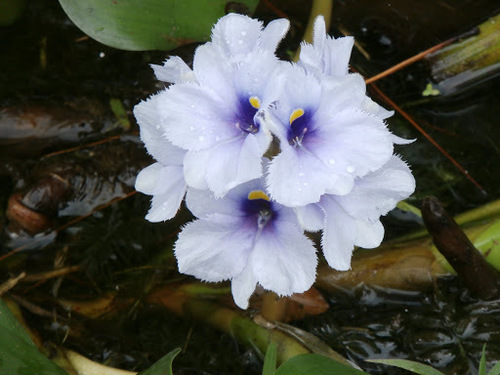
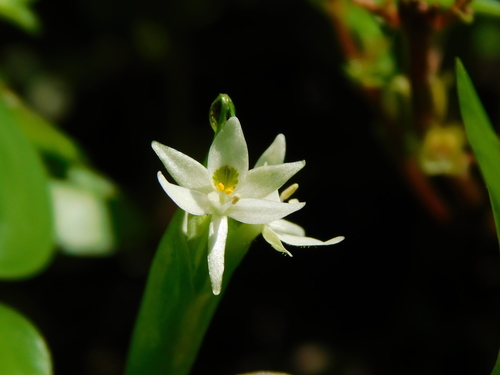
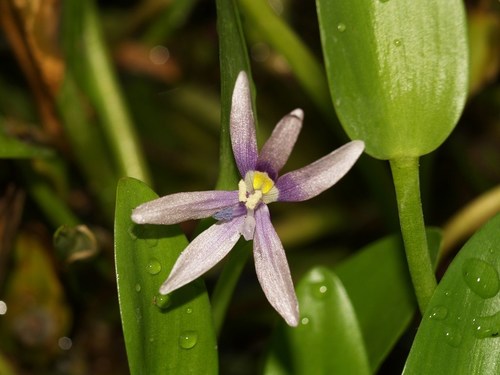
Heteranthera limosa (Sw.) Willd. is a polymorphic annual that grows 2 to 6 inches tall. Its appearance changes based on the habitat it grows in, with aquatic plants differing from those growing on muddy ground. It can be easily confused with other closely related species, so reliable identification relies on examining flowering individuals. It has thick, spade-shaped green leaves with parallel veins. When the species grows in water, its leaves may sit above or below the water surface, and submerged leaves are linear in shape. Its branching stems are creeping, can reach up to 15 inches in length, and root at the nodes. Its blue, purple, or white perfect flowers are six-parted, with narrow petals and three stamens. The flowers are nearly 1 inch wide, and are subtended by a spathe. Flowering occurs only when the correct environmental conditions are met, has a very brief duration, and can take place from May to November. Flowers open early in the morning and wither by noon. Heteranthera limosa grows in shallow water, reaching its best growth in water less than 5cm deep; it can also be found growing immersed at pond edges and in roadside ditches. It occurs naturally in Arizona, Arkansas, California, Colorado, Florida, Illinois, Iowa, Kansas, Kentucky, Louisiana, Mississippi, Missouri, Nebraska, New Mexico, Oklahoma, South Dakota, Tennessee, Texas, Mexico, the West Indies, Central America, and South America (Argentina, Bolivia, Brazil, Colombia, Ecuador, Paraguay, Venezuela). In Minnesota, this species sits at the northern limit of its natural distribution, and is found only in the southwestern corner of the state. It grows in shallow vernal pools that form from water seeping between rock layers that include Sioux quartzite, and grows in association with other rare species in the state: Isoetes melanopoda, Plantago elongata, and Cyperus acuminatus. In Minnesota, it is listed as a threatened species, as it is rare there and restricted to specific unusual microhabitats.