About Hericium novae-zealandiae (Colenso) Chr.A.Sm. & J.A.Cooper
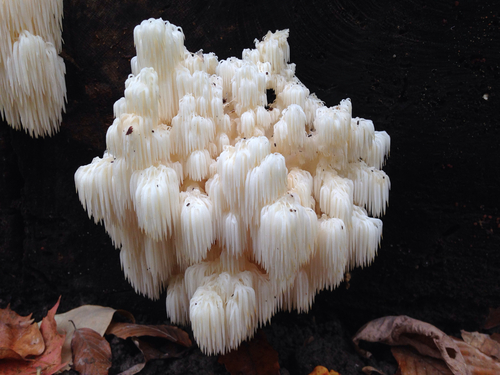
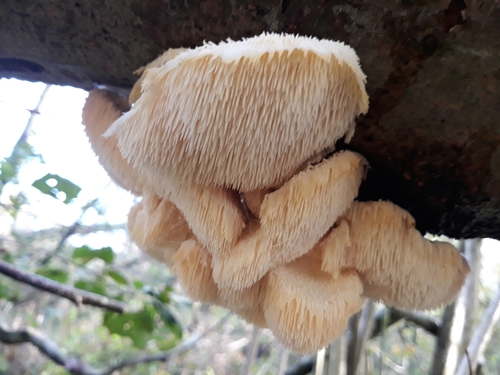
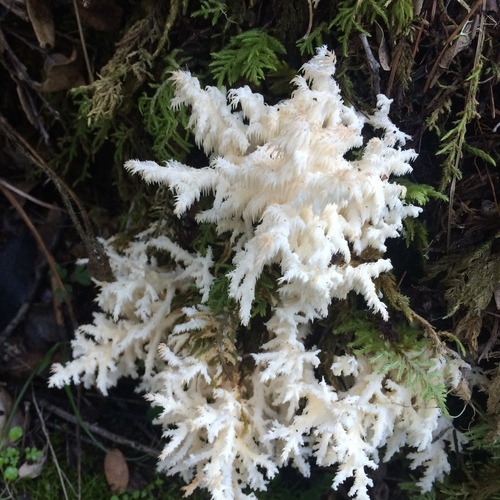
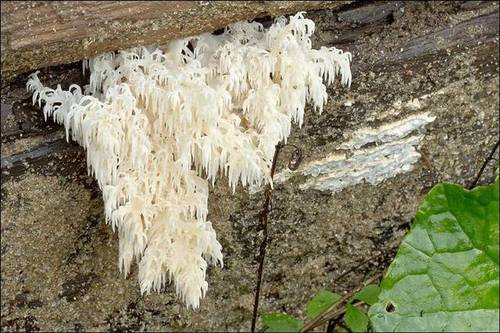
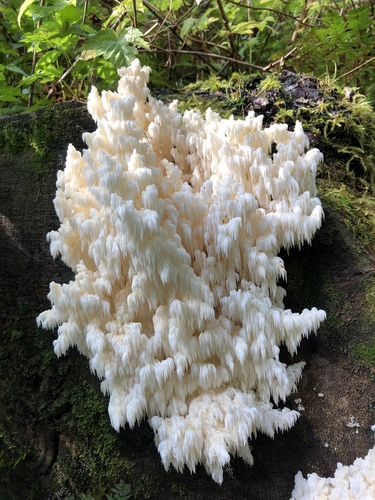
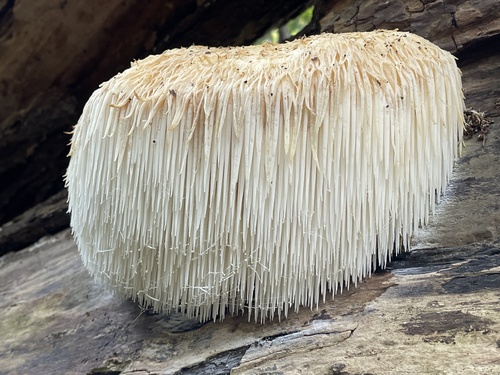
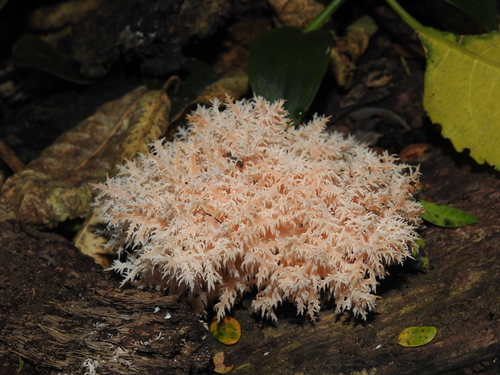
Hericium novae-zealandiae produces relatively large fruiting bodies, over 10 cm in diameter, that are white in color. When it was first described under the name Hydnum nova zealandia, its appearance was compared to a cauliflower that is approaching the flowering stage. This species lacks a distinct cap (pileus) or defined stalk (stipe); its basidiomata are extensively and irregularly branched. The fungal structure grows from a short, cork-like base stem, and ends in numerous densely packed, fine terminal tips. The hymenium, the spore-bearing surface, is found on the surface of these fine tips. There is no clear separation between the stipe and the hymenium until the spores reach maturity, at which point the tips turn reddish.
Hericium erinaceus, a close relative of Hericium novae-zealandiae commonly called lion's mane, has been demonstrated to have multiple health benefits. These benefits include treating dyspepsia and gastric ulcers, as well as displaying antitumor and immuno-modulatory activity. Extracts from Hericium novae-zealandiae have been found to have antiproliferative effects when tested on three prostate cancer cell lines: DU145, LNCaP, and PC3. A polysaccharide extract from the fungus was effective against the LNCaP and PC3 cell lines, while an ethanol extract containing the compounds hericenone C, hericene B, ergosterol, and ergosterol peroxide was effective against all three cell lines. In both cases, the observed mechanism of action was identified as apoptosis, or programmed cell death.