About Heracleum maximum W.Bartram
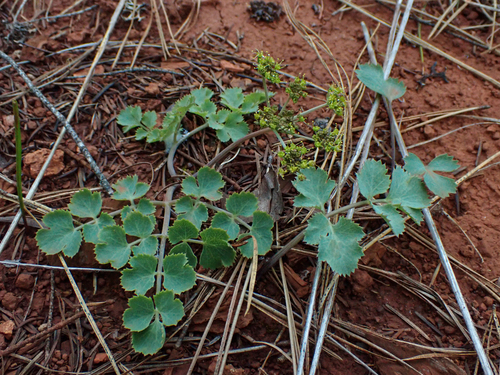
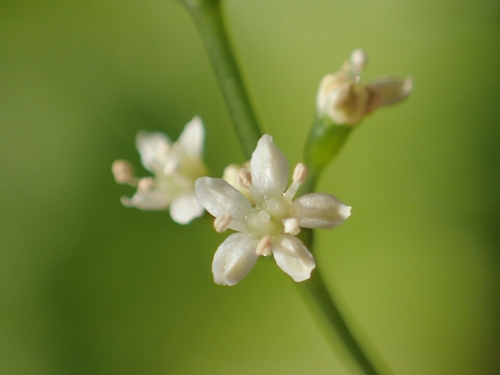
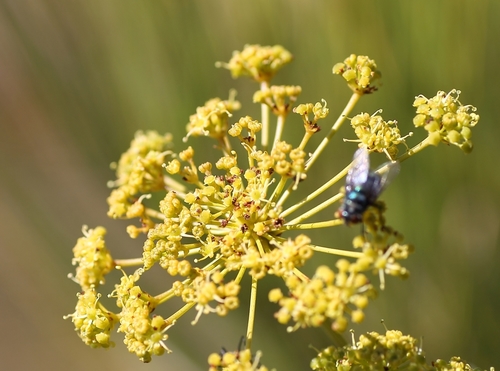
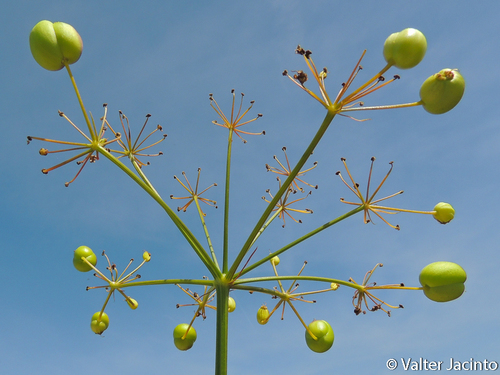
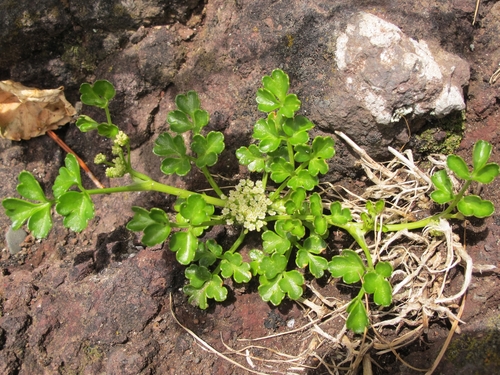
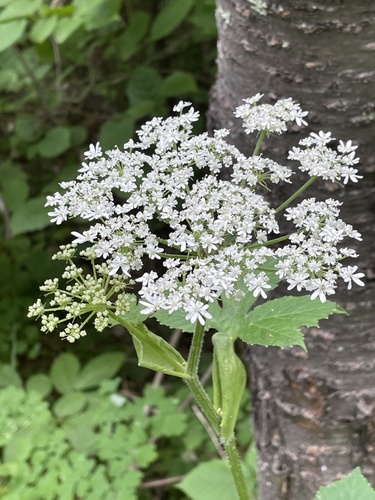
Heracleum maximum W.Bartram, commonly known as cow parsnip, is a tall herbaceous perennial plant. It can reach heights of up to 3 metres (10 feet), with hollow, densely hairy stems. Its leaves are very large, growing up to 40 centimetres (16 inches) across, and are divided into three lobes. Like other members of the carrot family (Apiaceae), cow parsnip produces characteristic umbel-shaped flower clusters, and blooms from February to September. These umbels can reach 30 cm (12 in) across, and are either flat-topped or rounded; they are composed of many small white flowers, and sometimes the outer flowers of an umbel are much larger than the inner ones. Its seeds measure 8–12 millimetres (3⁄8–1⁄2 in) long and 5–8 mm (3⁄16–5⁄16 in) wide.
This species is native to North America, distributed across most of the continental United States except the Gulf Coast and a few neighboring states. Its range extends from the Aleutian Islands and Alaska in the far northwest to Newfoundland on the east coast, and reaches south as far as California, New Mexico, Kansas, Ohio, and Georgia. It grows from sea level up to elevations of about 2,700 m (9,000 ft), and is especially prevalent in Alaska, where it often grows alongside devil's club (a plant nearly identical in size and somewhat similar in appearance) and monkshood, a highly toxic flower. In Canada, it occurs in every province and territory except Nunavut. It is listed as Endangered in Kentucky and Special Concern in Tennessee. The plant is also found in Siberia, East Asia, and the Kuril Islands.
Ecologically, Heracleum maximum is widely recognized as a valuable pasture plant for cows, sheep, and goats. It is also an important food source for numerous wild animals, particularly both grizzly and black bears. It acts as a host plant for the black swallowtail butterfly (Papilio polyxenes), short-tailed swallowtail butterfly (Papilio brevicauda), old world swallowtail butterfly (Papilio machaon), anise swallowtail butterfly (Papilio zelicaon), and the moths Eupithecia tripunctaria, Papaipema harrisii, Papaipema impecuniosa, Agonopterix clemensella, Agonopterix flavicomella, and Depressaria pastinacella.
Cow parsnip contains furanocoumarins including xanthotoxin, angelicin, pimpinellin, isopimpinellin, isoimperatorin, bergapten, isobergapten, 6‐isopentenyloxyisobergapten, and sphondin. One study found that young leaves do not contain xanthotoxin, but older, senescing leaves hold substantial amounts of this compound. Some of these furanocoumarins are known to have antimicrobial properties, and are also the cause of a painful skin reaction that produces erythematous vesicles (burn-like blisters) and hyperpigmentation when the plant's clear sap contacts skin. These compounds are photosensitive, meaning the rash only develops after exposure to ultraviolet light. As a result, phytophotodermatitis leading to skin blistering can occur after touching the sap on a sunny day. Scars and persistent pigmentation from these blisters, caused by some Heracleum species, can last for months or years.
Thick young flower stems of cow parsnip, which come into season in early summer, can be peeled and cooked and eaten when young, a practice used historically by Native Americans. Caution is required when harvesting cow parsnip, as its flowers closely resemble those of the extremely poisonous Cicuta maculata. Indigenous North Americans made a variety of uses of this plant, often traveling 80 kilometres (50 miles) or more in spring to find its succulent young shoots. Young stems and leafstalks were peeled and usually eaten raw, while early American settlers cooked the plant. Peeled cow parsnip stalks resemble celery in taste, texture, and nutrient content, which led to its common alternative name "Indian celery". Native peoples were aware of the plant's toxic effects, and knew that failing to remove the outer skin would cause an itchy mouth or blistering skin. Pregnant women were warned to avoid flower bud stalks to prevent newborns from asphyxiating when crying.
At least seven Indigenous groups in North America used cow parsnip as a dermatological aid. It was included as an ingredient in poultices applied to bruises or sores, and a poultice made from the plant's roots was applied to swellings, especially swelling of the feet. Dried cow parsnip stems were used as drinking straws for elderly or infirm people, and carved into flutes for children. An infusion made from the flowers can be rubbed onto the body to repel flies and mosquitoes, and a yellow dye can be produced from the roots.