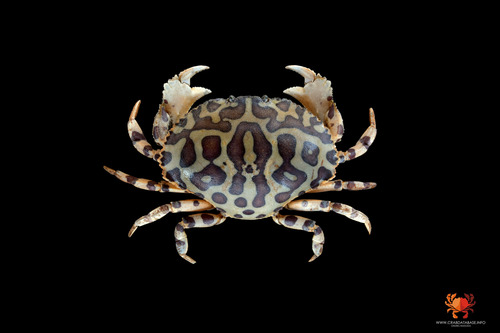
Hepatus epheliticus (Linnaeus, 1763) is a animal in the Aethridae family, order Decapoda, kingdom Animalia. Not known to be toxic.

Photo of Hepatus epheliticus (Linnaeus, 1763) (Hepatus epheliticus (Linnaeus, 1763))
🦋 Animalia

Hepatus epheliticus (Linnaeus, 1763)

Hepatus epheliticus (Linnaeus, 1763)

Hepatus epheliticus is a crab species native to western Atlantic waters from Chesapeake Bay to Jamaica and the Dominican Republic.

Family
Genus
Hepatus
Order
Decapoda
Class
Malacostraca

About Hepatus epheliticus (Linnaeus, 1763)

Hepatus epheliticus grows up to 3 inches (76 mm) across its carapace. The carapace is covered in large red patches, which may join to form lines or other patterns. These red spots are outlined with a darker color; in some individual crabs, only the darker outlining rings are visible. The distribution range of H. epheliticus starts at Chesapeake Bay and extends southward, covering the entire Gulf of Mexico, and reaches as far south as Jamaica and the Dominican Republic. H. epheliticus inhabits sandy and muddy substrates at depths of up to 46 m (151 ft). It often carries the sea anemone Calliactis tricolor on its back, or buries itself in sand leaving only its eyes exposed. Reproduction for this species takes place in summer, which is confirmed by the presence of egg-bearing (berried) females during this season. Females hold the eggs until they hatch, and the species has five planktonic zoea larval stages.


Photo: (c) Ondřej Radosta, some rights reserved (CC BY-NC), uploaded by Ondřej Radosta · cc-by-nc

Taxonomy

Animalia Arthropoda Malacostraca Decapoda Aethridae Hepatus

Sources: GBIF, iNaturalist, Wikipedia, NCBI Taxonomy · Disclaimer

Identify Hepatus epheliticus (Linnaeus, 1763) instantly — even offline

iNature uses on-device AI to identify plants, animals, fungi and more. No internet needed.

Download iNature — Free

Start Exploring Nature Today

Download iNature for free. 10 identifications on us. No account needed. No credit card required.

Download Free on App Store