About Heosemys spinosa (Gray, 1831)
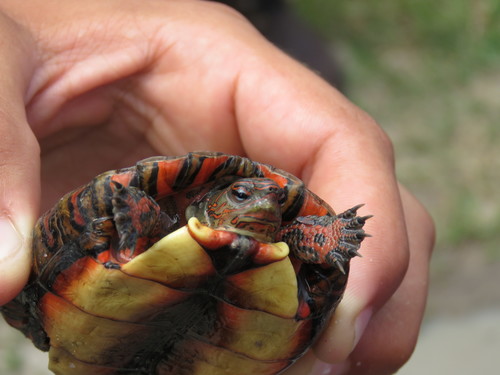
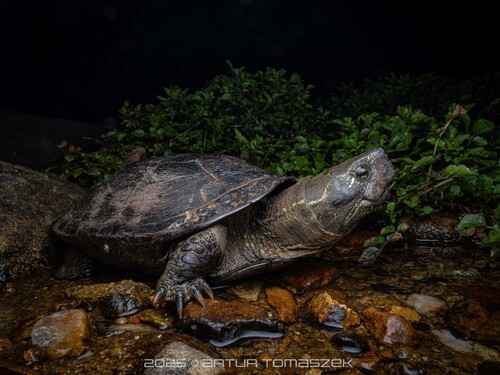
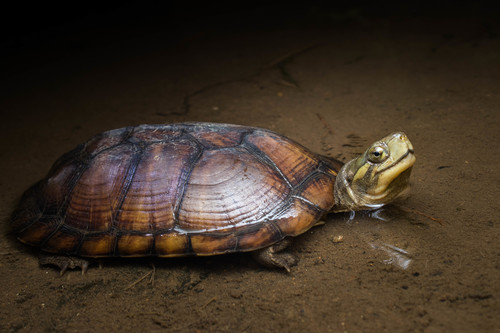
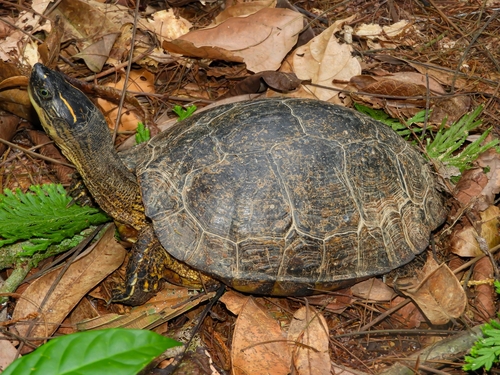
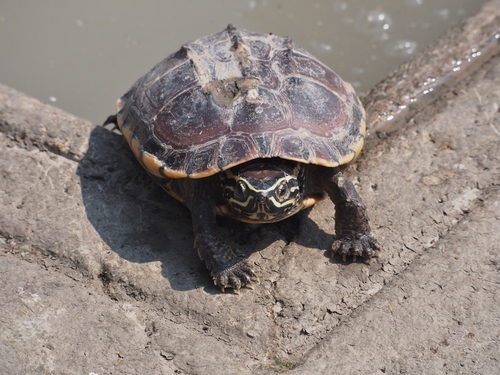
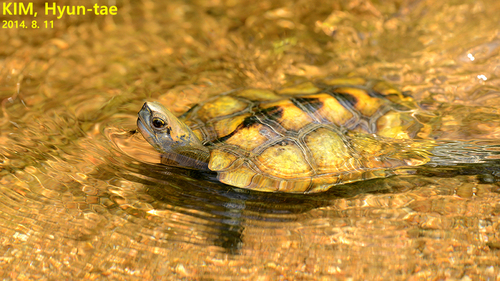
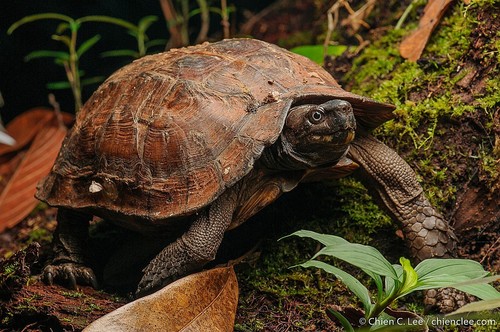
The spiny turtle, scientifically named Heosemys spinosa (Gray, 1831), is also commonly called the "cog-wheel turtle". It gets both common names from its spiky-edged carapace, marginal scutes, and spiny keel. This is a medium-sized turtle with a brown shell and a head marked with red spots. As juveniles mature into adults, two notable changes occur: the black stripes on the yellow underside of their shell fade in color, and the jagged serrations on the juveniles' carapace margin shrink in size, becoming restricted only to the rear margin of the carapace. These age-related changes to the spines and carapace are thought to be evolutionary adaptations that protect juvenile turtles from predators. Spiny turtles are found in Brunei, Indonesia, Malaysia, Myanmar, the Philippines, Singapore, and Thailand. They inhabit forested areas along brooks, most commonly in mountains at altitudes between 170 m and 1,000 m above sea level. Mating takes place in December and February, and is apparently triggered by rain. In wild nesting behavior, a female lays one or two eggs per nest, and can produce up to three clutches each year. In captive settings, spraying males with water has been observed to cause them to chase females and attempt to mate. Before a female lays an egg, a hinge forms in her plastron to make egg delivery easier. Females usually cover their eggs with a partial layer of substrate, and researchers have recorded eggs being laid in protected spots underneath cork bark or thick foliage. Most captive breeding attempts have been unsuccessful, because the eggs have thick shells that are prone to bursting if the substrate is too damp. The first successful captive copulation happened in 1991 at Zoo Atlanta. Incubation of the egg lasted 106 days, in a medium of peat moss, long fiber peat moss, and damp sand. For the first 35 days of incubation, the temperature was held between 28°C and 30°C; for the remaining 71 days, the temperature was lowered to between 26°C and 28°C.