About Henricia sanguinolenta (O.F.Müller, 1776)
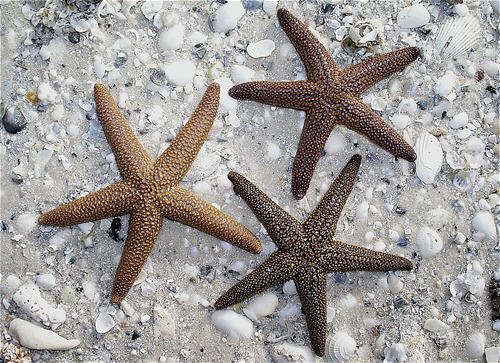
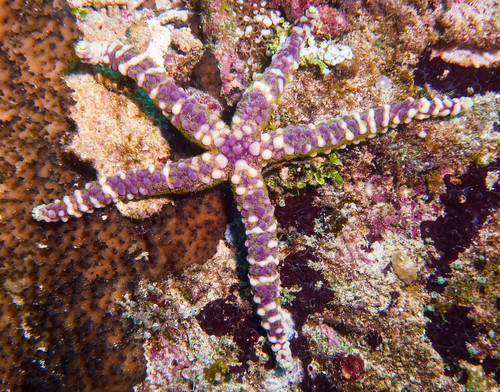
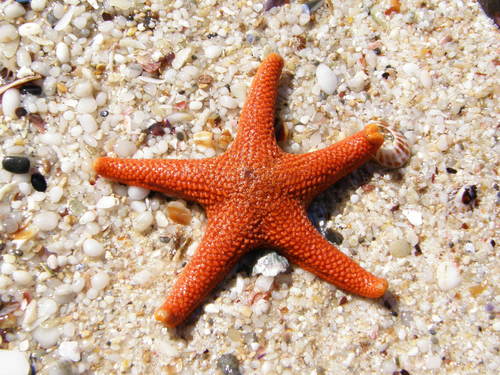
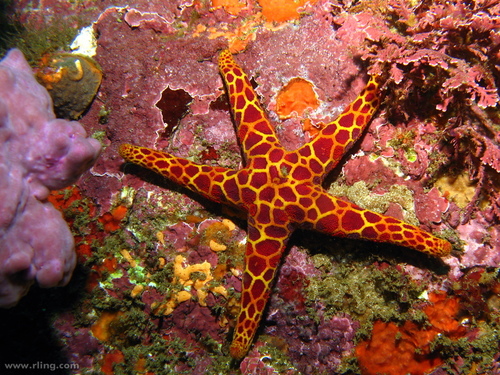
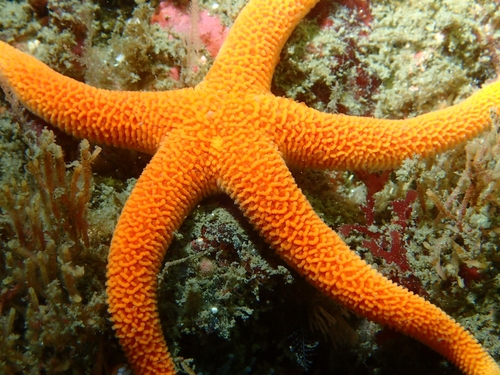
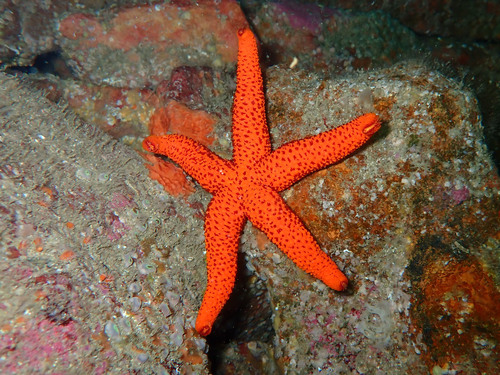
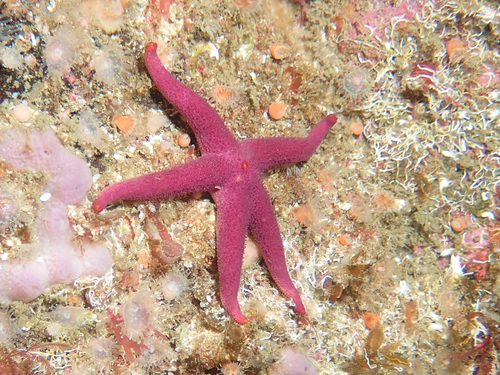
Henricia sanguinolenta, commonly called the northern henricia, is a species of sea star found in the North Atlantic and North Pacific Oceans. It is very similar to Henricia oculata, which is also known as "bloody Henry", and the two species can only be distinguished by laboratory testing. Individuals occur in a range of colors: red, yellow, orange, purple, and lavender.
This sea star lives in the coastal and benthic aquatic biomes of the North Atlantic and North Pacific. It can be found on beaches, under rocks, in available tidal pools, and on gravel. It occurs at depths from 0 to 2414 meters. It is almost always found near sponges and coral, because the currents these organisms create make filter feeding easier for this species.
Henricia sanguinolenta is a stable gonochoric species that uses sexual reproduction. It typically reproduces between February and May. During the breeding season, individuals migrate to warm, shallow water, and mate through disk fusion. After fertilization, the female starfish keeps the eggs under her disk to incubate. Once incubation is complete, the female deposits the eggs on the ground, secretes mucus over them, and remains on top of the eggs for three weeks until they hatch. This species is polygamous, and has a diploid chromosome number of 36. In addition to sexual reproduction, Henricia sanguinolenta can also reproduce asexually via regeneration. Asexual regeneration can occur if the disc is split in half, or even if just a ray is cut off. The regeneration process takes anywhere from weeks to months to complete.