About Henosepilachna vigintioctomaculata (Motschulsky, 1857)
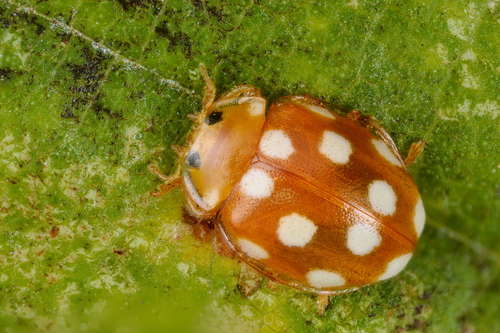
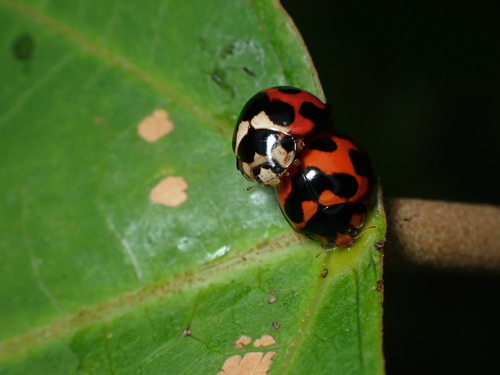
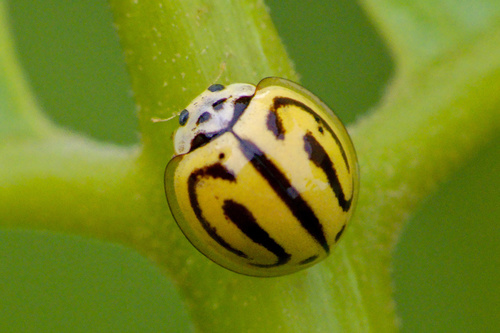
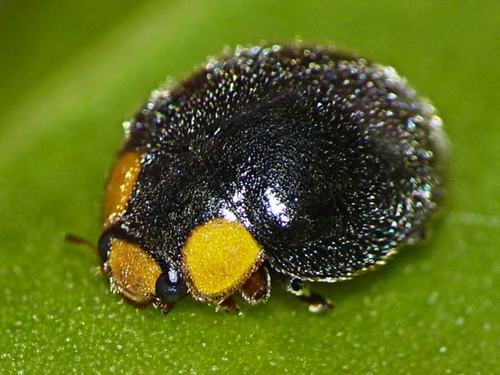
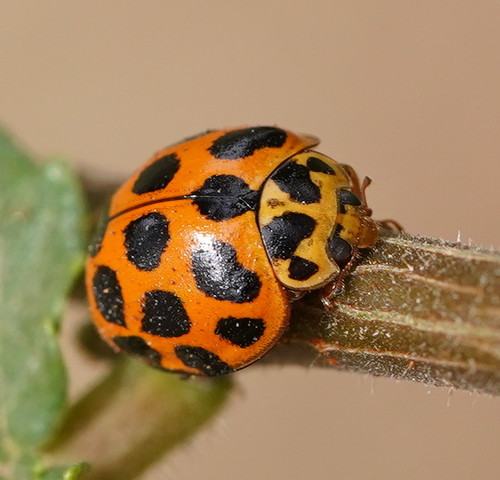
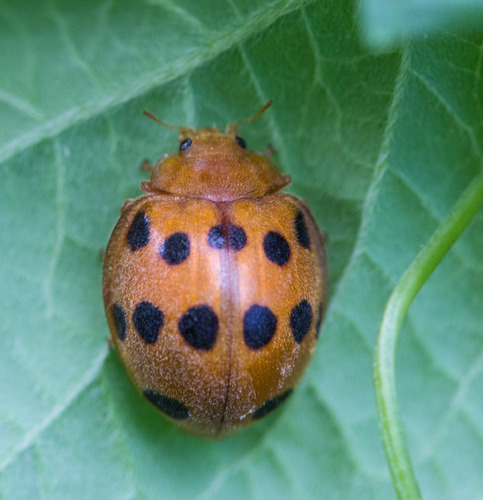
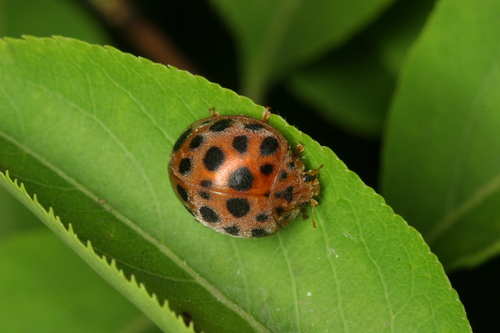
For Henosepilachna vigintioctomaculata, commonly called the 28-spotted potato ladybird, the adult body is nearly round, convex, glossy, and reaches a maximum length of seven millimeters. It is reddish-brown, with thirteen black spots on each elytron, and one or more black spots on each side of the thorax. Adult females lay yellow eggs that measure approximately 1.5 millimeters long; these eggs are laid in batches of 10 to 65 on the undersides of leaves. A single female can produce between 300 and 400 eggs total. Both the oval larvae and pupae are yellow-green, marked with black branched thorny appendages. Both adult beetles and larvae feed openly on leaves, consuming the soft plant tissues located between leaf veins. Under optimal environmental conditions, the species completes all developmental stages in 4 to 6 weeks. Larvae pupate directly on leaves, and newly emerged young beetles of the new generation feed heavily for 1 to 2 weeks to build up their fatty tissue reserves. Only adult 28-spotted potato ladybirds can survive overwintering. Adults typically hibernate under fallen leaves at the edges of woods, within bushes, or under plant residue in agricultural fields. This species originally came from the far east of Russia. It began expanding its range during the second half of the 20th century, and is currently found across most of Russia, as well as in northeast China, northern Korea, and Japan.