About Hemitragus jemlahicus (C.H.Smith, 1826)
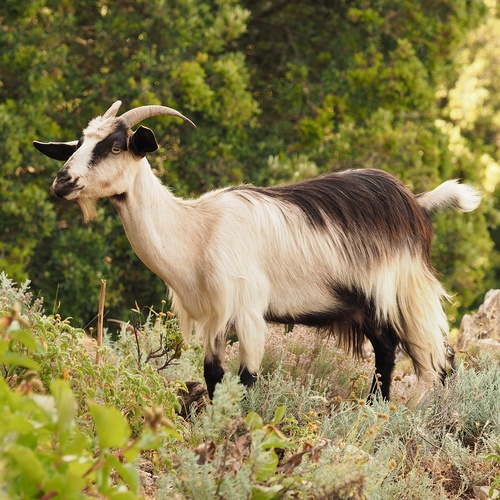
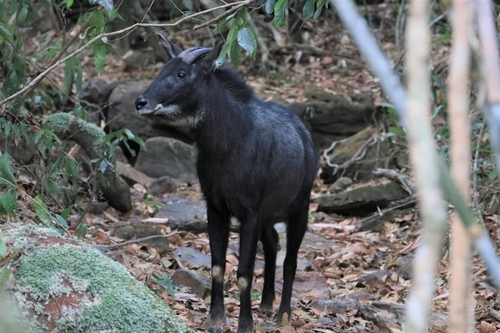
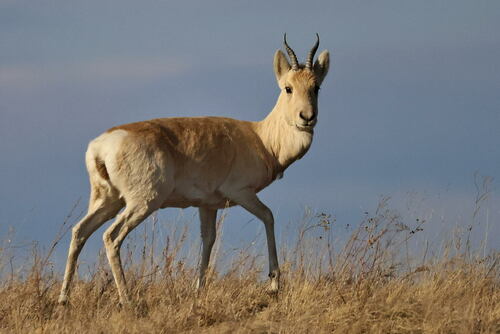
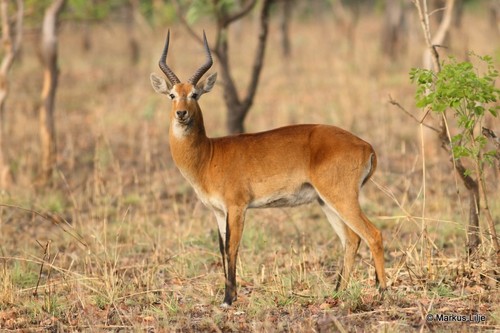
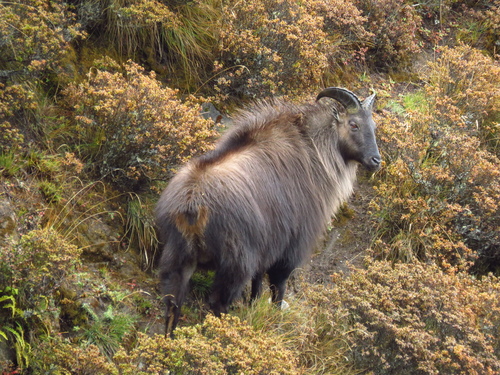
The Himalayan tahr, scientific name Hemitragus jemlahicus (C.H.Smith, 1826), has a small head, small pointed ears, large eyes, and horns that differ between males and females. Their maximum horn length is 46 cm (18 in). This species is sexually dimorphic: females are smaller in both size and weight, and have smaller horns. All Himalayan tahr horns curve backwards, an adaptation that prevents injury during mating season, when male headbutting is a common mating ritual. On average, adult males weigh around 73 kg (161 lb), while adult females average 36 kg (79 lb), and females are shorter in height than they are in body length. The Himalayan tahr’s outer body is well adapted to the harsh climate of the Himalayas. They have thick, reddish wool coats paired with thick undercoats, suited to their habitat conditions. Their coats thin and lighten in color as winter ends. As ungulate mammals, Himalayan tahrs have an even number of toes. They have a unique adaptive ability to grasp both smooth and rough surfaces, the type of terrain common to the mountainous areas they inhabit, which improves their mobility. Their hooves have a rubber-like core that lets them grip smooth rocks, while keratin along the hoof rim increases hoof durability — a key trait for moving across rocky ground. This adaptation allows Himalayan tahrs to maneuver confidently and swiftly across their rugged terrain. The typical lifespan of a Himalayan tahr is 14 to 15 years, and females generally live longer than males. The oldest recorded Himalayan tahr lived to 22 years old in captivity. Himalayan tahrs are adapted to life in cool climates with rocky terrain, so they occupy mountainous areas. In the Himalayas, they are mainly found on slopes between 2,500 and 5,000 m in elevation. They can eat a wide variety of plants, and most often live in areas where vegetation is accessible for browsing and grazing. During winter, when higher elevations’ vegetation is covered in snow, they move to lower-altitude slopes. Himalayan tahrs are polygynous, and males face intense competition for access to females. Young reproductive males roam and mate opportunistically when larger males are not present, while mature males over four years old perform ritualized displays and fight to secure mates. During mating season, reproductive males lose a large amount of their fat reserves, while females and nonreproductive males do not. This shows these competitive mating behaviors carry a substantial fitness cost. Traits that influence which males dominate include size, weight, and testosterone levels; coat color also has an effect, as lighter-coated Himalayan tahrs are more likely to gain access to estrous females. Himalayan tahr young are precocious, and can stand soon after birth. Females have a gestation period of 180 to 242 days, and usually give birth to a litter of only one kid. This reproductive pattern indicates that sexual selection is extremely important to male fitness. In 1960, sodium monofluoroacetate, also called compound 1080, was used to poison Himalayan tahrs. This derivative of fluoroacetic acid is commonly used as a pesticide in Mexico, Australia, the United States, and New Zealand. Compound 1080 is highly water-soluble: it is diluted by rainwater and broken down by aquatic microorganisms, and water samples taken after baiting operations did not detect dangerous levels of the compound. In soil, bacteria and fungi convert sodium monofluoroacetate into metabolic products that have been shown to be nonhazardous to the environment. According to Australia's Department of Primary Industries, Parks, Water, and Environment, mammals (especially cats and dogs) are the most susceptible to compound 1080 poisoning, while fish, birds, and amphibians are generally highly tolerant of the poison. Even though compound 1080 is strong enough to eradicate an entire Himalayan tahr population, political pressure from hunter groups, plus opposition from the general public over concerns that 1080 accumulates at higher levels of the food chain and would endanger mammals such as dogs, deer and pigs, has reduced its use.