About Hemistropharia albocrenulata (Peck) Jacobsson & E.Larss.
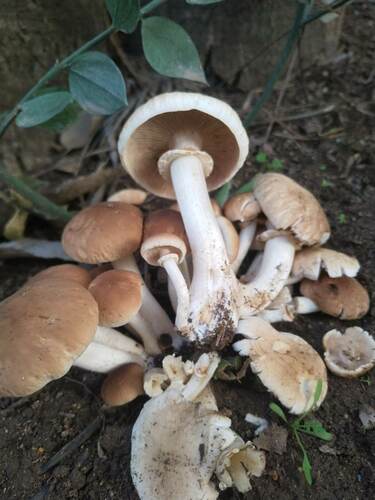
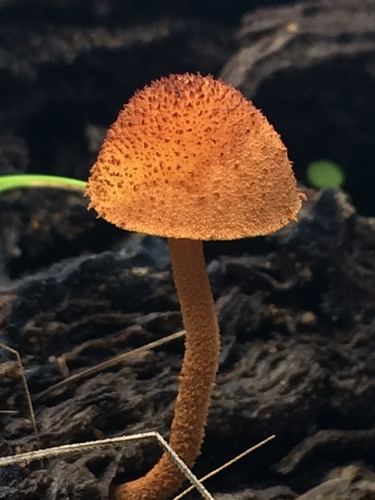
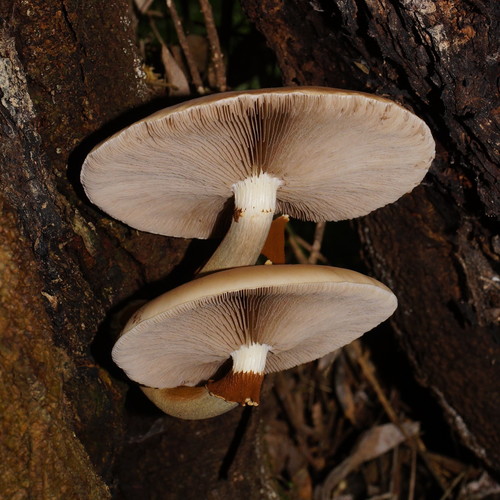
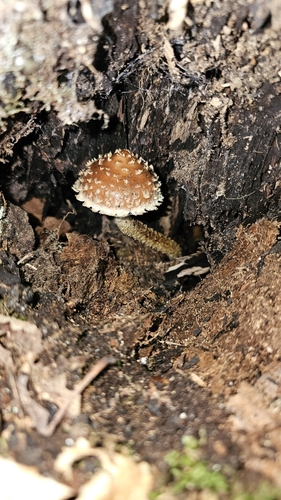
Hemistropharia is a genus of agarics with an unclear classification, though it may be related to either Hymenogastraceae or Tubarieae. This is a monotypic genus, meaning it contains only one single species: Hemistropharia albocrenulata. Originally described in 1873 by American mycologist Charles Horton Peck under the name Agaricus albocrenulatus, this species has several other synonymous scientific names, including Pholiota albocrenulata (Peck) Sacc. and Stropharia albocrenulata (Peck) Kreisel. This fungus has an orangish cap that can grow up to 9 centimetres (3+1⁄2 inches) wide, and its stem reaches up to 12 cm (4+3⁄4 in) long. It produces a brown spore print, and it is reported to be nonpoisonous. The genus most closely resembles typical members of the genus Pholiota, where it was previously classified and described. Like true Pholiota species, H. albocrenulata causes wood decay in trees. Unlike Pholiota species, however, H. albocrenulata does not have chrysocystidia, and its basidiospores are darker.