About Hemipepsis ustulata
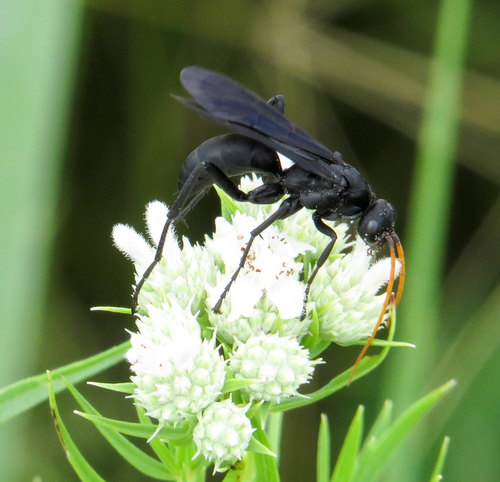
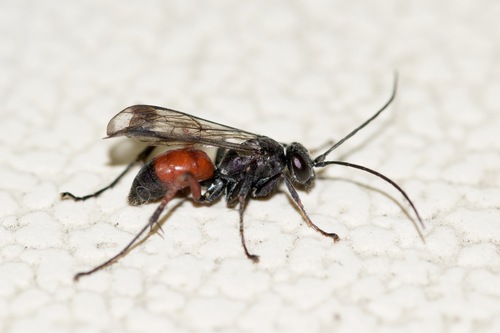
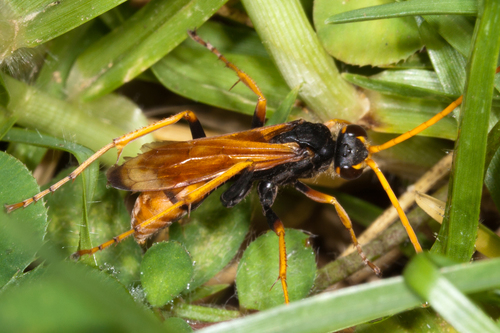
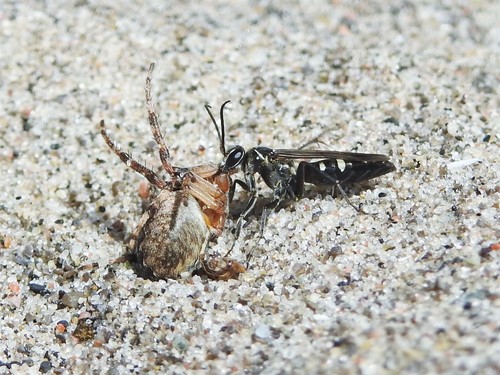
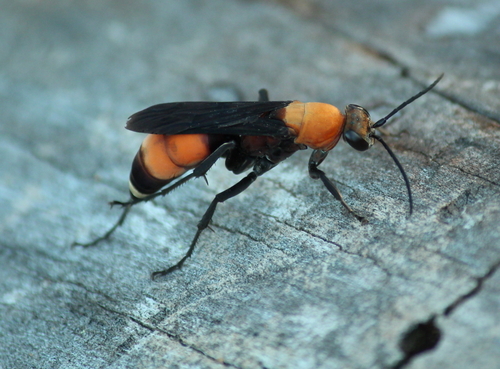
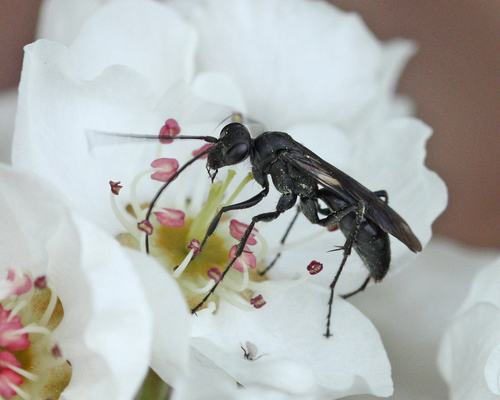
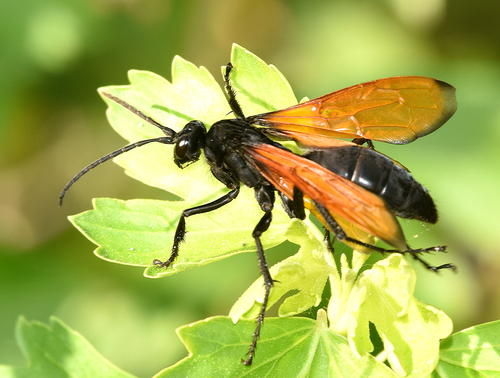
Hemipepsis ustulata generally has a matte black body and rust-orange wings. It is among the largest of the Hymenoptera, reaching up to 5 cm in total length. Hemipepsis ustulata resembles its close relatives in the genus Pepsis, but Pepsis species typically have more metallic black bodies marked with deep-blue stripes. Because the two genera share similar biology and overall appearance, the only reliable way to distinguish them is by comparing their wing venation patterns. This species is common in arid climates of the Southwestern United States, with a range extending from California through Arizona, New Mexico, and Texas, and reaching as far north as Nevada, Oklahoma, and Kansas. Most field research on Hemipepsis ustulata has been conducted in the Sonoran Desert near Phoenix, Arizona, by John Alcock. The distribution of Hemipepsis ustulata overlaps with that of theraphosid spiders, which the wasp parasitizes to raise its young. Male Hemipepsis ustulata are significantly smaller than females, have more slender bodies, and have more vibrantly colored wings; this wing color acts as a visual signal during mating rituals. Females, by contrast, have robust bodies and slightly darker wings. The antenna of Hemipepsis ustulata has a distinctive curve and twelve segments, which provides an additional identifying feature that separates it from other members of the Pompilidae family.