About Hemipenthes morioides (Coquillett) Coquillett
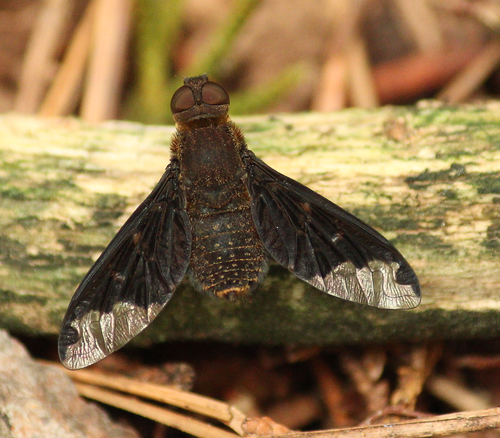
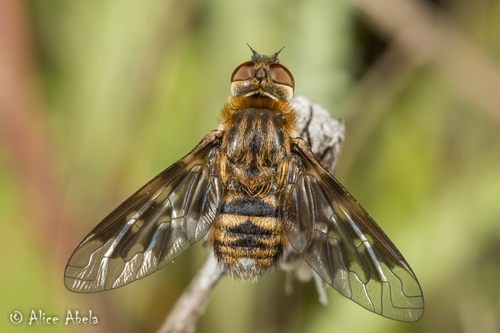
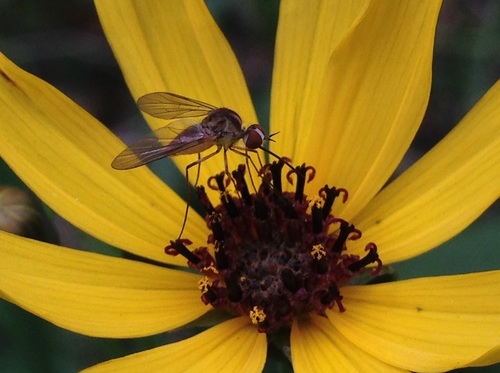
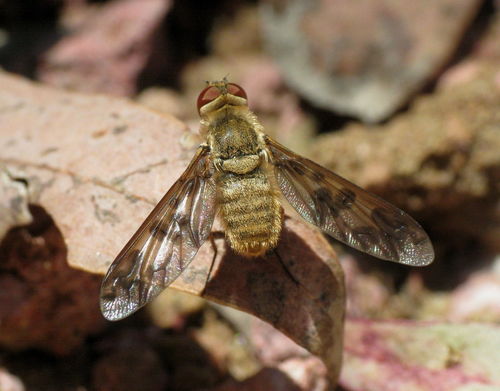
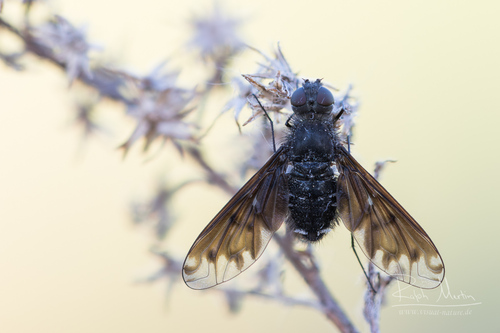
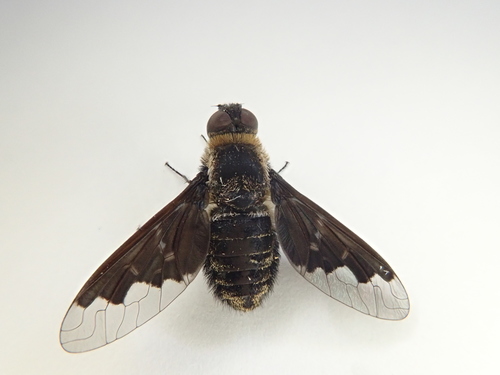
Hemipenthes morio is a bee fly species in the family Bombyliidae, subfamily Anthracinae. This common bee fly occurs across most of Europe, the eastern Palearctic realm, and the Near East. It is extremely similar in appearance to Hemipenthes morioides, a North American species that was previously classified as the same species as H. morio. Adult H. morio reach a body length of 7–10 millimetres (0.28–0.39 in), with a wingspan of 5–15 millimetres (0.20–0.59 in). Adults are most active from May through August, when they can be found feeding on nectar and pollen from a variety of flowers, including Lavandula stoechas, Cytisus scoparius, and Thapsia villosa. The body of H. morio is dark brown and covered in hairs, with particularly dense hair along the sides of the abdomen. The wings have a light patch near the apex and a dark patch close to the costal margin, separated by a zig-zag boundary. The apex of cell R1 is hyaline, and the dark wing area extends almost to the end of the abdomen. H. morio larvae are hyperparasites, meaning they parasitize other parasites. They primarily develop in larvae of tachinid flies (Diptera, Tachinidae) and ichneumonid wasps (Hymenoptera, Ichneumonidae), which themselves parasitize noctuid moth caterpillars.