About Hemileuca tricolor Packard, 1872
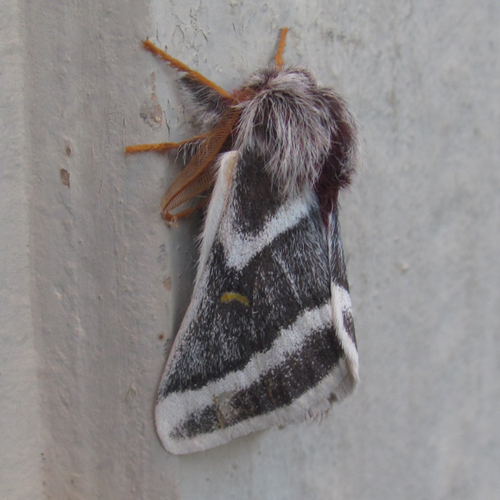
Hemileuca tricolor, first described by Packard in 1872, displays clear sexual dimorphism in its adult stage: males are smaller and lighter in color than females. Adult wingspan ranges from 2 1/8 to 3 1/8 inches, or 5.2 to 7.8 centimeters. The forewing is gray, marked with marginal, median, and postmedian white bands, plus a central yellow or orange eyespot. Male hindwings are white, while female hindwings range from white to dull brown. The abdomen is red to reddish brown. For its life cycle, eggs are laid on host plants and hatch in July. Caterpillars feed until they are ready to pupate, then overwinter in the pupal stage. Adults emerge in January, and there is one annual flight period that runs from January through April. Known larval host plants are littleleaf palo verde (Cercidium microphyllum), mesquite (Prosopis juliflora), and catclaw mesquite (Acacia greggii). Adult Hemileuca tricolor do not feed.