About Hemigrapsus crenulatus (H.Milne Edwards, 1837)
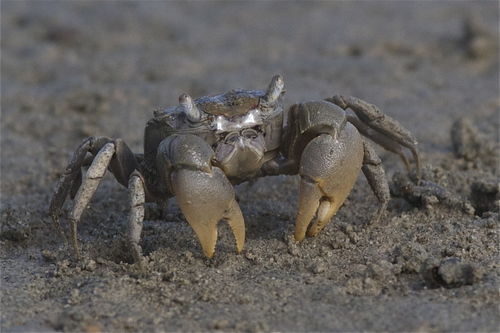
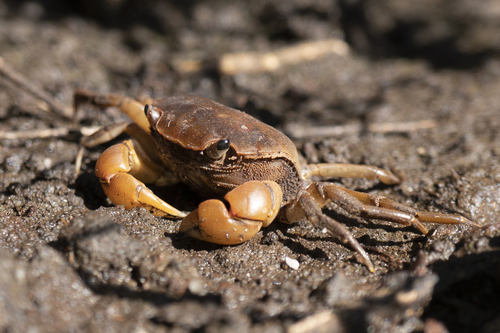
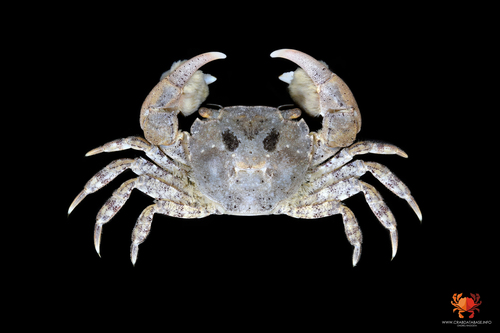
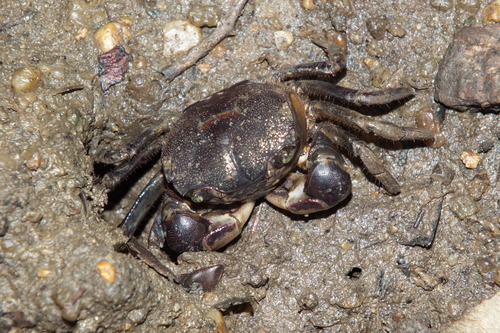
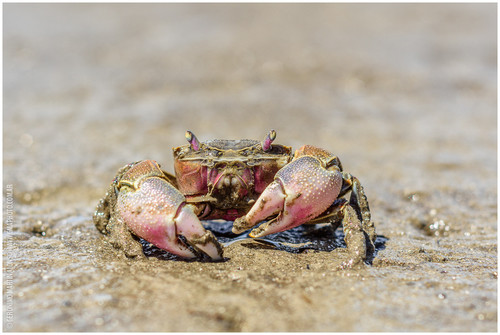
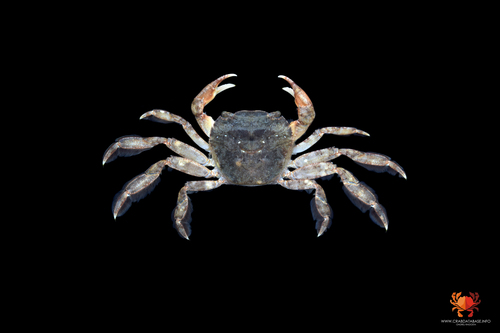
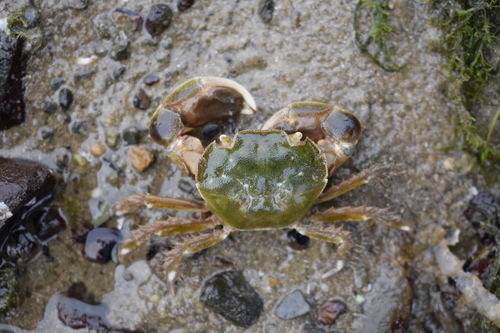
Hemigrapsus crenulatus, commonly called the hairy-handed crab or papaka huruhuru, is a marine crab species in the family Varunidae. It is endemic to the coast of New Zealand, though a taxon found in Chile may be the same species. This is an intertidal species with semi-terrestrial habits. Its common name refers to its characteristic setae, which are patches of thick hair covering its chelipeds and legs. Its body color ranges from green to brown. Adult crabs typically have a carapace width of 2–4 cm (0.8–1.6 in), though the smallest mature individuals can have a carapace width as small as 1 cm (0.4 in). This species is able to survive and reproduce in environments with a wide range of salinities.
The breeding season of Hemigrapsus crenulatus runs from June through to January or February, and winter breeding is more common than summer breeding. Females are ovigerous, meaning they carry their eggs on their underside. Females can also breed twice in a single breeding season. Molting generally occurs most often before and after the breeding season. Under ideal temperature and salinity conditions, the minimum egg incubation period is 45 days; incubation time and egg size both tend to increase when salinity is lower. As crabs mature (gain the ability to reproduce), male carapaces grow circularly, while female carapaces grow horizontally into an elliptical shape. This growth pattern increases the width of the female abdomen to allow it to carry more eggs. The minimum carapace width for mature males is 1.3–1.5 cm (0.5–0.6 in), and for mature females it is 0.9–1.1 cm (0.3–0.4 in). The overall range of carapace width for mature crabs is 1.2–2.0 cm (0.5–0.8 in), and most deviations outside this range are seen in males. Males also grow for a longer period, grow faster, and reach a larger adult size than females, potentially growing up to twice the size they were when first reaching maturity.
H. crenulatus can be found throughout mainland New Zealand, as well as on the west coast of Chile. It is euryhaline, meaning it can survive in habitats with a wide range of salinities, including estuaries, brackish waters, and intertidal zones. A 1910–1912 report by E.F. Stead documents that after a storm brought a large amount of salt water into a freshwater lake, H. crenulatus populated the lake area until salt levels returned to their original state. In intertidal areas, the species is rarely found below the low-water mark, and females make up the majority of individuals found at these lower intertidal levels. H. crenulatus is a burrowing crab: it hides under stones or burrows into sand and mud, and prefers softer substrates. This behavior helps it avoid intense light, high temperatures, and high salinity conditions. Its semi-terrestrial nature means it spends time away from the shore; for example, it migrates up the shore with rising tide to feed in terrestrial areas at high tide, then retreats back down as water levels fall.