About Hemicordulia tau Selys, 1871
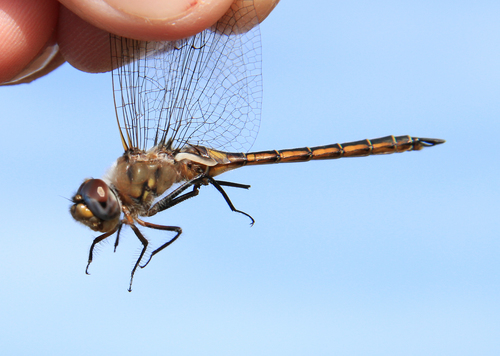
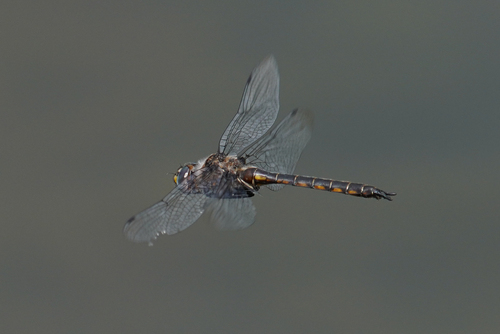
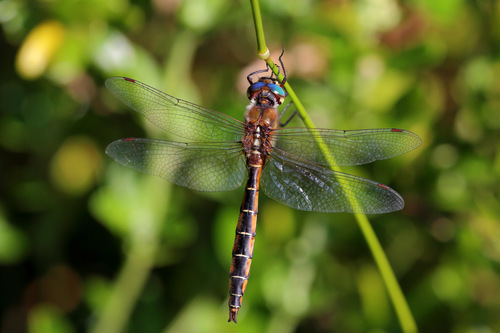
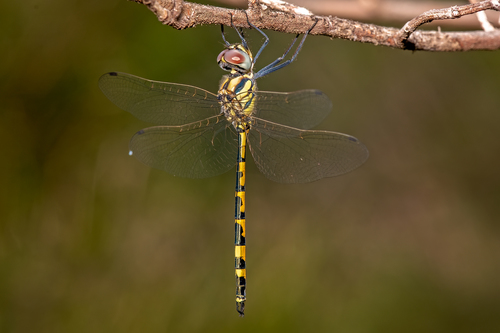
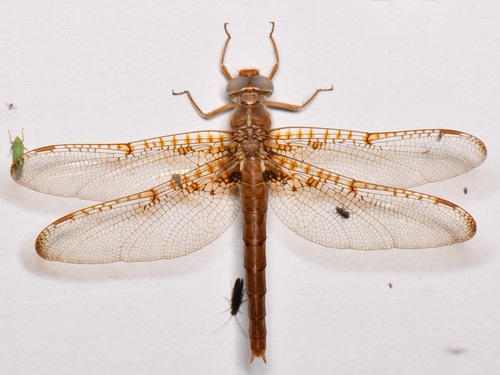
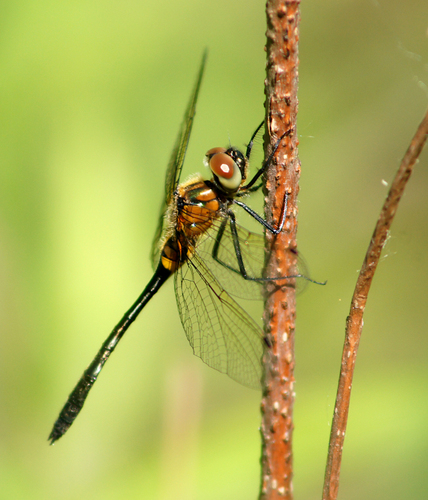
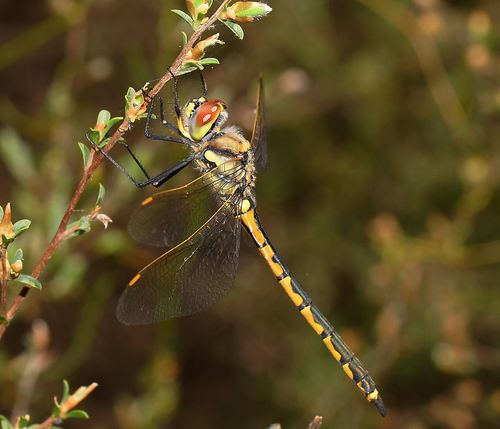
The tau emerald (Hemicordulia tau) is a species of dragonfly in the family Corduliidae. This species was first described by Edmond de Sélys Longchamps in 1871. Hemicordulia tau is found across most of Australia, with the exception of northern Queensland and north-western Western Australia, and it is one of the most abundant dragonfly species in Australia. It is classified as a dry-country dragonfly, and often inhabits the arid inland regions of Australia. Adult tau emeralds are vagrants, and are highly opportunistic when selecting breeding habitat. Alongside rivers, lakes, and swamps, H. tau can successfully breed in temporary waters, thanks to its short larval stage. Nymphs of this species have a high thermal growth coefficient, and details of their life history can vary based on their location. The nymphs are able to tolerate the high temperatures that occur in temporary shallow ponds. Their ability to use temporary waters and shorten their larval life when temperatures increase contributes to the species' abundance and wide distribution. They can also overwinter in cold permanent refuges, and have been recorded in water with a salinity ranging from 7.8g/L to 13.9g/L. Like the larvae of other Odonata species, H. tau larvae are associated with clean water, and it has been suggested that monitoring this species could help detect changes in water quality. Larval habitat is typically made up of leaf litter and weeds. Like many other aquatic invertebrates with terrestrial adult stages, this species needs a snag extending above the water surface to emerge from the larval to adult stage. The main predators of Hemicordulia tau are fish and birds.