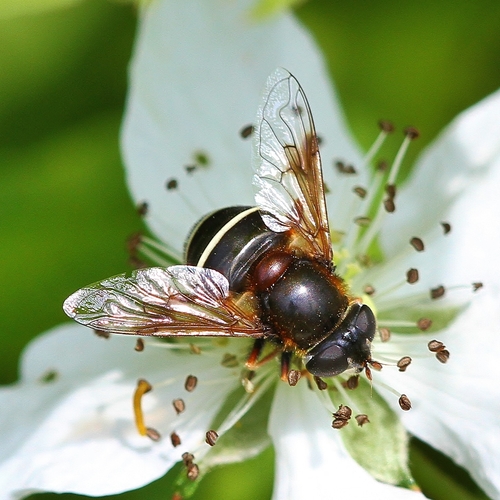
About Helophilus pendulus (Linnaeus, 1758)
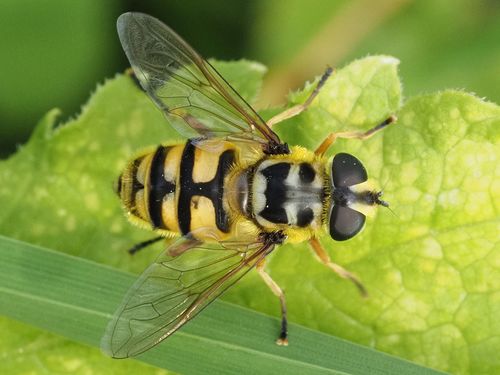
Helophilus pendulus is a European hoverfly. Its scientific name translates to "Dangling marsh-lover", with "helo-" from Greek meaning "marsh", "-phil" meaning "love", and "pend-" from Latin meaning "hang". It is a very common species in Britain, and it is the most common Helophilus species found there. Its range extends across Europe from the Mediterranean to Scandinavia, west to the Faroe Islands and Iceland, and eastward through Russia from the Kola Peninsula south to Crimea, then across Siberia to the Pacific Ocean. It also has the common name sun fly, which probably comes from misreading the Greek root "helo-" as "helio-".
In terms of ecology and behaviour, this hoverfly is associated with a wide variety of waterbodies. These range from large lakes and rivers down to small features including ditches, small ponds and muddy puddles. Its larvae have been found in cow-dung, very wet manure, or very wet old sawdust. Adult Helophilus pendulus visit flowers, and commonly rest on leaves. They often emit a buzzing sound while resting. This species is a notable wanderer, and can be found far from water. The larvae feed on detritus.