About Helogale parvula (Sundevall, 1847)
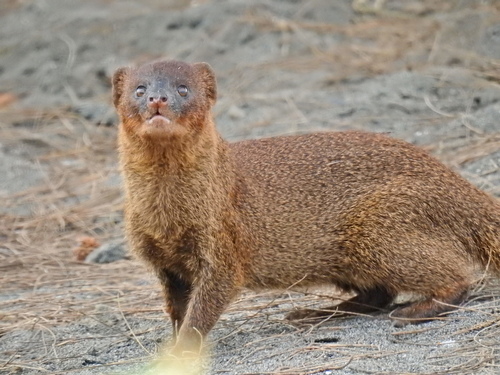
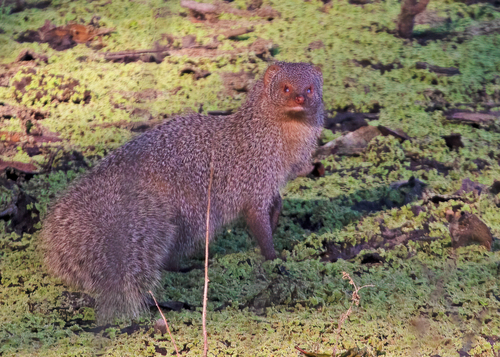
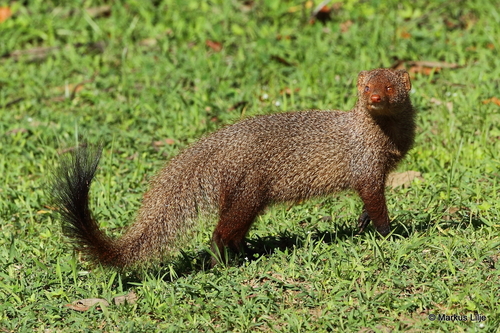
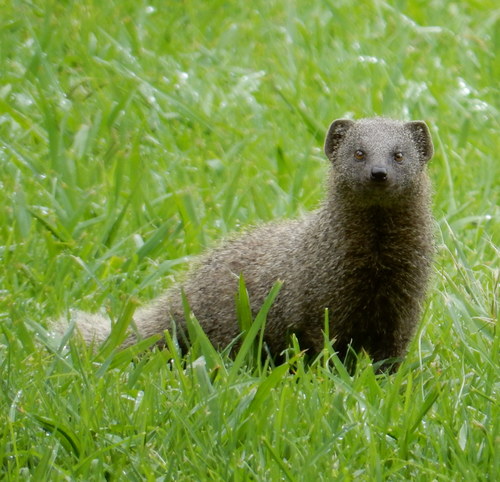
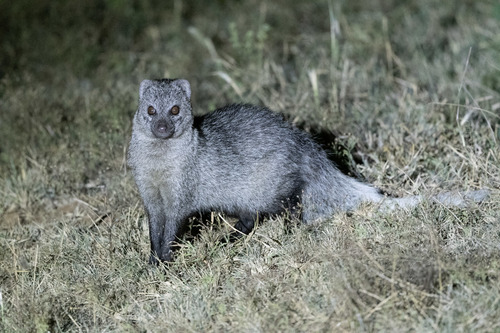
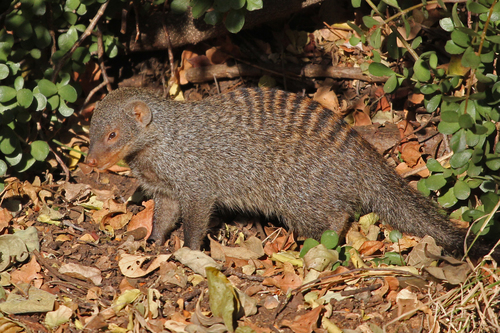
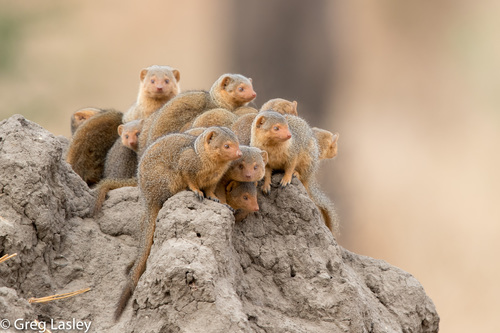
Common dwarf mongoose (scientific name: Helogale parvula (Sundevall, 1847)) has soft fur that ranges in color from yellowish red to very dark brown. It has a large pointed head, small ears, a long tail, short limbs, and long claws. Its body measures 16–23 cm (6.3–9.1 in) long, and it weighs 213–341 g (7.5–12.0 oz), making it the smallest carnivoran found in Africa. This species ranges from East Africa to southern Central Africa, occurring from Eritrea and Ethiopia south to Limpopo and Mpumalanga provinces in South Africa. It primarily lives in dry grassland, open forests, and bushland up to an elevation of 2,000 m (6,600 ft). It is especially common in areas with many termite mounds, its preferred sleeping place, and it avoids dense forests and deserts. The common dwarf mongoose is diurnal. It is a territorial animal; social groups each occupy a territory of approximately 30 to 60 hectares, with size varying by habitat type. Groups sleep at night in abandoned termite mounds, though they will occasionally use alternative sites such as rock piles or hollow trees. Group members mark their territory using secretions from anal and cheek glands, as well as shared latrines. Neighboring territories often overlap slightly, which leads to confrontations between groups, with larger groups typically winning these encounters. The main predators of the common dwarf mongoose include predatory birds such as raptors and marabou storks, reptiles such as snakes and monitor lizards, and other carnivorous mammals such as jackals and larger mongooses. This species has evolved a mutualistic relationship with hornbills: hornbills actively seek out dwarf mongooses to forage together, and both species warn each other of nearby birds of prey and other predators. Common dwarf mongooses usually breed during the wet season, between November and May. A breeding female can produce up to three litters in one breeding season. Each litter has an average of four pups, born after a gestation period of 49 to 53 days. Pups nurse for 45 days, and subordinate females may help nurse the group's young. Juveniles start foraging alongside adults at around six weeks of age, reach sexual maturity at three years old, and have a maximum lifespan of around 18 years.