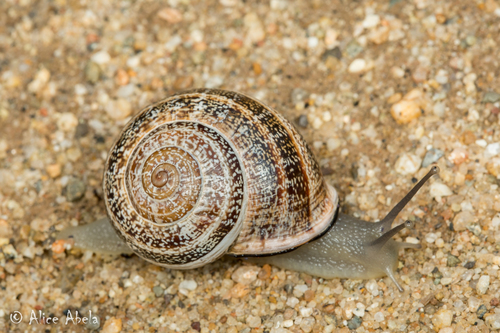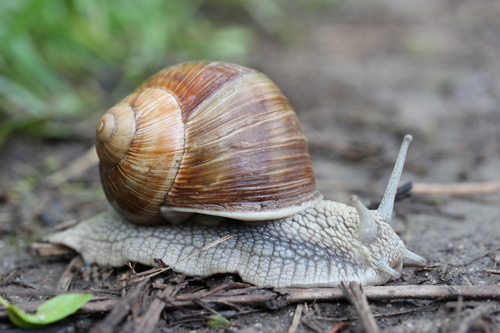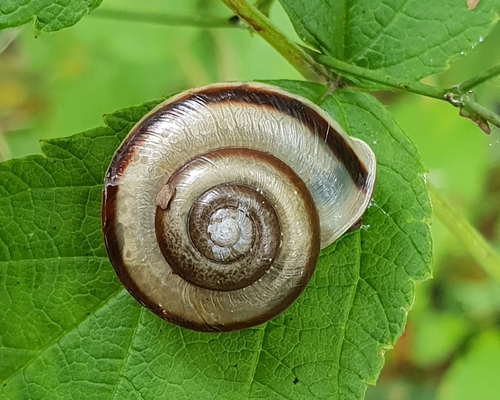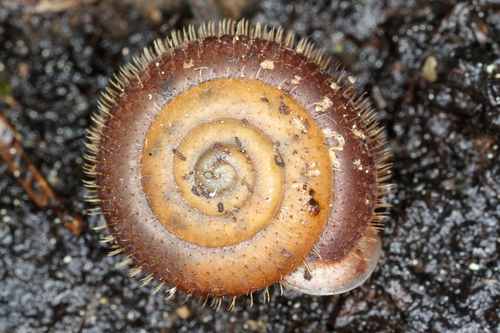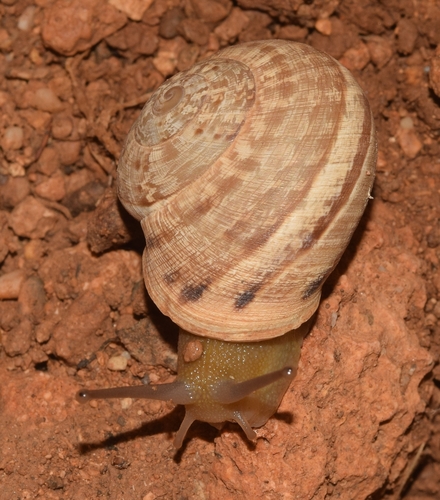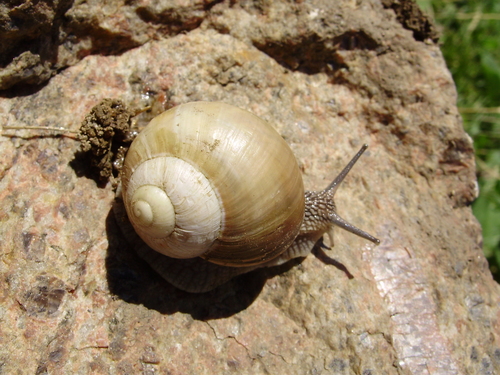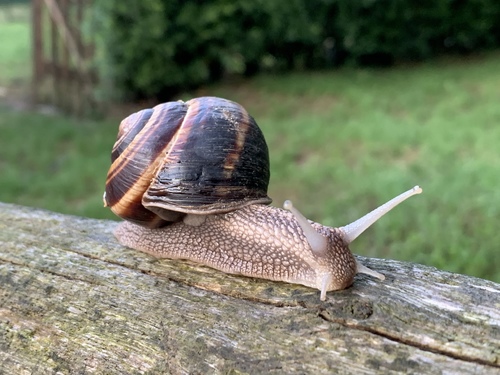
About Helix lucorum Linnaeus, 1758
Description: Adult Helix lucorum snails weigh approximately 20–25 g. Their shells measure 35–60 mm wide and 25–45 mm high. This snail species produces and uses love darts. Distribution: The species' native range includes the Caucasus, Anatolia, and is considered by some to also include the Balkans. It has invaded many other regions since ancient times, likely with human assistance. The eastern native range, which holds the species' main genetic diversity, covers Anatolia (Turkey), Georgia, Azerbaijan, Armenia, and northern Iran. The Balkans (Albania, Bosnia and Herzegovina, Bulgaria, Croatia, Greece, Macedonia, Serbia, Turkey) are considered probably native. Other recorded locations include: Israel, Syria, Russia (possibly native in the Caucasus, invasive in other regions), Italy (probably invasive), Hungary (probably invasive), Romania (probably invasive), Ukraine (invasive; populations of Anatolian origin have been present in Crimea at least since the early 19th century, and possibly longer; additional colonies from a different lineage have appeared in mainland southern Ukraine and Crimea since the 2000s), Czech Republic (invasive since 2009; only one known locality in Prague-Žižkov as of 2011), Slovakia (invasive since 2013; only one known locality in Bratislava as of 2014), France (invasive), and Great Britain (invasive since 2009, recorded at Wimbledon). Ecology: The eggs of Helix lucorum have a diameter of 4.4 mm. Two to three month old juvenile snails weigh 0.5–0.9 g. Human use: Measuring DNA damage in wild-collected Helix lucorum can be used to assess soil pollution at collection sites. This DNA damage is measured in the species' haemocytes and digestive gland cells using the comet assay. Helix lucorum is also used as food in cuisine as escargots.