About Helix albescens Rossmässler, 1839
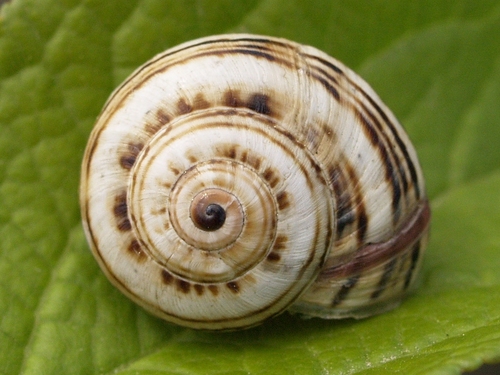
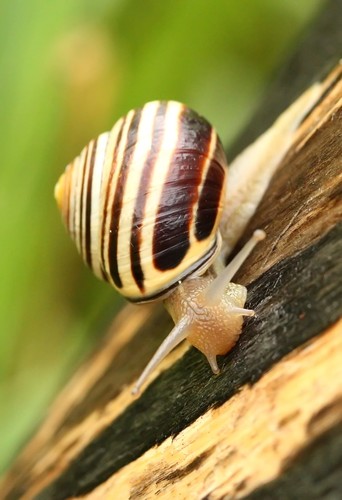
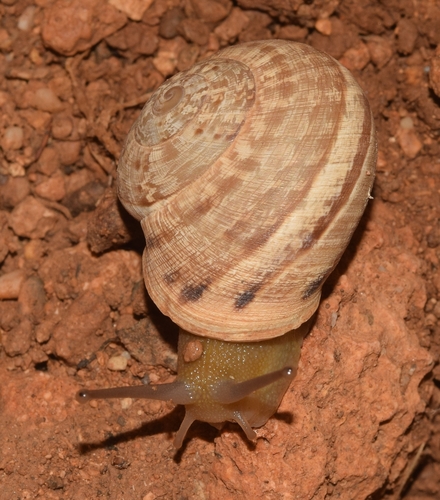
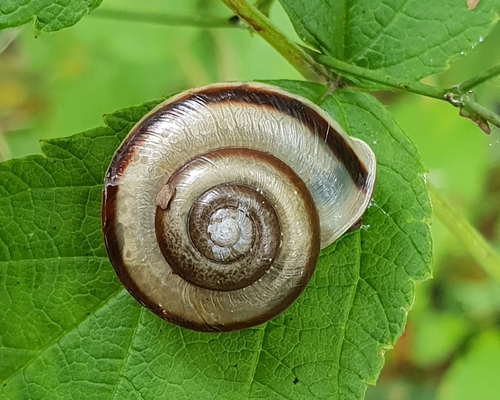
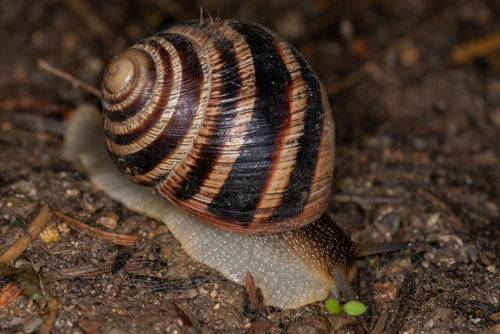
Helix albescens is a relatively small species within the genus Helix, with a globular shell that ranges in color from whitish to cream-brown. The shell typically has five reddish-brown bands, and the second and third bands in particular may partially fuse together. This species has a closed umbilicus, and its apertural margins may be brown. A key defining characteristic is its very large protoconch, the embryonal portion of the shell. The soft body of the snail is yellow, and usually has a dark brown back. In its genital system, two typical traits are the absence of a diverticulum on the bursa copulatrix, also called the gametolytic gland, and a very short flagellum.
Helix albescens is distributed across southern Ukraine, southwestern Russia (Ciscaucasia), and the Caucasus region (Georgia, Armenia, and Azerbaijan). Patterns in the distribution of its mitochondrial genetic lineages suggest the species originated in Crimea. It naturally occurs in shrubby habitats, where associated plants include Christ's thorn, blackthorn, and hawthorn, among others.
Like all stylommatophoran land snails, H. albescens is a hermaphrodite. The species lays its eggs in small clutches, placed in cavities dug 5 to 6 centimeters deep into damp soil. Egg laying takes many hours total, because laying a single egg can take up to two hours. Recorded clutch sizes range from 6 to 25 eggs, with an average of 18 eggs. The eggs are oval and large relative to the size of the adult snail, with a maximum diameter of 6 to 11 millimeters.